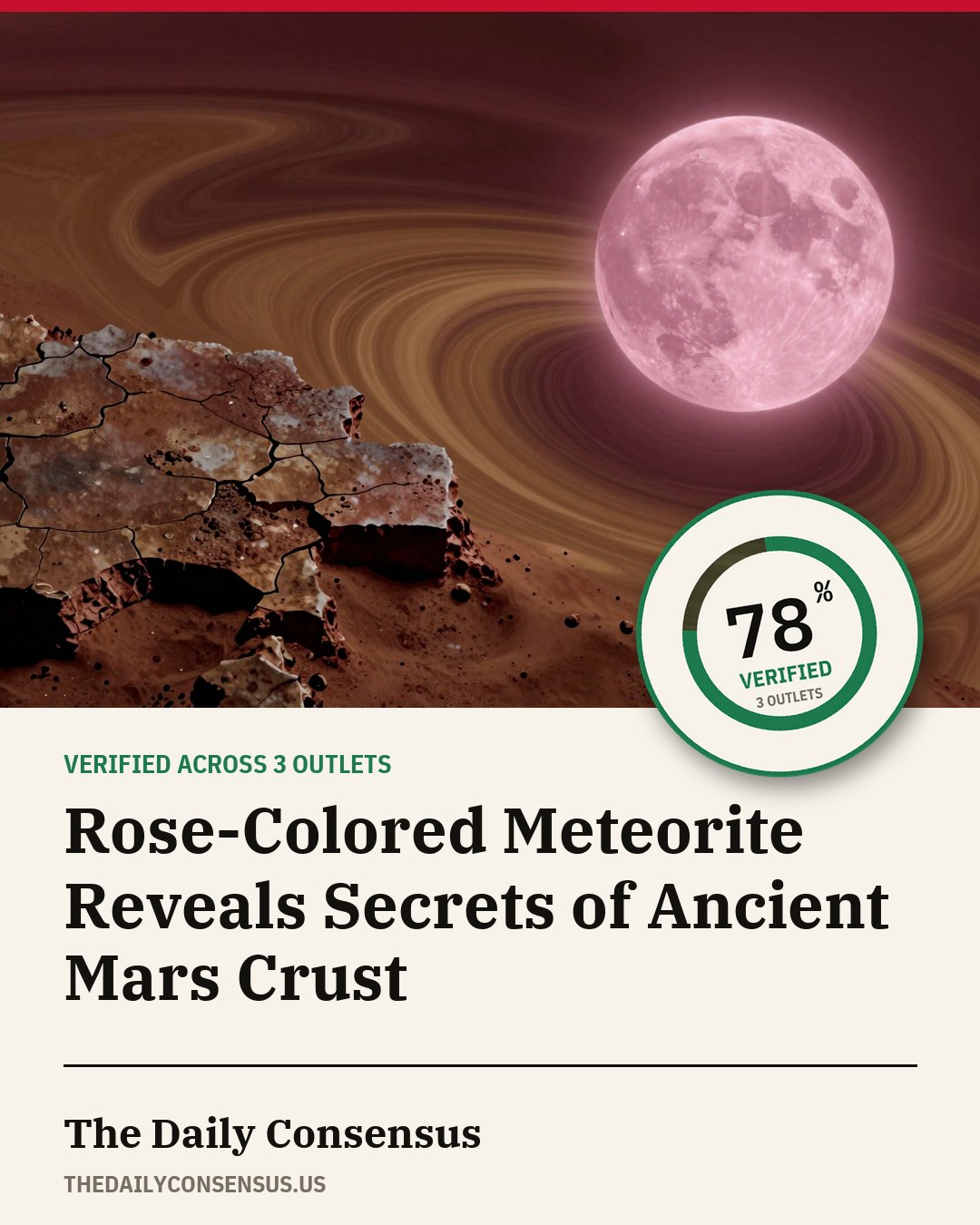
Rose-Colored Meteorite Reveals Secrets of Ancient Mars Crust
A newly discovered meteorite, Teghaza 001, offers unique insights into the Red Planet’s early geological history.
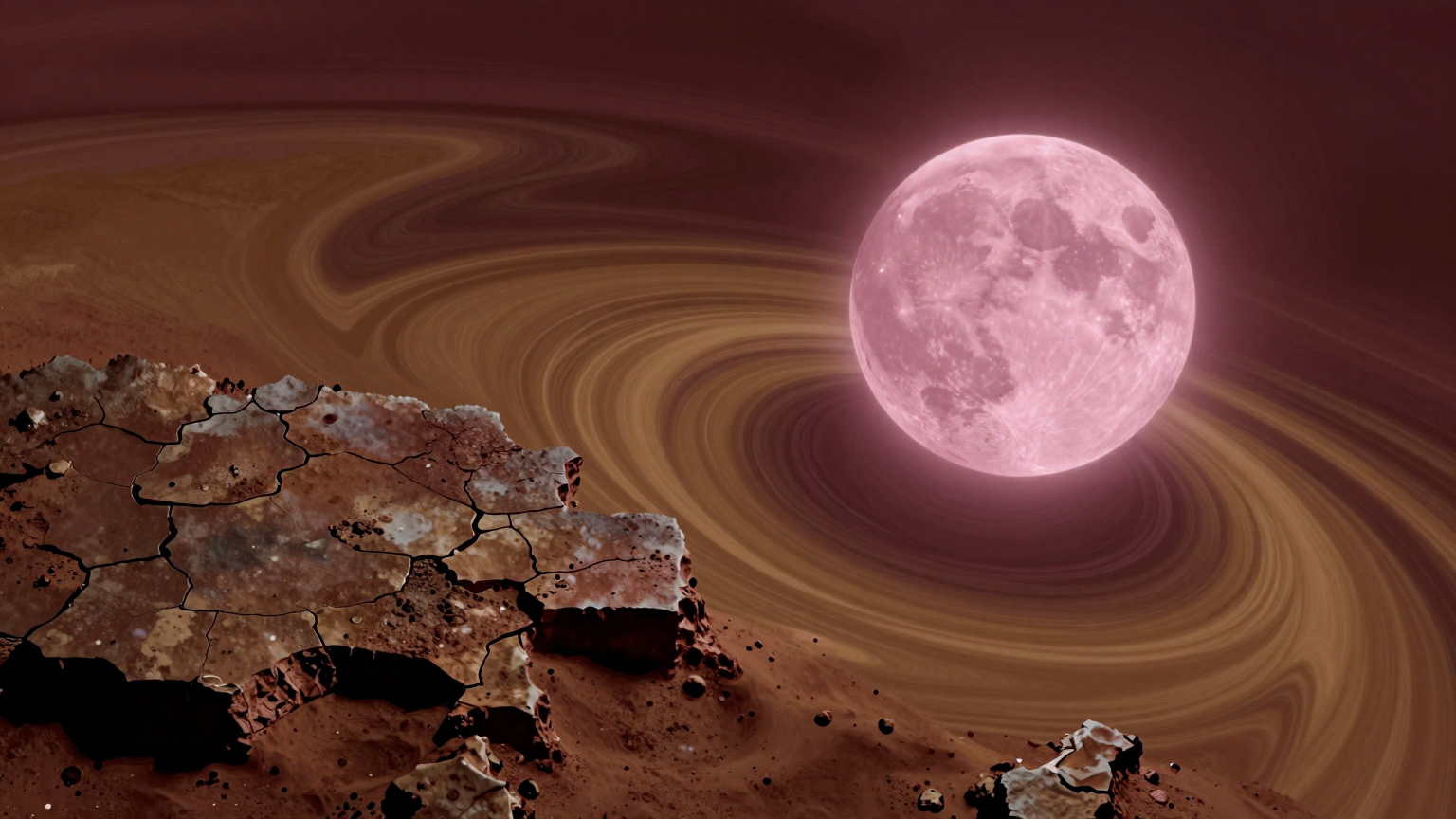
A rose-colored meteorite named Teghaza 001, recently unearthed in the Sahara Desert, has captured the attention of scientists for its rare glimpse into the ancient crust of Mars. This remarkable find, confirmed to be a fragment of the Red Planet, dates back over 4.1 billion years, making it one of the oldest known Martian meteorites 123.
Teghaza 001 stands out not just for its age but also for its distinctive mineral composition, which aligns closely with observations made by NASA’s Mars Reconnaissance Orbiter 13. The meteorite’s unique features include zircon crystals that provide valuable clues about its formation, offering researchers a window into the early conditions on Mars 13.
One of the most intriguing aspects of Teghaza 001 is its evidence of water-rock interactions, suggesting that liquid water was present on Mars during its formative years 13. This discovery adds to our understanding of the planet’s geological evolution and the potential for past habitability 13.
The meteorite was dated using an innovative in-situ rubidium-strontium method, distinguishing it from most other Martian meteorites found on Earth, which are typically 2.4 billion years old or younger 12. Prior to Teghaza 001, only two other ancient Martian meteorites were known: Allan Hills 84001 and Black Beauty 2. However, Black Beauty differs significantly, being a mixture of soil and small rock fragments rather than an intact igneous rock like Teghaza 001 2.
With approximately 435 known Martian meteorites on Earth, Teghaza 001’s status as one of the three oldest is particularly noteworthy 1. Its existence underscores the importance of large impacts on Mars, which are necessary to launch rocks off the planet, though not all rocks can survive the journey due to their composition 2.
What we know
- - Teghaza 001 is a rose-colored meteorite found in the Sahara Desert 123
- - It is a piece of Mars that formed over 4.1 billion years ago 123
- - Teghaza 001 is one of the oldest known Martian meteorites 123
- - Its mineralogy matches observations made by NASA's Mars Reconnaissance Orbiter 13
- - The meteorite contains zircon crystals that record clues to its formation 13
- - Teghaza 001 shows evidence of water-rock interactions on ancient Mars 13
- - It provides insight into Mars' ancient crust and formation 1
- - The meteorite was age-dated using a novel in-situ rubidium-strontium method 1
- - Most Martian meteorites found on Earth are 2.4 billion years old or younger 2
- - Only two other genuinely ancient Martian meteorites were known before Teghaza 001 2
- - Black Beauty is a mixture of soil and small rock fragments, unlike Teghaza 001 2
- - Teghaza 001 is one of the three oldest Martian meteorites found on Earth 3
- - There are about 435 known Martian meteorites on Earth 1
- - Large impacts on Mars are necessary to launch rocks off the planet 2
- - Not all rocks can survive the impact needed to leave Mars due to their composition 2



Powered by Quantum Forge Robotics with Jessi AI Intelligence
Verification report
- confirmed
A rose-colored meteorite named Teghaza 001 was found in the Sahara Desert.
94% · supported by 3 - confirmed
Teghaza 001 is a piece of Mars that formed over 4.1 billion years ago.
94% · supported by 3 - confirmed
Teghaza 001 is one of the oldest known Martian meteorites.
94% · supported by 3 - confirmed
The meteorite's distinctive mineralogy matches observations made by NASA's Mars Reconnaissance Orbiter.
87% · supported by 2 - confirmed
Teghaza 001 contains zircon crystals that record clues to its formation.
87% · supported by 2 - confirmed
Teghaza 001 shows evidence of interaction between water and rock on ancient Mars.
87% · supported by 2 - likely
Teghaza 001 provides insight into Mars' ancient crust and formation.
73% · supported by 1 - likely
The meteorite was age-dated using a novel in-situ rubidium-strontium method.
73% · supported by 1 - likely
Most Martian meteorites found on Earth are 2.4 billion years old or younger.
72% · supported by 1 - likely
Only two other genuinely ancient Martian meteorites were known before Teghaza 001: Allan Hills 84001 and Black Beauty.
72% · supported by 1 - likely
Black Beauty is a mixture of soil and small rock fragments, unlike Teghaza 001 which is an intact igneous rock.
72% · supported by 1 - likely
It is one of the three oldest Martian meteorites found on Earth.
71% · supported by 1 - unverified
The meteorite weighs approximately 800 grams.
53% · supported by 1, contradicted by 1 - unverified
The meteorite weighs almost two pounds.
47% · supported by 1, contradicted by 1 - likely
There are about 435 known Martian meteorites on Earth.
73% · supported by 1 - likely
Large impacts on Mars are necessary to launch rocks off the planet.
72% · supported by 1 - likely
Not all rocks can survive the impact needed to leave Mars due to their composition.
72% · supported by 1