Astronauts Successfully Deploy New Solar Panels During Spacewalk
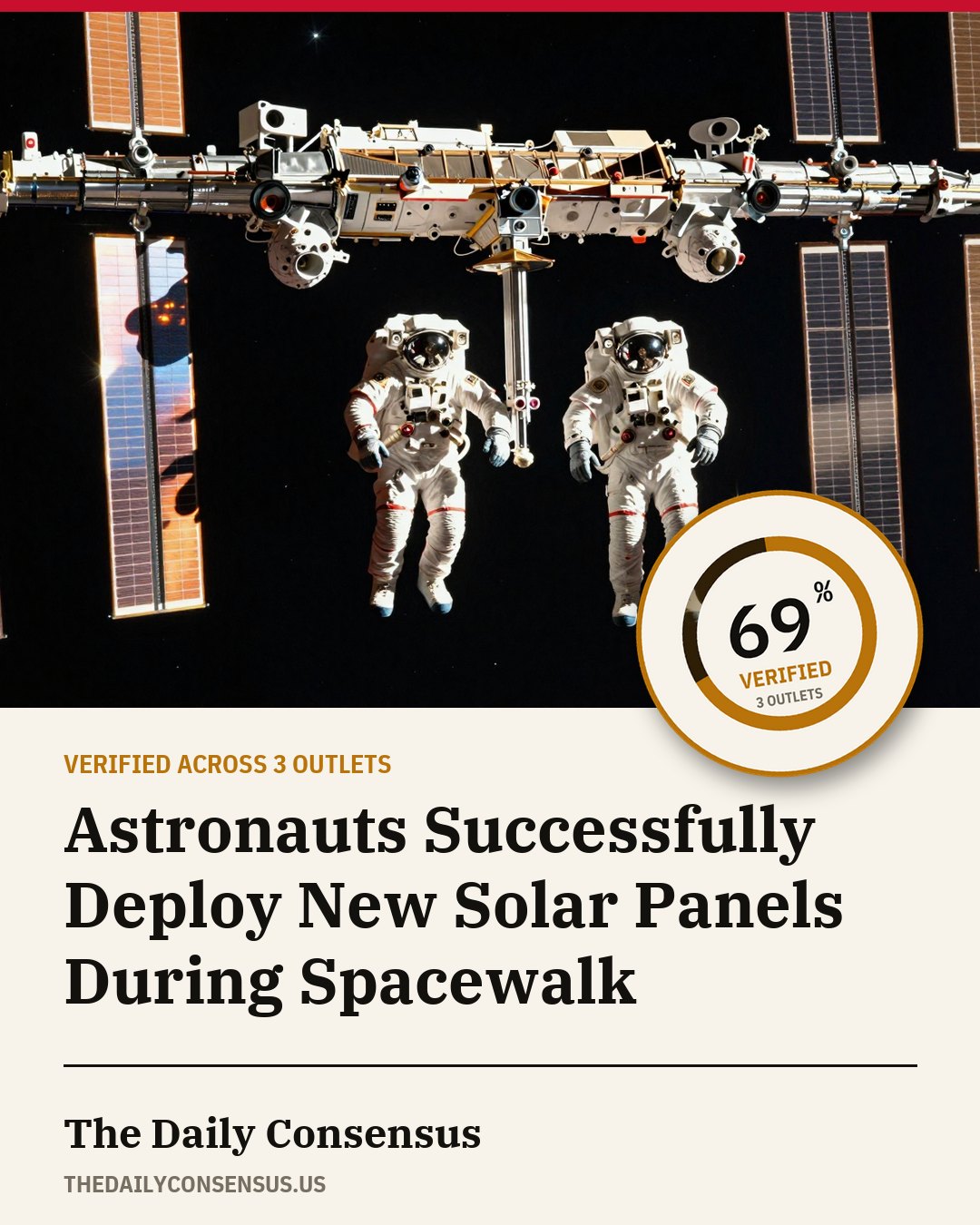
NASA's Anil Menon and CSA's Joshua Kutryk completed a seven-hour mission to enhance the International Space Station's power generation capabilities.
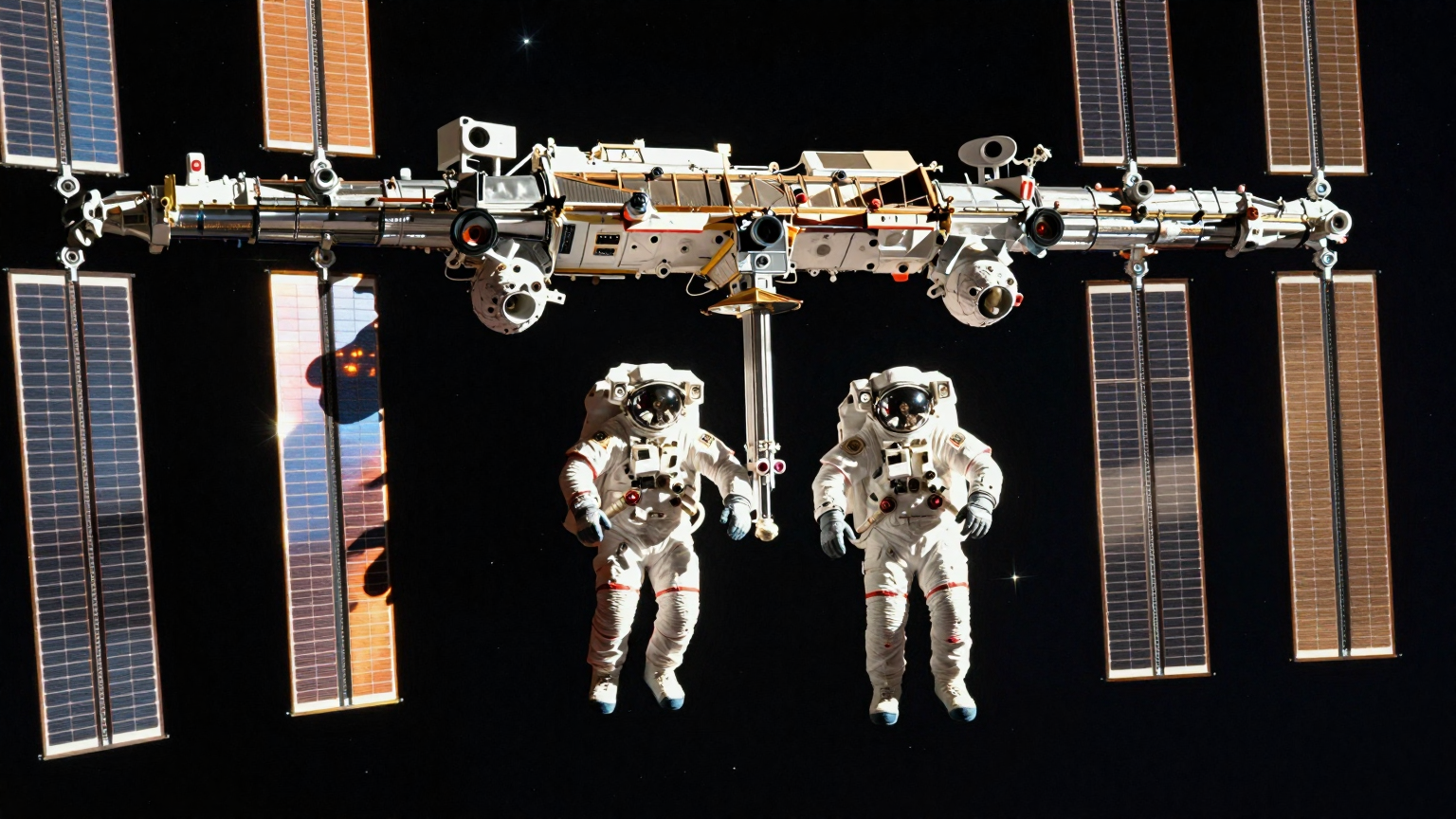
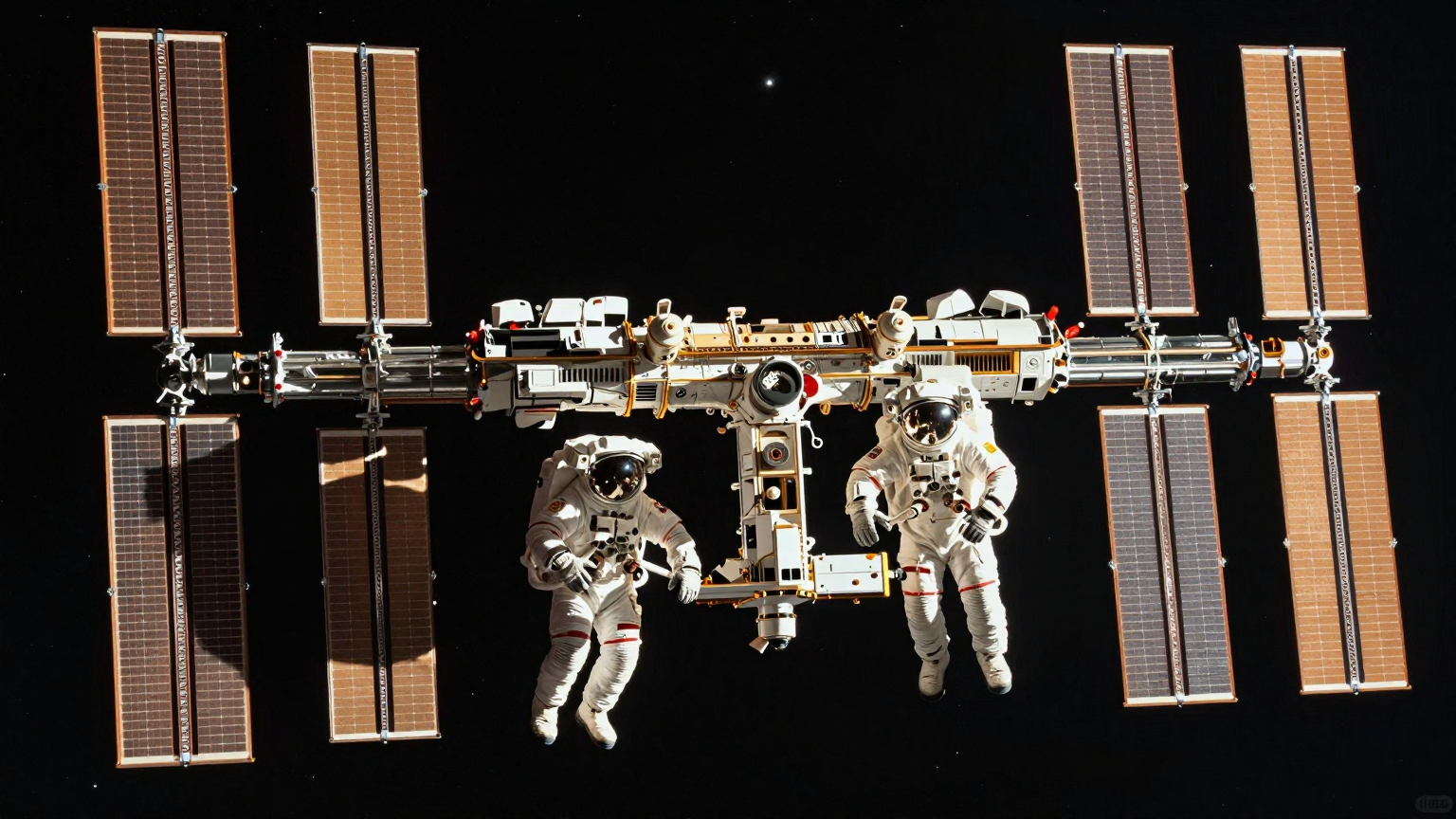
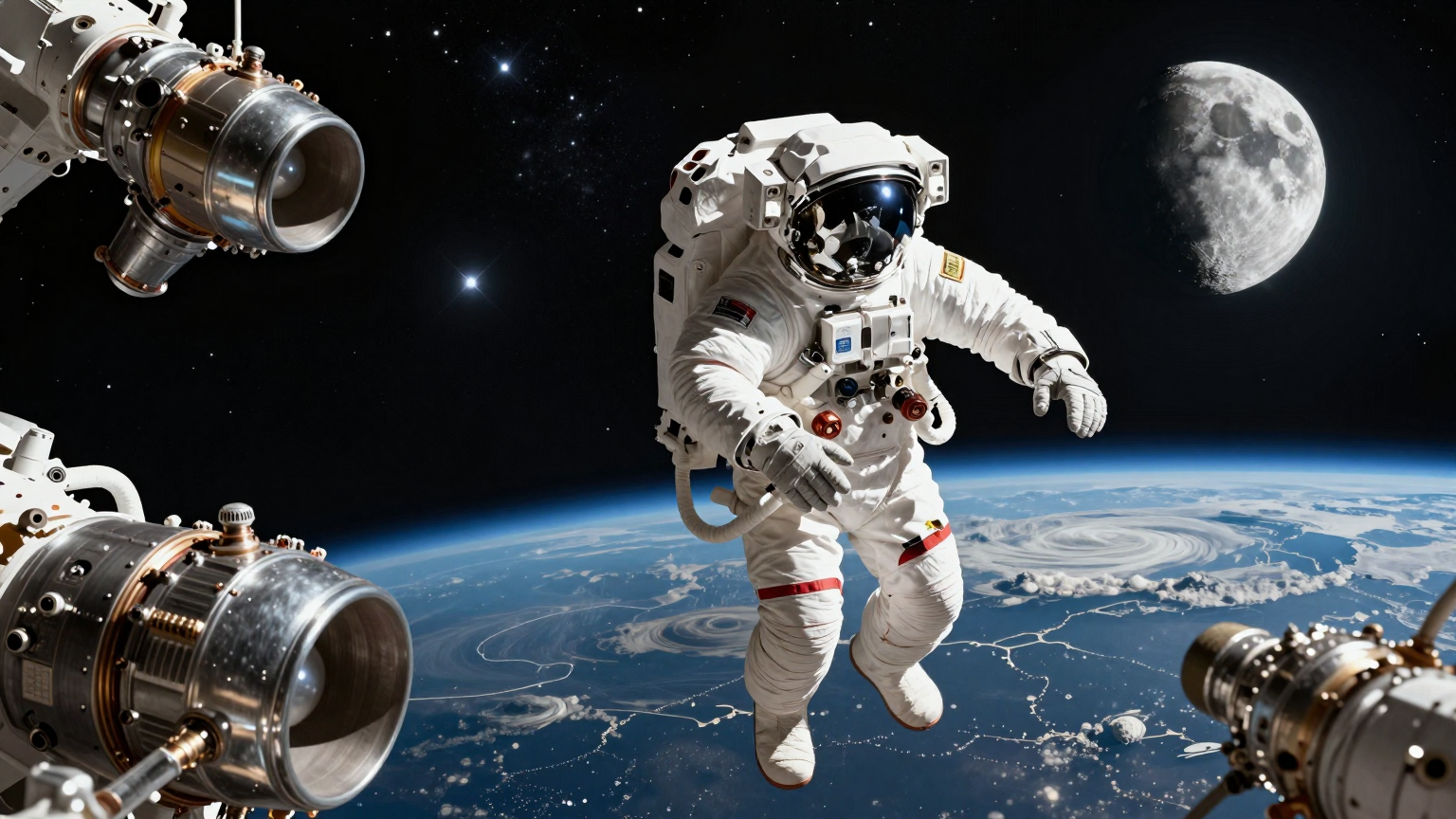
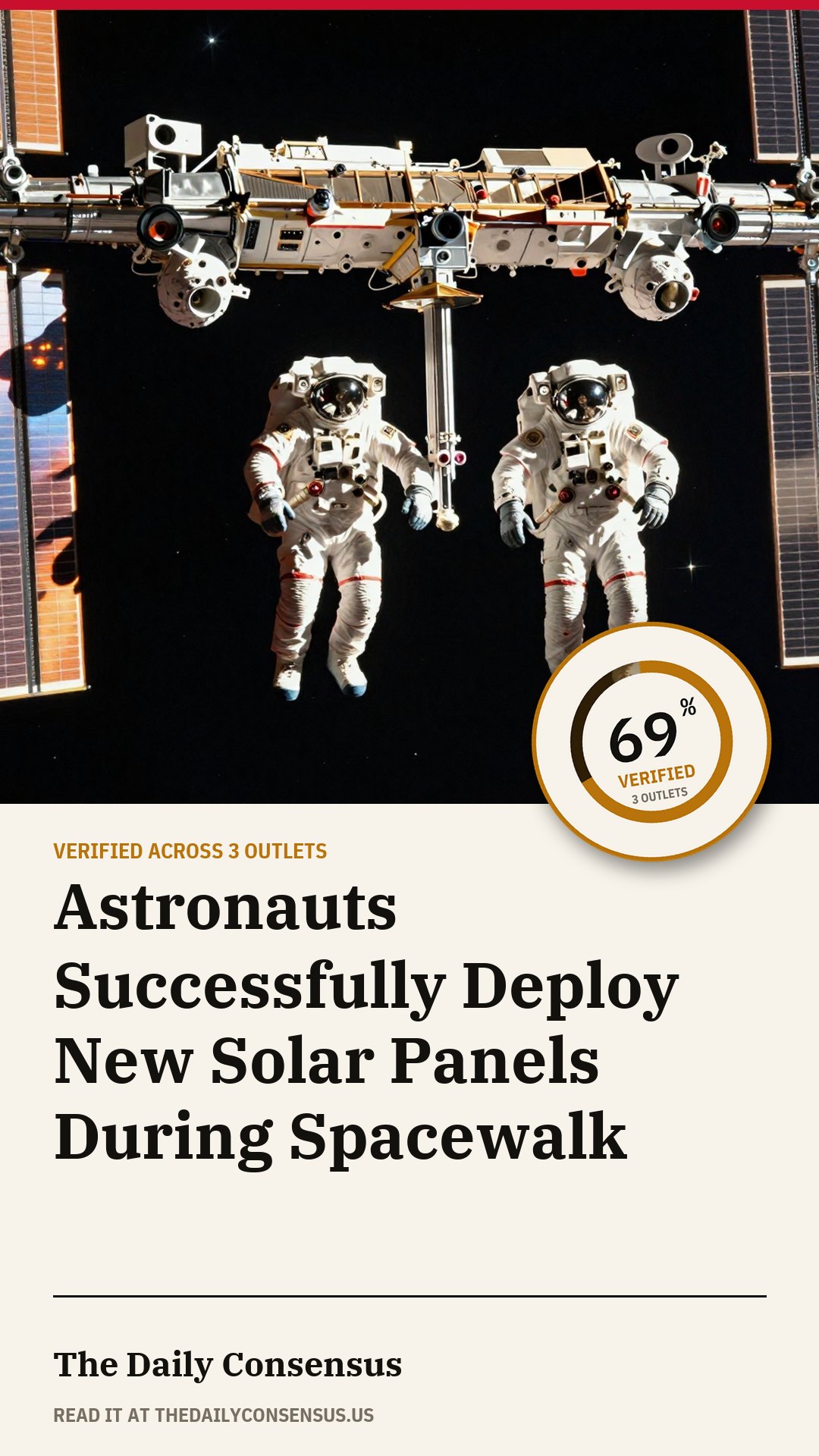
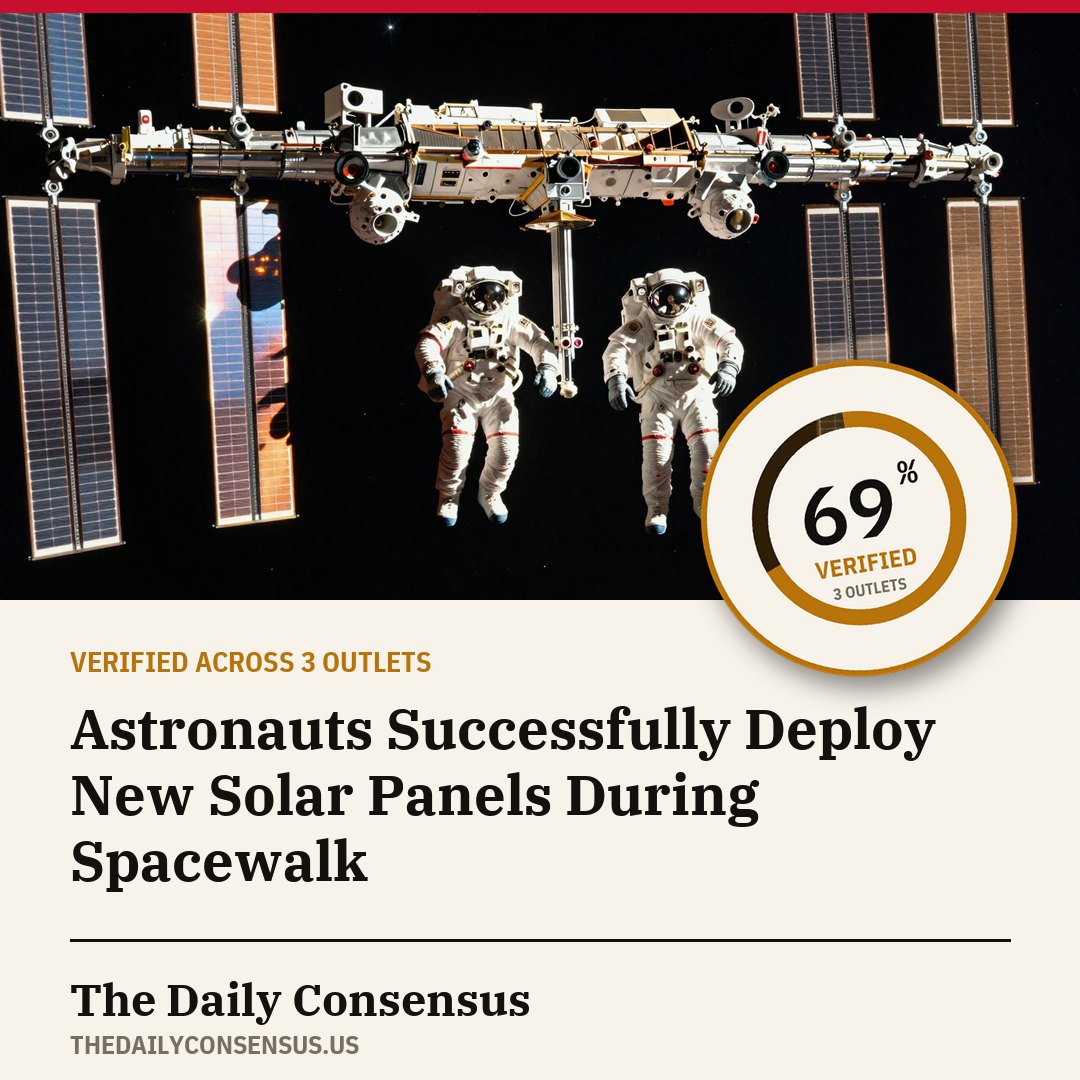
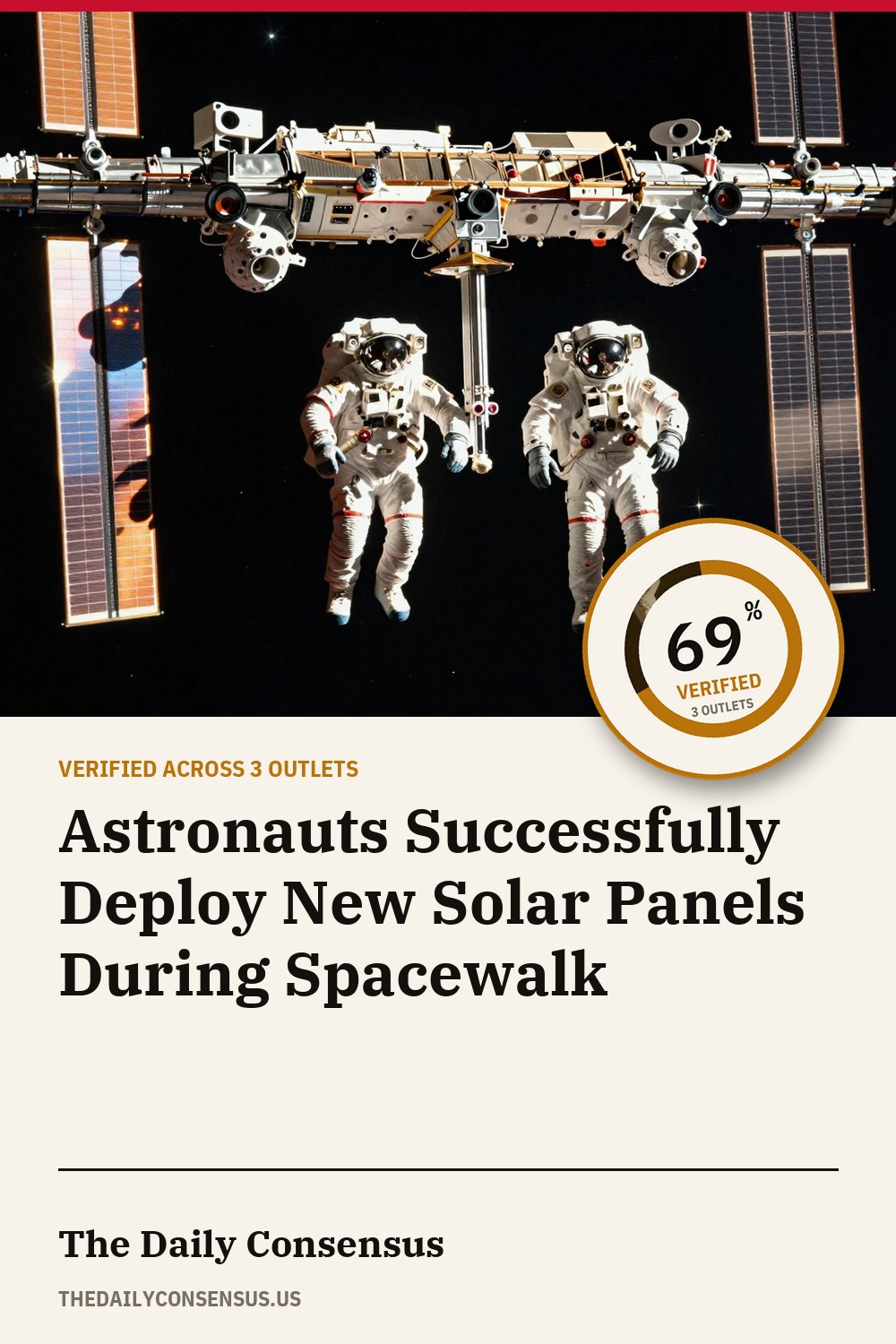
NASA astronaut Anil Menon and Canadian Space Agency astronaut Joshua Kutryk recently embarked on a spacewalk to install and deploy an International Space Station Roll-Out Solar Array (IROSA), a move aimed at boosting the station’s power output. According to reports, the duo spent 7 hours and 11 minutes outside the ISS, successfully unfurling the new solar array which is expected to generate approximately 8 kilowatts of electricity 23.
The installation of the IROSA marks a significant step in enhancing the power generation capabilities of the International Space Station. The original solar wings, installed between 2000 and 2009, were designed to last 15 years, but now face partial shading from the newer arrays 2. This upgrade is crucial for maintaining and potentially expanding the station’s operations and research activities.
The spacewalk was deemed essentially flawless by NASA Mission Control, highlighting the smooth execution of the task 2. It was also noted that this was Menon's fourth spacewalk, while for Kutryk, it marked his inaugural venture into the vacuum of space 3.
Looking ahead, the astronauts have another spacewalk scheduled for November 5, 2026, where they will install the final solar array, completing the series of upgrades to the station's power system 23.
What We Know
- NASA astronaut Anil Menon and Canadian Space Agency astronaut Joshua Kutryk performed a spacewalk. 123
- The purpose of the spacewalk was to install and deploy an International Space Station Roll-Out Solar Array (IROSA). 12
- The spacewalk lasted 7 hours and 11 minutes. 23
- The astronauts are scheduled for another spacewalk on November 5, 2026, to install the final solar array. 23
- Each new solar panel generates around 8 kilowatts of electricity. 2
- The original solar wings were installed between 2000 and 2009. 2
- The new solar panels are mounted in front of the original panels, partly shading them. 2
- The spacewalk was described as 'essentially flawless' by NASA Mission Control. 2
- This was Menon's fourth spacewalk and Kutryk's first. 3

Powered by Quantum Forge Robotics with Jessi AI Intelligence
Verification report
- confirmed
NASA astronaut Anil Menon and Canadian Space Agency astronaut Joshua Kutryk performed a spacewalk.
93% · supported by 3 - likely
The purpose of the spacewalk was to install and deploy an International Space Station Roll-Out Solar Array (IROSA).
73% · supported by 2, contradicted by 1 - unverified
The astronauts installed and unfurled the seventh of eight new solar panels for the International Space Station.
51% · supported by 1, contradicted by 1 - unverified
The new solar panels will increase the station's power from 160 kilowatts to approximately 215 kilowatts.
51% · supported by 1, contradicted by 1 - unverified
The new solar arrays will increase power generation capability by up to 30 percent.
51% · supported by 1, contradicted by 1 - likely
The spacewalk lasted 7 hours and 11 minutes.
85% · supported by 2 - likely
The astronauts are scheduled for another spacewalk on November 5, 2026, to install the final solar array.
85% · supported by 2 - likely
Each new solar panel generates around 8 kilowatts of electricity.
71% · supported by 1 - likely
The original solar wings, designed to last 15 years, were installed between 2000 and 2009 by space shuttles.
71% · supported by 1 - likely
The new solar panels are mounted in front of the original panels, partly shading them.
71% · supported by 1 - likely
The spacewalk was described as 'essentially flawless' by NASA Mission Control.
71% · supported by 1 - likely
This was Menon's fourth spacewalk and Kutryk's first.
70% · supported by 1