NASA Astronauts Complete Key Spacewalks for ISS Solar Array Upgrade
Two spacewalks by NASA and CSA astronauts have brought the International Space Station closer to its goal of increasing power capacity.
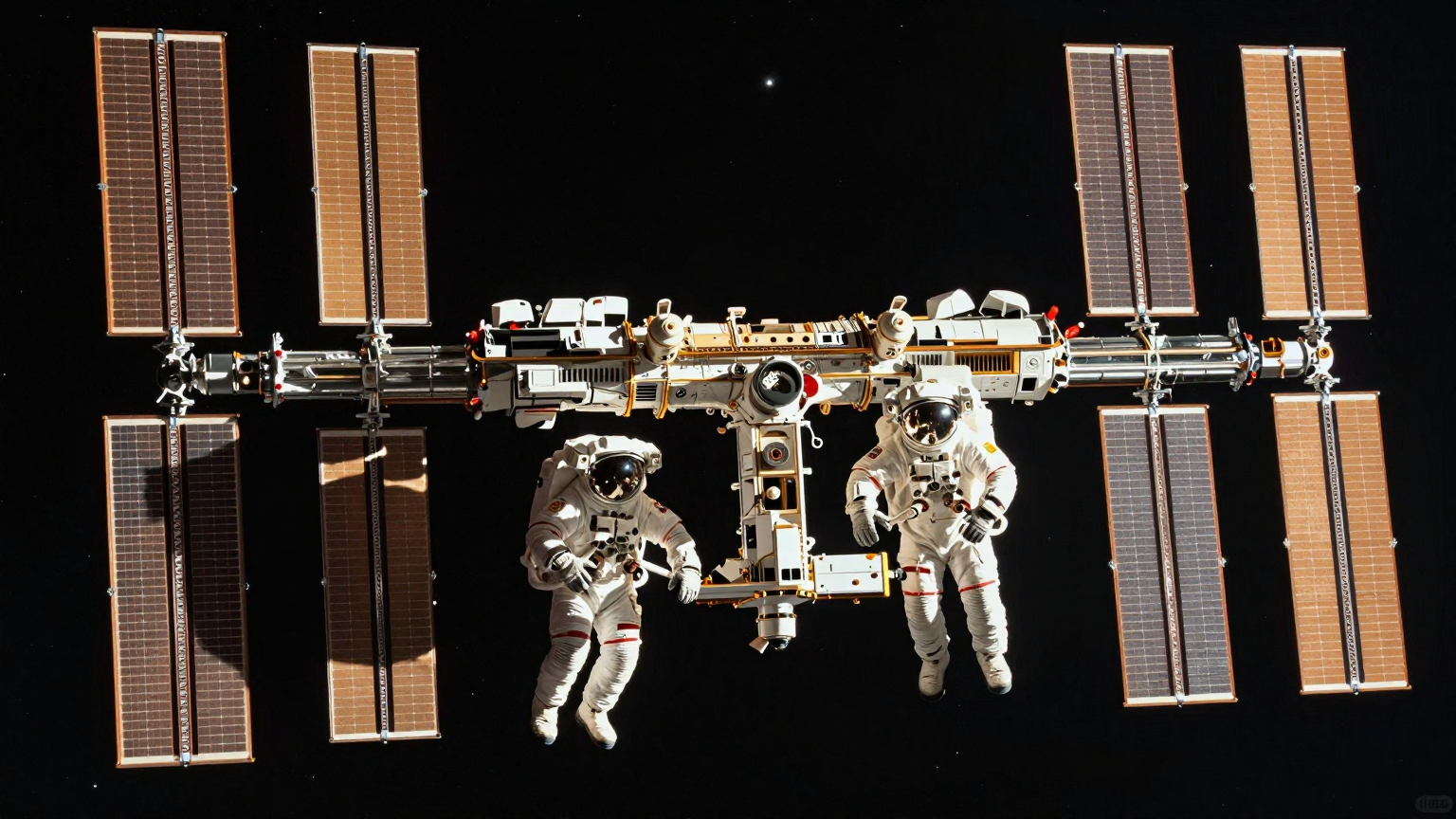
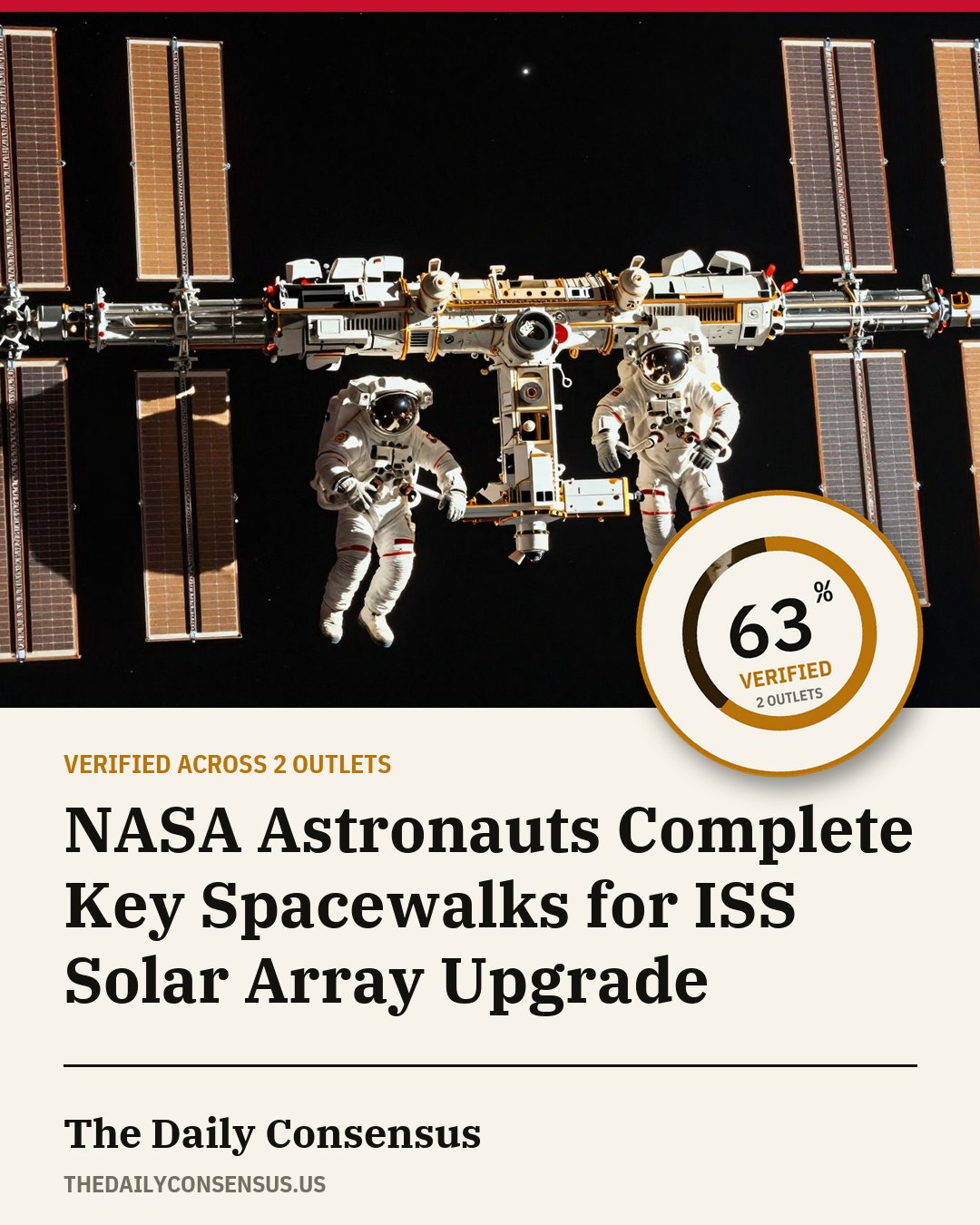
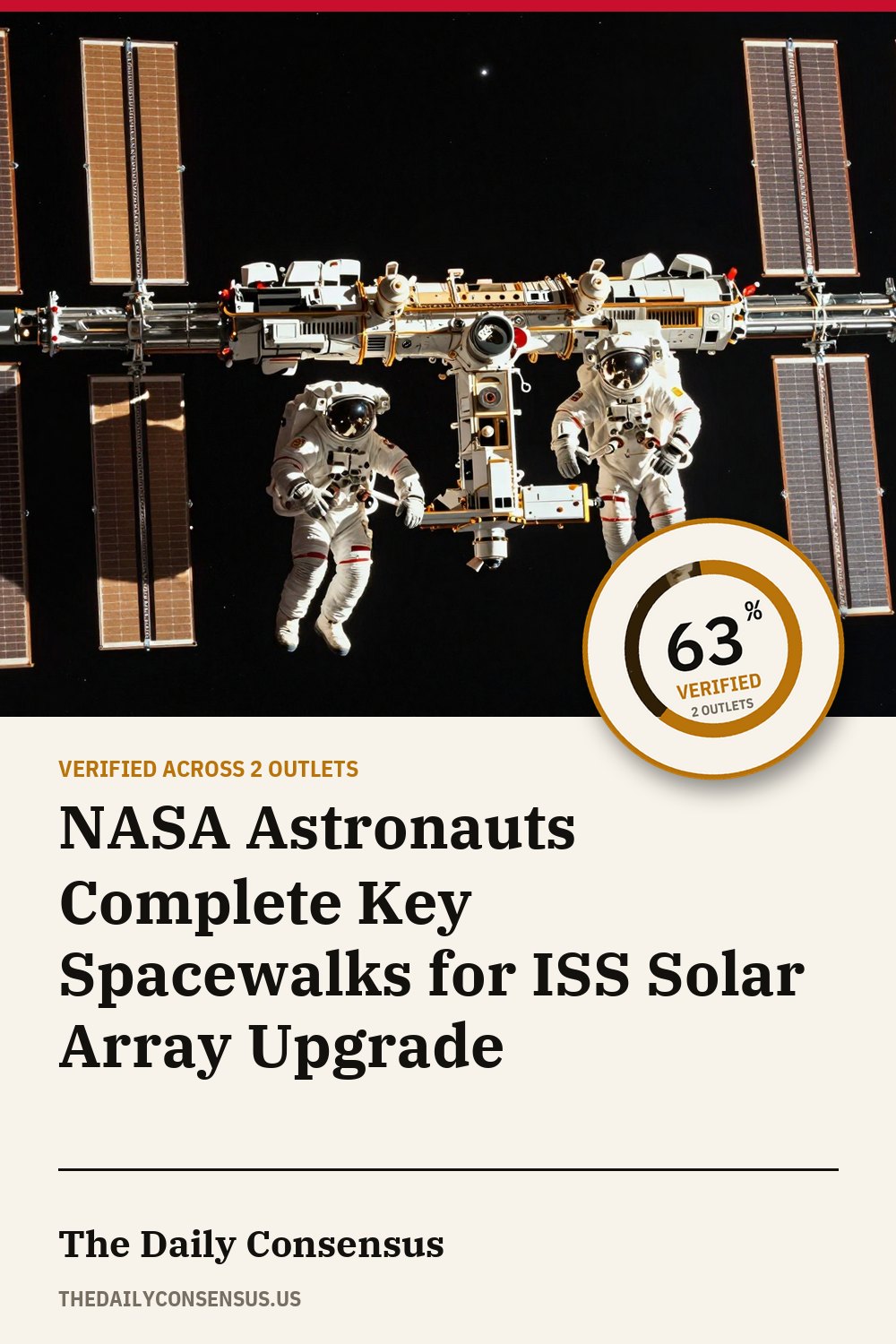
In a significant step towards enhancing the power capabilities of the International Space Station (ISS), two astronauts recently completed crucial spacewalks to install a roll-out solar blanket. This latest addition is part of a series of upgrades aimed at boosting the station’s total power output to around 215 kilowatts 12.
The spacewalks, carried out by NASA astronaut Anil Menon and Canadian Space Agency (CSA) astronaut Joshua Kutryk, involved the meticulous installation of the new solar array components 12. These arrays, which were delivered to the ISS via a SpaceX Cargo Dragon capsule, represent a substantial improvement over the existing solar panels, offering greater efficiency and reliability 12.
This enhancement is particularly important as it ensures that the ISS can continue to support advanced scientific research and technological experiments, while also accommodating future crew members and visitors 12. With these upgrades, the station will be better equipped to handle increased electrical demands from additional modules and equipment, potentially extending its operational lifespan and enabling more ambitious missions in the future.
What we know
- - Two astronauts performed a spacewalk to install a roll-out solar blanket on the ISS 12
- - The astronauts were NASA's Anil Menon and Canadian Space Agency's Joshua Kutryk 12
- - The total power capability of the station will increase to approximately 215 kilowatts with the installation of the final two solar arrays 12
- - The new solar arrays were delivered to the station by a SpaceX Cargo Dragon capsule 12


Powered by Quantum Forge Robotics with Jessi AI Intelligence
Verification report
- confirmed
Two astronauts performed a spacewalk to install a roll-out solar blanket on the International Space Station.
85% · supported by 2 - confirmed
The astronauts were NASA's Anil Menon and Canadian Space Agency's Joshua Kutryk.
85% · supported by 2 - confirmed
The total power capability of the station will increase to approximately 215 kilowatts with the installation of the final two solar arrays.
85% · supported by 2 - confirmed
The new solar arrays were delivered to the station by a SpaceX Cargo Dragon capsule.
85% · supported by 2 - unverified
The spacewalk took place on October 26, 2026, and lasted for 7 hours and 11 minutes.
50% · supported by 1, contradicted by 1 - unverified
The new solar array added eight kilowatts to the station's power capability.
50% · supported by 1, contradicted by 1 - unverified
The original arrays were generating about 152 kilowatts of power before the new arrays were installed.
50% · supported by 1, contradicted by 1 - unverified
The new solar arrays will increase the International Space Station's power generation capability by up to 30%.
50% · supported by 1, contradicted by 1 - unverified
The arrays will raise the station's available power from 160 kilowatts to about 215 kilowatts.
50% · supported by 1, contradicted by 1 - unverified
The spacewalkers completed additional preparatory tasks for the next spacewalk scheduled for November 5, 2026.
50% · supported by 1, contradicted by 1 - unverified
The robot arm, operated by ground controllers, assisted in positioning the solar arrays for installation.
50% · supported by 1, contradicted by 1 - unverified
The spacewalk began in orbital darkness to safely connect the new array to the power circuits.
50% · supported by 1, contradicted by 1 - unverified
The solar arrays deploy using stored energy, similar to a tape measure unwinding.
50% · supported by 1, contradicted by 1 - unverified
Each IROSA assembly weighs approximately 750 pounds.
50% · supported by 1, contradicted by 1 - unverified
During the October 29 spacewalk, Menon will use the station's robotic arm to transport the array to its installation site.
50% · supported by 1, contradicted by 1 - unverified
The arrays will unroll on their own over about 10 minutes using energy stored in carbon-fiber composite booms.
50% · supported by 1, contradicted by 1