Animal Bones Reveal Insights into Social Lives of Ancient Foragers in Malawi
Archaeologists have uncovered over 13,000 bone fragments in Malawi, shedding light on the social structures and hunting habits of ancient foragers.

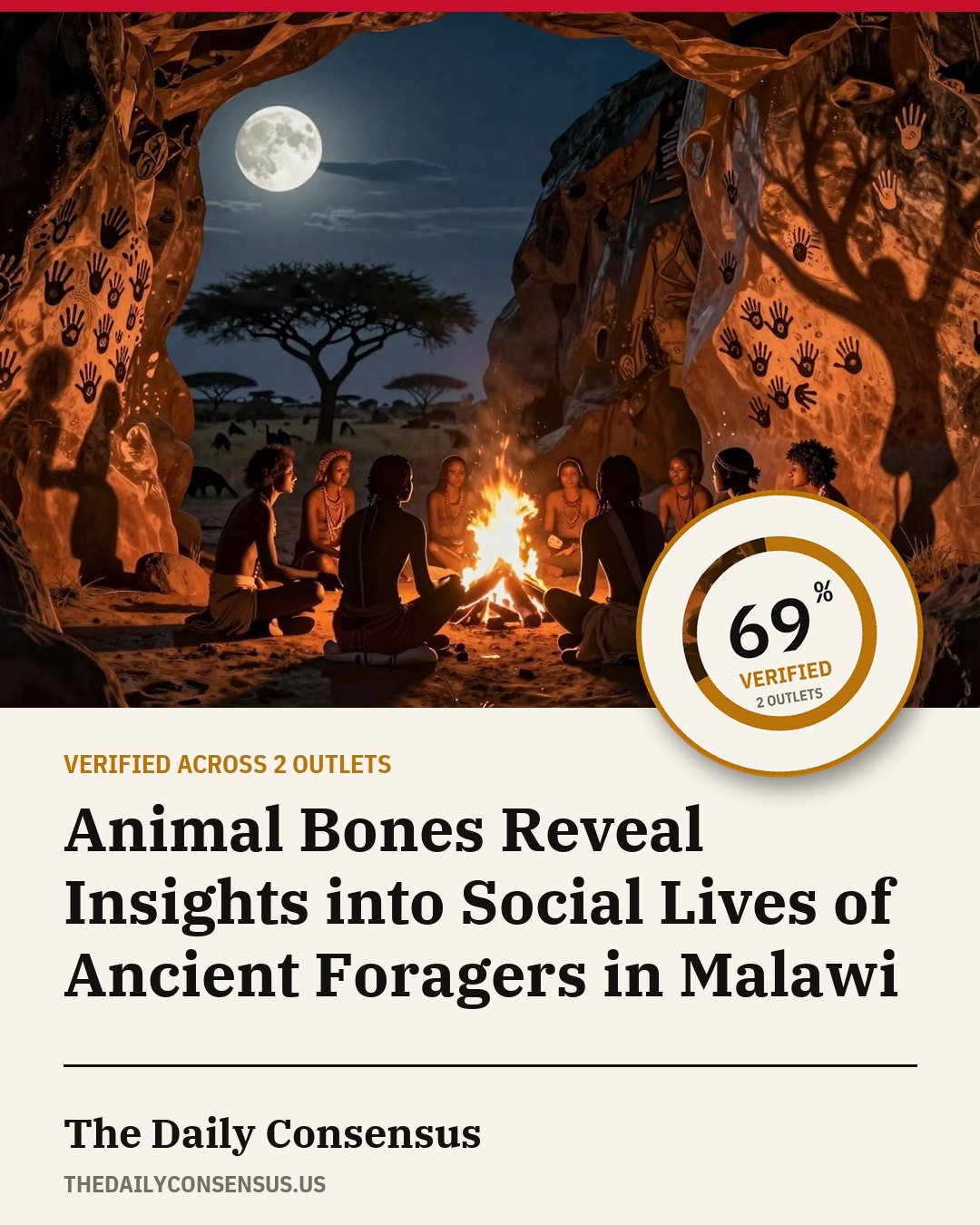
Archaeologists have made a significant discovery in Malawi, where over 13,000 individual bone fragments have been identified, providing valuable insights into the social lives and hunting practices of ancient foragers who inhabited the area some 21,000 years ago. 12
The findings, reported by researchers, indicate that these early inhabitants relied primarily on foraging for their sustenance, gathering food from wild plants and animals. This lifestyle is likely to have shaped their social dynamics and interactions within their community. 12
A notable aspect of the research is the evidence suggesting in-group cooperation and possibly shared identity among the foragers. This implies that the ancient people may have had a strong sense of community and worked together to secure resources. 12
Moreover, the analysis of the bone fragments reveals that relatedness among individuals decreased rapidly as distance from the sites increased, pointing towards a 'local' cultural group rather than a widespread one. This suggests that the foragers maintained a tight-knit community with distinct boundaries. 12
The types of animals represented by the bones provide further clues about the foragers' diet and hunting patterns. Most of the bones belonged to smaller animals such as antelopes, hares, and monkeys, indicating that larger prey like zebras and rhinoceroses were less common in their diet. This observation supports the idea that the foragers hunted closer to home and brought back entire carcasses, rather than relying on distant or larger game. 12
Interestingly, the high degree of fragmentation observed in the animal bones suggests that the foragers faced periods of food scarcity, necessitating efficient use of all parts of the animals they hunted. 12
However, the archaeological record does not show any evidence of persistent violent encounters or large, stable settlements, which could imply a more fluid and adaptable way of life for these ancient communities. 12
These findings contribute significantly to our understanding of how ancient foragers lived and interacted with each other and their environment, offering a glimpse into the social structures and daily lives of people who lived thousands of years ago in what is now Malawi.
What we know
- Ancient people in Malawi lived by foraging food from wild plants and animals. 12
- Over 13,000 individual bone fragments were identified, spanning 21,000 years of human occupation. 12
- Evidence shows in-group cooperation and possibly shared identity among foragers. 12
- Relatedness among individuals decreased rapidly as distance from the sites increased, indicating a 'local' cultural group. 12
- Most of the bones belonged to small animals such as antelopes, hares, and monkeys, indicating large prey like zebras and rhinoceroses were uncommon. 12
- The bones suggest that foragers hunted close to home and brought back entire carcasses. 12
- Animal bones were very fragmented, suggesting food scarcity. 12
- No evidence was found for persistent violent encounters or large, stable settlements. 12


Powered by Quantum Forge Robotics with Jessi AI Intelligence
Verification report
- likely
Ancient people in Malawi lived by foraging food from wild plants and animals.
71% · supported by 2 - likely
Over 13,000 individual bone fragments were identified, spanning 21,000 years of human occupation.
71% · supported by 2 - likely
Evidence shows in-group cooperation and possibly shared identity among foragers.
71% · supported by 2 - likely
Relatedness among individuals decreased rapidly as distance from the sites increased, indicating a 'local' cultural group.
71% · supported by 2 - likely
Most of the bones belonged to small animals such as antelopes, hares, and monkeys, indicating large prey like zebras and rhinoceroses were uncommon.
71% · supported by 2 - likely
The bones suggest that foragers hunted close to home and brought back entire carcasses.
71% · supported by 2 - likely
Animal bones were very fragmented, suggesting food scarcity.
71% · supported by 2 - likely
No evidence was found for persistent violent encounters or large, stable settlements.
71% · supported by 2 - unverified
Archaeologists studied animal bones and stone tools from Hora 1, a shelter in northern Malawi, to understand early human life from 19,000 to 10,000 years ago.
50% · supported by 1, contradicted by 1