South African Citizen Scientists Uncover Hidden Urban World for Solitary Bees
Citizen scientists in South Africa have discovered hidden urban areas with accommodations for solitary bees, shedding light on the diversity of these lesser-known insects.
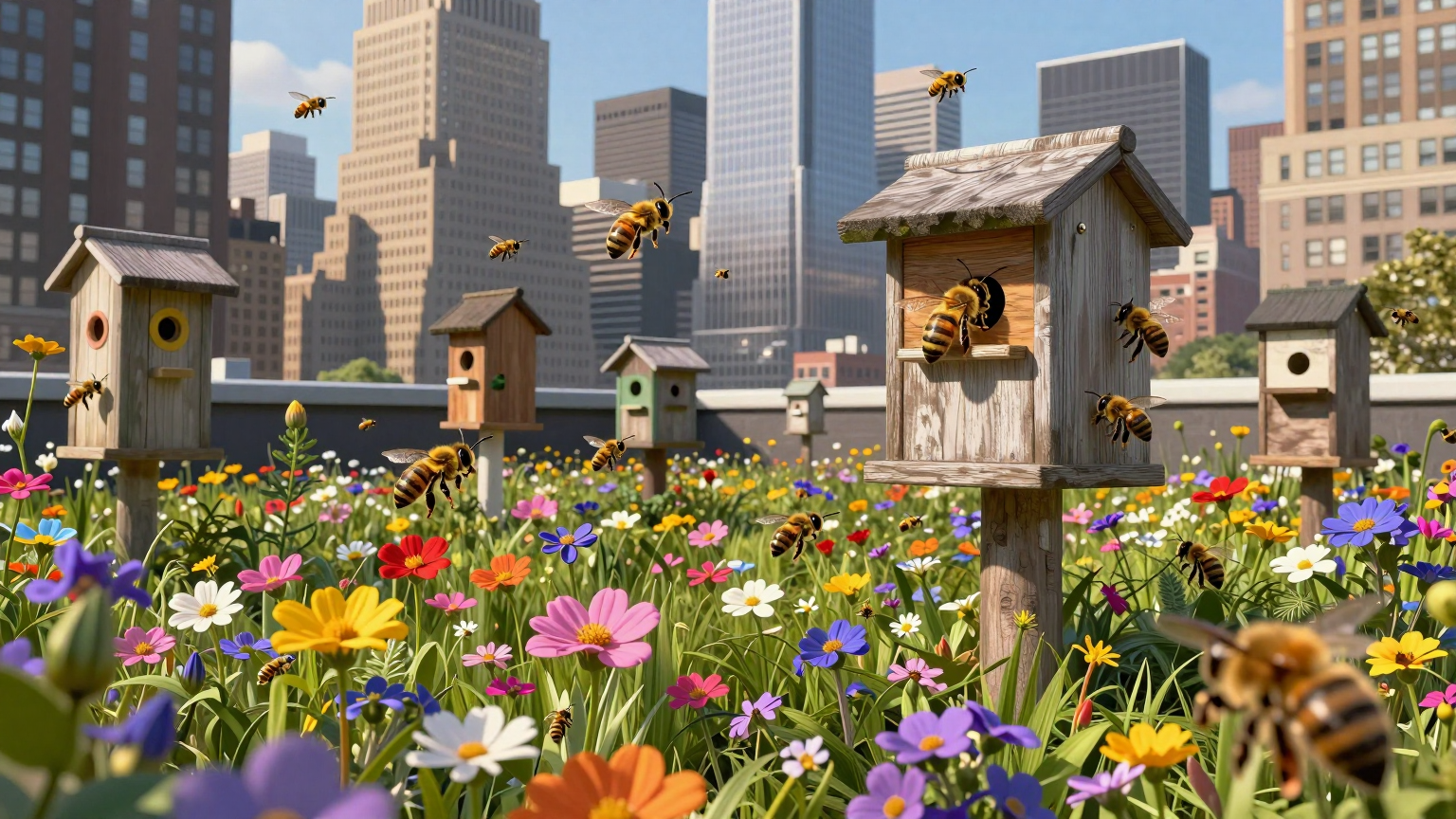
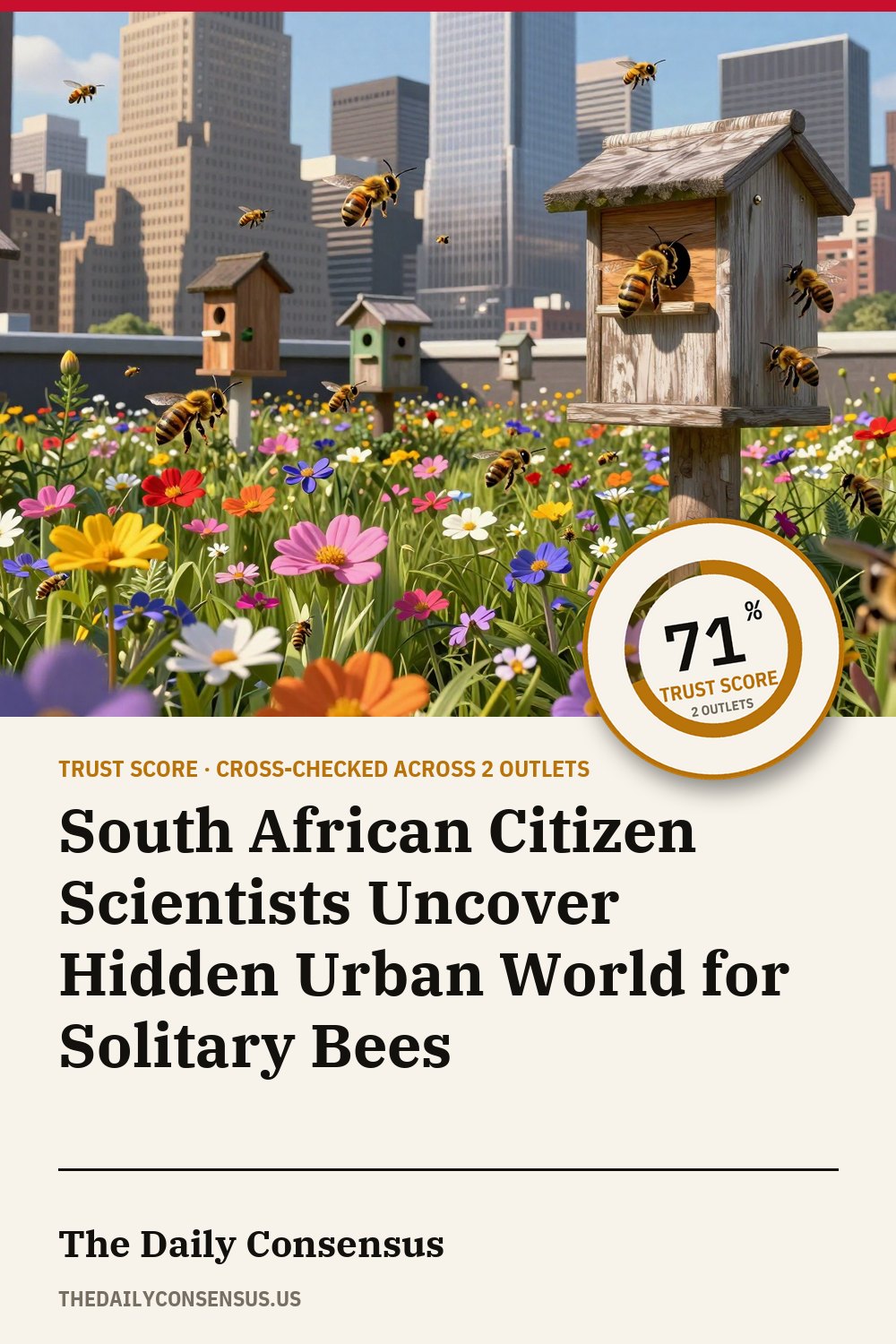
In a remarkable discovery, citizen scientists in South Africa have uncovered hidden urban areas with accommodations for solitary bees, revealing new insights into the diversity of these lesser-known insects. This finding, part of the UrbanBEE project, highlights the importance of studying solitary bees in urban environments, which are often overshadowed by the more familiar western honeybee.
The western honeybee, while widely recognized and extensively studied, represents just one species among the vast array of bee species found globally. With over 20,000 known species of bees worldwide, most of which are solitary and harder to track, the discovery of these bee-friendly urban spaces offers a unique opportunity to explore the lives of these less-studied creatures.
Johannesburg resident Celia Haupt is among the 347 participants in the UrbanBEE project, monitoring one of the 510 bee hotels distributed to volunteers. These bee hotels, which provide shelter for solitary bees, have been a focal point of the project since October 2025, with volunteers submitting weekly photos to document the occupancy and behavior of the bees.
South Africa boasts approximately 1,300 bee species, the majority of which are solitary. The UrbanBEE project, funded by the European Union’s Biodiversa+ partnership, aims to understand how urban settings influence the diversity of solitary bees. By comparing bee hotels across African and European cities, researchers hope to discern the impact of various environmental factors on bee populations.
Participants in the project not only contribute to scientific knowledge but also gain a deeper understanding of bee species and their nesting habits. They learn to identify different bee species and observe how they use materials such as mud, plant fibers, or petals to seal their nests. This hands-on experience fosters a sense of friendly competition among participants, as they vie to see whose bee hotel is the most popular.
Moreover, the project has sparked a change in gardening practices among participants, encouraging them to create more bee-friendly habitats in their local communities. This initiative underscores the potential for citizen science to bridge the gap between urban living and natural biodiversity, fostering a richer understanding of the ecological roles played by solitary bees in our cities.
What we know
- - Citizen scientists in South Africa discovered hidden urban areas with accommodations for solitary bees. 12
- - The UrbanBEE project explores how cities influence solitary bee diversity. 2
- - The western honeybee is one of the most studied insect species globally. 1
- - There are over 20,000 known species of bees worldwide. 1
- - Most bee species are solitary and not as easy to find or track compared to the western honeybee. 1
- - Celia Haupt monitors one of 510 bee hotels distributed to volunteers. 2
- - South Africa has approximately 1,300 bee species, mostly solitary. 2
- - The UrbanBEE project involves 347 Johannesburg residents and is funded by the European Union’s Biodiversa+ partnership. 2
- - Volunteers submit weekly photos of bee hotels since October 2025. 2
- - The project compares bee hotels across African and European cities to understand the impact of various factors on bee diversity. 2
- - Participants learn to recognize different bee species and their nesting behaviors. 2
- - Some bee species use materials like mud, plant fibers, or petals to seal their nests. 2
- - Friendly competition exists among participants regarding bee hotel occupancy. 2
- - The project fosters connections between participants and changes gardening practices. 2

Powered by Quantum Forge Robotics with Jessi AI Intelligence
Trust Score report
- likely
Citizen scientists in South Africa discovered hidden urban areas with accommodations for solitary bees.
72% · supported by 2 - likely
UrbanBEE project explores how cities influence solitary bee diversity.
71% · supported by 1 - likely
The western honeybee is one of the most studied insect species globally.
72% · supported by 1 - likely
There are over 20,000 known species of bees worldwide.
72% · supported by 1 - likely
Most bee species are solitary and not as easy to find or track compared to the western honeybee.
72% · supported by 1 - likely
Celia Haupt, a Johannesburg resident, monitors one of 510 bee hotels distributed to volunteers.
71% · supported by 1 - likely
South Africa has approximately 1,300 bee species, mostly solitary.
71% · supported by 1 - likely
UrbanBEE involves 347 Johannesburg residents and is funded by the European Union’s Biodiversa+ partnership.
71% · supported by 1 - likely
Volunteers submit weekly photos of bee hotels since October 2025.
71% · supported by 1 - likely
The project compares bee hotels across African and European cities to understand the impact of various factors on bee diversity.
71% · supported by 1 - likely
Participants learn to recognize different bee species and their nesting behaviors.
71% · supported by 1 - likely
Some bee species use materials like mud, plant fibers, or petals to seal their nests.
71% · supported by 1 - likely
Friendly competition exists among participants regarding bee hotel occupancy.
71% · supported by 1 - likely
The project fosters connections between participants and changes gardening practices.
71% · supported by 1