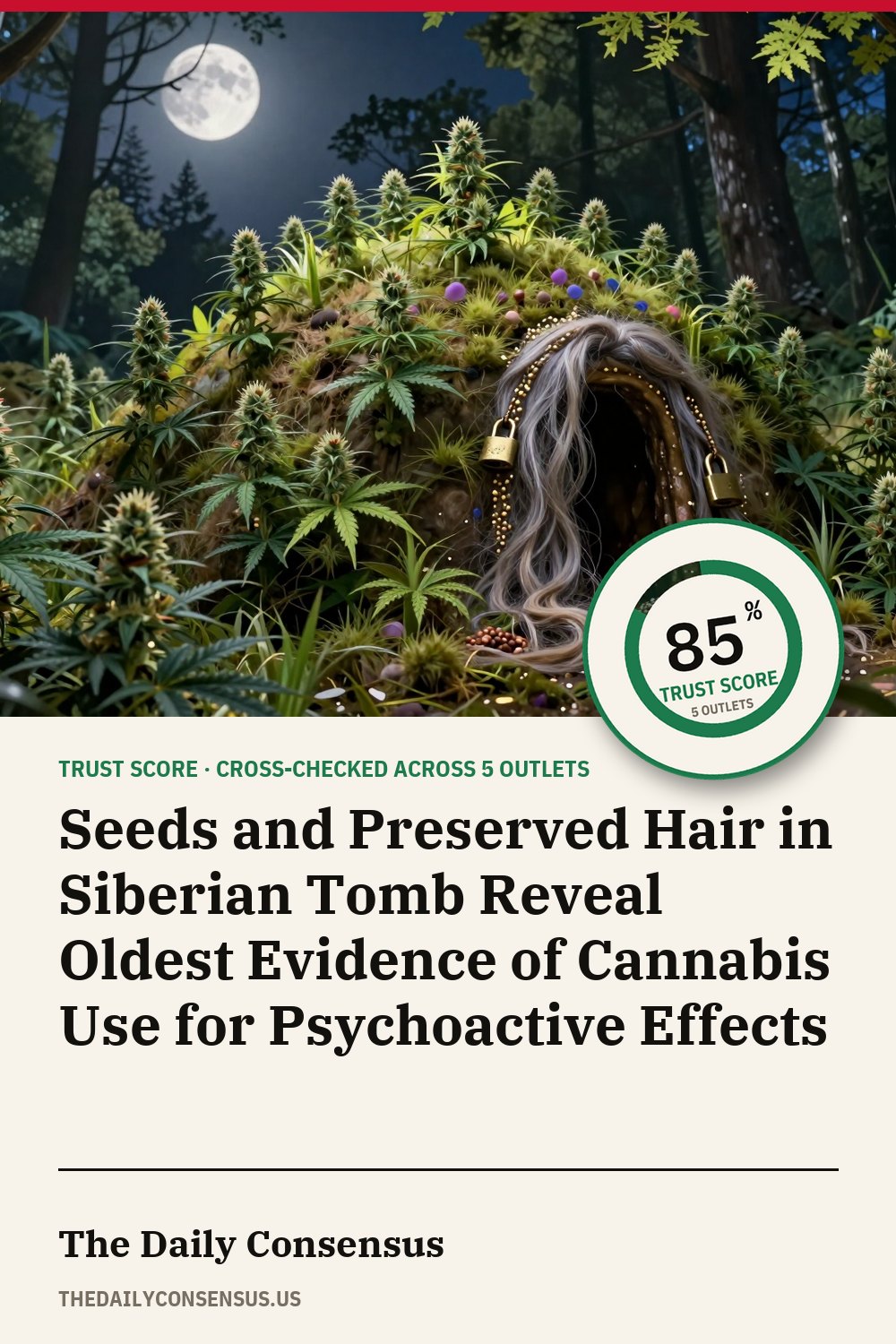
Seeds and Preserved Hair in Siberian Tomb Reveal Oldest Evidence of Cannabis Use for Psychoactive Effects
Archaeologists have uncovered evidence suggesting that cannabis was used for its mind-altering properties over 2,800 years ago in what is now southern Siberia.
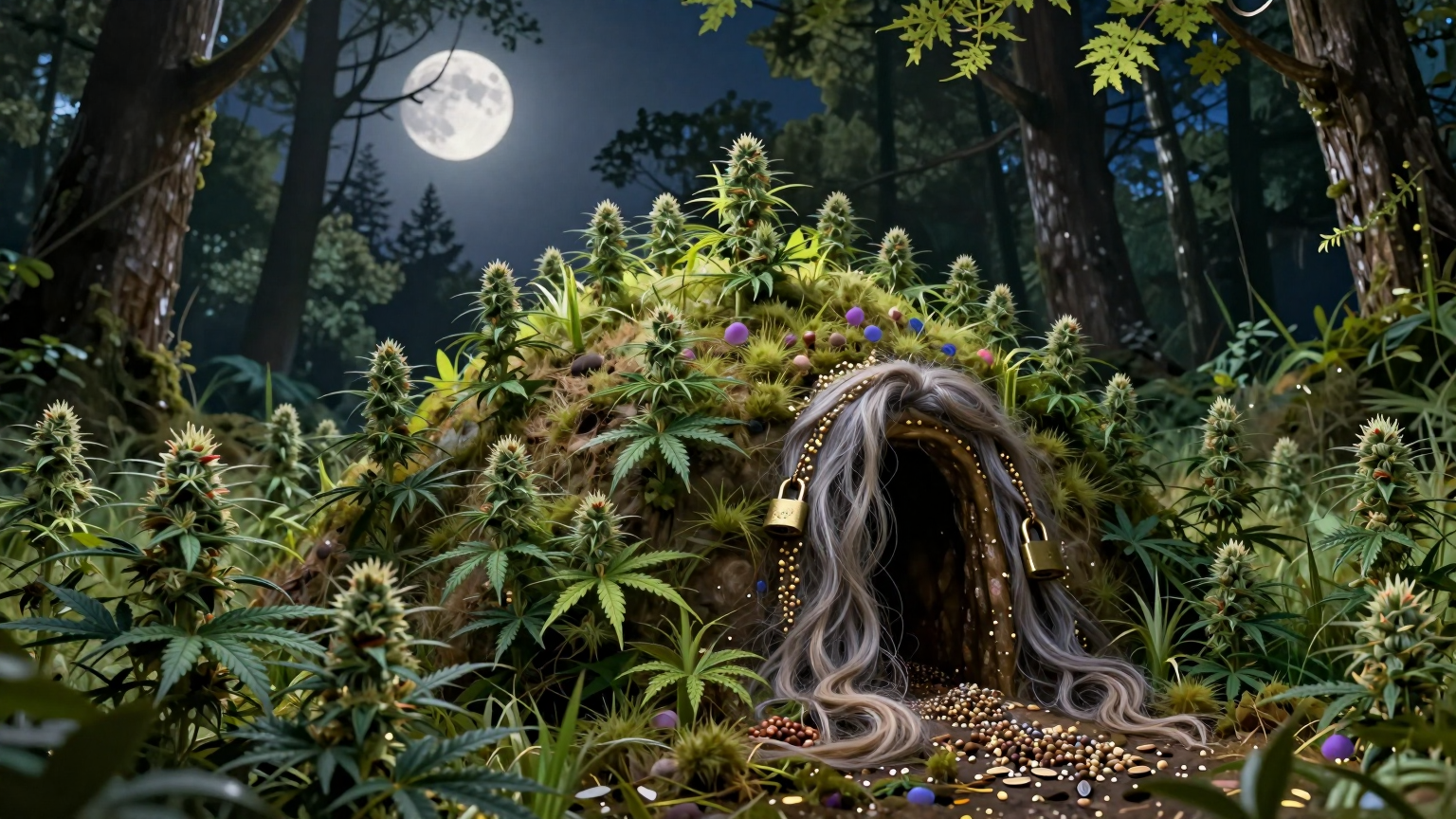
Archaeologists have made a groundbreaking discovery in Siberia, where they found seeds and preserved hair in a monumental tomb that point to the earliest known use of cannabis for its psychoactive effects. The find, which dates back approximately 2,800 years, provides new insights into ancient practices and rituals involving the plant.
The seeds and hair samples, discovered in the Uyuk Valley of southern Siberia, show signs of cannabinol and tetrahydrocannabinol (THC), indicating that the individuals buried there had consumed cannabis for its psychoactive properties. This finding is significant because it pushes back the timeline for the use of cannabis for recreational or ritual purposes by several centuries.
The tomb itself is a fascinating structure, containing a log cabin-like building, one coffin, and the remains of multiple individuals alongside horse sacrifices. Inside, researchers found six elite individuals, mostly men with one woman, laid to rest in tree-trunk coffins within the mound. This elaborate burial arrangement suggests that these people held a special status in their society.
Interestingly, the tomb also yielded a substantial amount of cannabis seeds, with reports varying on the exact number. According to some sources, over 1,000 whole cannabis seeds and around 500 partial seeds were found, while others suggest nearly 1,000 whole seeds were discovered in the excavation trench at the center of the mound. These seeds, along with the hair samples, provide crucial evidence for the use of cannabis in this ancient community.
One theory posits that the use of cannabis may have served a practical purpose, such as calming individuals during human sacrifices or funeral rites. This hypothesis adds another layer of complexity to our understanding of how cannabis was integrated into the social and religious fabric of ancient Siberian societies.
While the exact date of the seeds and hair samples is somewhat debated, with estimates ranging from 800 to 760 B.C., the overall consensus among researchers is that these findings represent a significant milestone in the history of cannabis use.
What we know
- Archaeologists discovered seeds and preserved hair in a monumental tomb in Siberia. 12345
- The seeds and hair indicate the earliest known use of cannabis for its psychoactive effects. 12345
- This use of cannabis dates back approximately 2,800 years. 12345
- Hair samples from the grave showed signs of cannabinol and THC, indicating psychoactive use. 2345
- The tomb contained a log cabin-like structure, one coffin, and remains of multiple individuals and horse sacrifices. 2345
- The use of cannabis may have been to calm human sacrifice victims during funerals. 345
- The tomb is located in the Uyuk Valley of southern Siberia. 345
What remains unclear

Powered by Quantum Forge Robotics with Jessi AI Intelligence
Trust Score report
- confirmed
Archaeologists discovered seeds and preserved hair in a monumental tomb in Siberia.
97% · supported by 5 - confirmed
The seeds and hair indicate the earliest known use of cannabis for its psychoactive effects.
97% · supported by 5 - confirmed
This use of cannabis dates back approximately 2,800 years.
97% · supported by 5 - confirmed
Hair samples from the grave showed signs of cannabinol and THC, indicating psychoactive use.
97% · supported by 4 - confirmed
The tomb contained a log cabin-like structure, one coffin, and remains of multiple individuals and horse sacrifices.
97% · supported by 4 - confirmed
The use of cannabis may have been to calm human sacrifice victims during funerals.
93% · supported by 3 - confirmed
The tomb is located in the Uyuk Valley of southern Siberia.
93% · supported by 3 - likely
The seeds and hair samples were dated to between 800 and 760 B.C.
72% · supported by 2, contradicted by 1 - likely
Over 1,000 whole cannabis seeds and approximately 500 partial seeds were found in the tomb.
71% · supported by 2, contradicted by 1 - likely
Six elite individuals, mostly men with one woman, were buried in tree-trunk coffins within the mound.
71% · supported by 1 - disputed
Almost 1000 whole cannabis seeds were discovered in the excavation trench at the center of the mound.
29% · supported by 1, contradicted by 2
Sources & references
- PBS NewsHour — Seeds and preserved hair in tomb point to oldest signs of cannabis high 2,800 years ago, study suggests
- STAT — New evidence for ancient cannabis use
- Live Science — 2,800-year-old tomb in Siberia has evidence of the earliest use of cannabis — possibly as a way to calm human sacrifice victims
- New Scientist — Tomb in Siberia reveals humans were using cannabis 2800 years ago
- 404 Media — Oldest Evidence of Getting High on Cannabis Discovered In 2,800-Year-Old Tomb: ‘Absolutely Crazy’