ANC Plummets in Local Elections, Faces Major Losses Across South Africa
South Africa's ruling party, the African National Congress (ANC), has seen a significant drop in support following the local elections, losing its majority in six out of eight metropolitan regions.
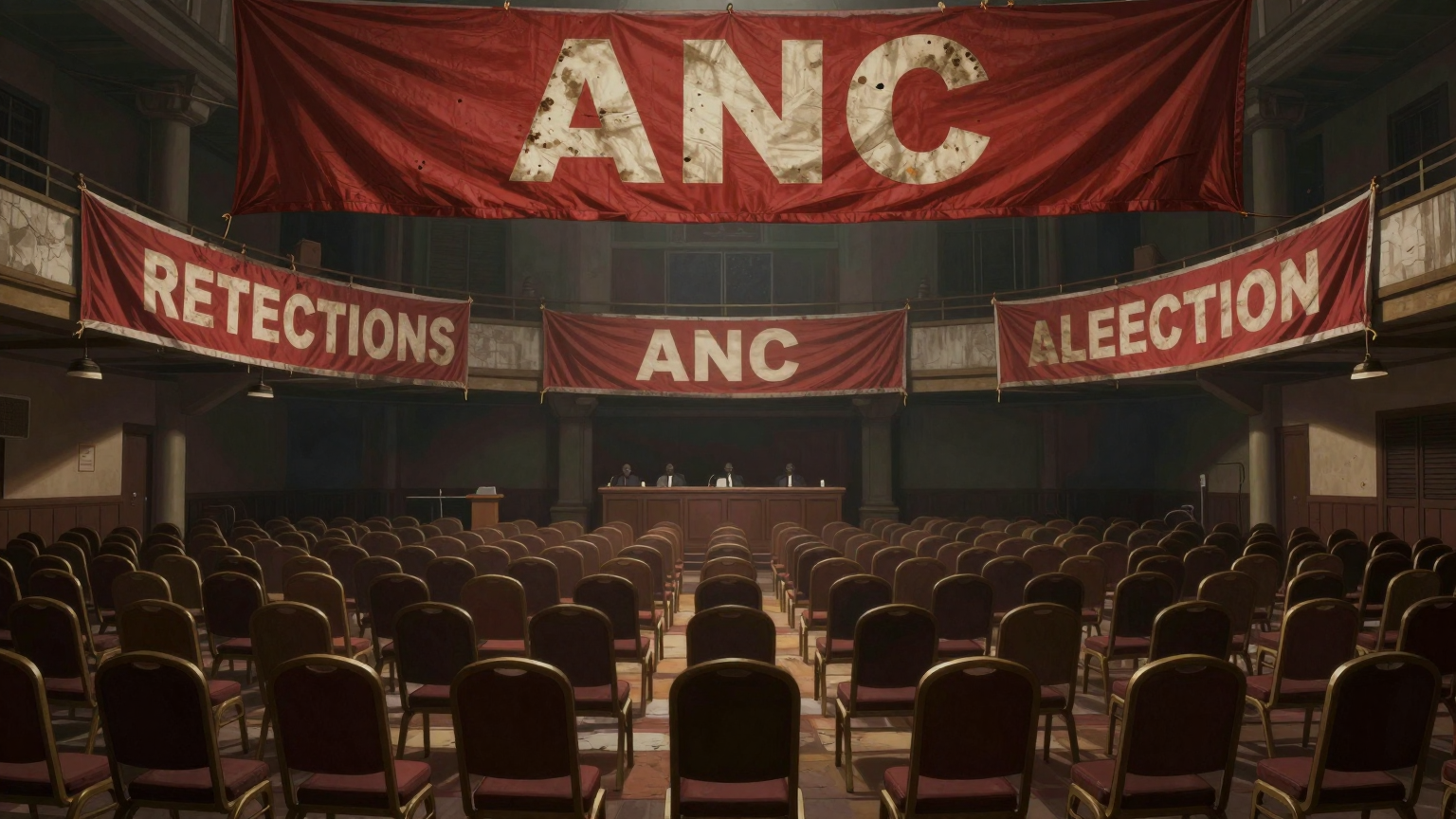
In a stark reversal of fortunes, South Africa's long-ruling African National Congress (ANC) has suffered a substantial decline in support, receiving just over 30% of the vote in recent local elections 12. This marks a notable shift from the party's previous standing, where it garnered over 45% of the national vote in the 2021 local government elections 2.
The ANC's performance has been described as 'catastrophic', with the party losing its majority in six of the eight metropolitan regions 1. This downturn can be traced back to the 2024 general election, where the ANC lost its absolute majority for the first time since 1994 1. The party's current predicament is attributed to a range of factors, including dissatisfaction among voters over water and electricity shortages, high unemployment, crime, and widespread corruption 1.
Cyril Ramaphosa, the ANC leader and South African president, acknowledged these 'municipal failures' in his weekly letter, highlighting the need for the party to address these pressing issues 1. Fikile Mbalula, the ANC Secretary-General, echoed this sentiment, stating that regaining public trust was essential for the party's future success 1.
The Democratic Alliance (DA), South Africa's main opposition party, secured 24% of the vote, coming in second place 1. The DA maintained control of Cape Town and performed strongly in Pretoria and Johannesburg, where it leads the governance of the latter city 12. The ANC now forms unity governments with the DA and smaller political parties in some cities, necessitating coalition rule 2.
Notably, the MK Party, led by former ANC leader Jacob Zuma, is currently leading in the eThekwini municipality, which includes Durban 2. This development underscores the fragmented nature of the political landscape in South Africa, with multiple parties vying for influence and control.
Political analysts suggest that voters are now making judgments based on performance rather than loyalty, indicating a potential shift in the traditional voting patterns that have long favoured the ANC 2. As the party grapples with its declining support, it faces the challenge of regaining the trust and favour of the electorate, a task made more complex by the presence of strong opposition and the ongoing issues faced by the country.
What We Know
- The ANC received just over 30% of the vote in South Africa's local elections 12
- The ANC lost its majority in six of the eight metropolitan regions 1
- The ANC's performance is described as 'catastrophic' 1
- The ANC's decline began after the 2024 general election 1
- The ANC received over 45% of the national vote in the 2021 local government elections 2
- Water and electricity shortages, high unemployment, crime, and corruption were significant issues for voters 1
- The DA came second with 24% of the vote and leads in Johannesburg 12
- The MK Party is leading in the eThekwini municipality 2
- Voters are judging parties based on performance rather than loyalty 2
Powered by Quantum Forge Robotics with Jessi AI Intelligence
Trust Score report
- confirmed
The African National Congress (ANC) received just over 30% of the vote in South Africa's local elections.
86% · supported by 2 - likely
The ANC lost its majority in six of the eight metropolitan regions.
72% · supported by 1 - likely
The ANC's performance in the 2026 local elections is described as 'catastrophic'.
72% · supported by 1 - likely
The ANC's decline in voter support began after the 2024 general election, where they lost their absolute majority for the first time since 1994.
72% · supported by 1 - likely
In the previous local government elections in 2021, the ANC received over 45% of the national vote.
71% · supported by 1 - likely
Voters were dissatisfied with water and electricity shortages, attributing them to the poor state of municipalities under the ANC's management.
72% · supported by 1 - likely
High unemployment, crime, and widespread corruption were other significant issues for South African voters.
72% · supported by 1 - likely
Cyril Ramaphosa, the ANC leader and South African president, acknowledged 'municipal failures' in his weekly letter.
72% · supported by 1 - likely
Fikile Mbalula, ANC Secretary-General, stated the need to regain public trust.
72% · supported by 1 - likely
The Democratic Alliance (DA) came second in the local elections with 24% of the vote.
72% · supported by 1 - likely
The DA retained control of Cape Town and performed well in Pretoria and Johannesburg.
72% · supported by 1 - likely
The ANC formed a unity government with the Democratic Alliance and smaller political parties, and governs some cities through coalition governments.
71% · supported by 1 - likely
The Democratic Alliance leads in Johannesburg, with all parties needing to form coalitions to govern.
71% · supported by 1 - likely
The MK Party, led by former ANC leader Jacob Zuma, is leading in the eThekwini municipality, which includes Durban.
71% · supported by 1 - likely
Voters are now judging parties based on performance rather than loyalty, according to political analysts.
71% · supported by 1