Historian Unearths Link Between Jones Beach Namesake and Notorious Pirate Heist
An amateur historian has uncovered colonial-era documents suggesting Thomas Jones, namesake of Jones Beach, played a crucial role in helping Captain Henry Every evade authorities after a historic raid.
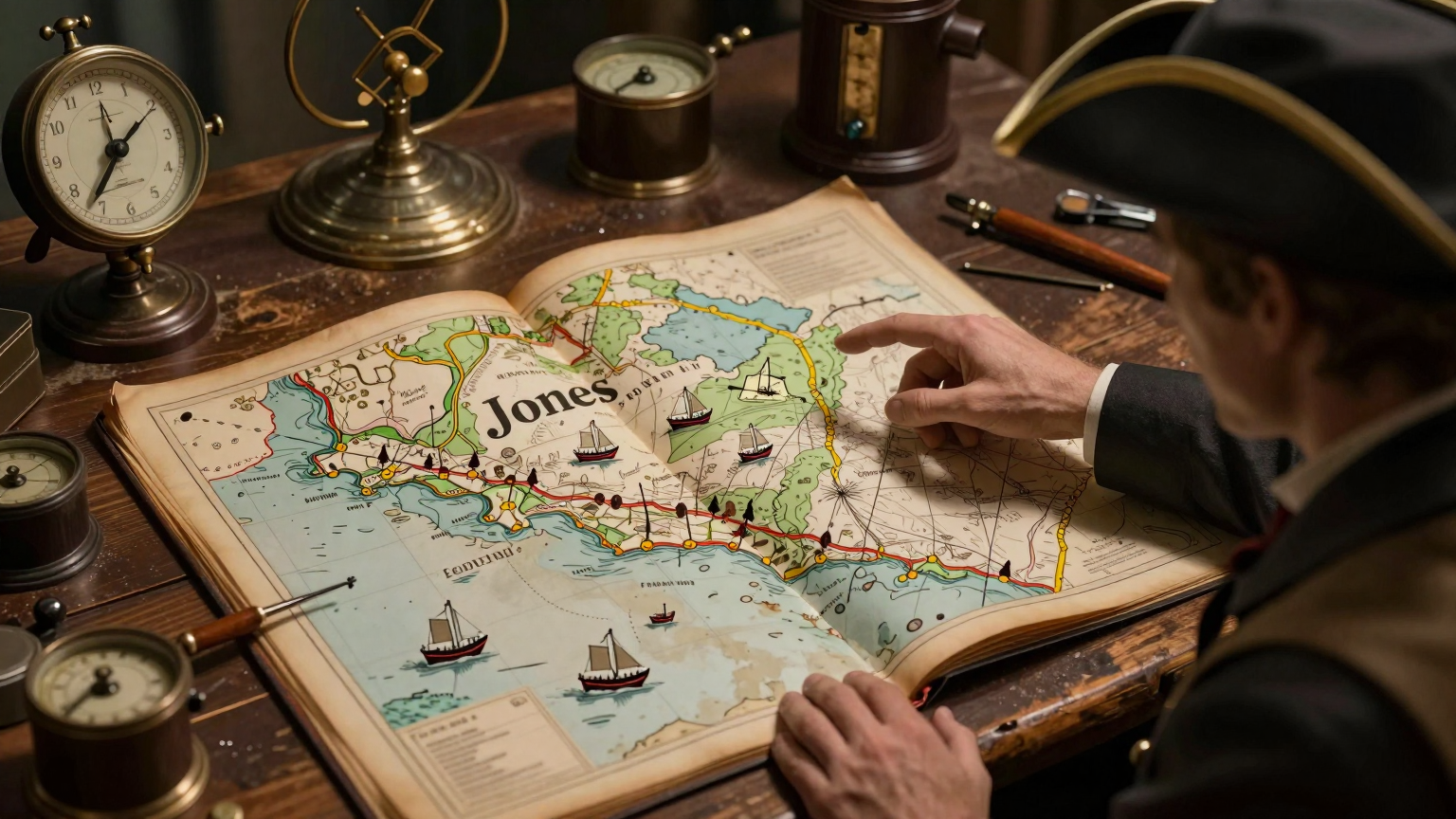
James Bailey, an amateur historian, recently made a fascinating discovery that links the namesake of Jones Beach to one of history's most notorious pirate heists. According to colonial-era documents, Thomas Jones, who lent his name to one of New York’s most beloved state parks, may have aided Captain Henry Every, known as the 'King of the Pirates,' in evading authorities following the raid on the Ganj-i-Sawai in 1695 13.
The Ganj-i-Sawai, a richly laden Indian ship, was seized by Every and his crew off the coast of the Red Sea, leading to a series of brutal acts including torture, killing, and rape 13. This audacious act of piracy was not just a simple robbery; it was a grand theft that captured the imagination of the world and set the stage for a complex web of intrigue involving Thomas Jones 13.
Bailey’s findings suggest that Thomas Jones, who was not only a major in the English military but also a prominent businessman and landowner in New York, might have served as a 'wheelman' for the pirates, helping them navigate their escape from the authorities 12. This role would have been critical in ensuring the success of the heist and securing the pirates’ freedom 2.
Jones’s connection to the pirate world runs deeper than just this single act. He was a former privateer, a distinction that allowed him to see himself more as a hero of the sea rather than a common pirate 2. His background as a privateer, combined with his military service and business acumen, made him a perfect fit to assist in the evasion of authorities 2.
Interestingly, Jones received a significant land grant on Long Island’s south shore from his father-in-law in 1696, just a year after the Ganj-i-Sawai raid 1. This timing adds another layer of intrigue to the story, as it coincides with the period when Governor Richard Coote began investigating Jones for a mysterious barrel of money found at his home in 1698 12.
The investigation into Jones’s wealth and possible ties to piracy continued even after his death in 1713, with rumors persisting that his initial fortune was derived from piratical activities 2. These rumors highlight the enduring impact of the Ganj-i-Sawai raid and the lasting legacy of Captain Henry Every 2.
This discovery not only sheds light on the historical significance of Jones Beach but also underscores the pivotal role that piracy played in shaping the fortunes of many prominent northeastern American families 12. It serves as a reminder that behind the picturesque beaches and bustling boardwalks lie stories of daring and adventure, waiting to be uncovered.
What we know
- - James Bailey discovered colonial-era documents linking Thomas Jones to Captain Henry Every 1
- - The documents suggest Thomas Jones helped Captain Henry Every and his crew evade authorities after robbing the Ganj-i-Sawai 1
- - Thomas Jones is associated with Jones Beach, one of New York's most visited state parks 12
- - The Ganj-i-Sawai was raided by Captain Henry Every's crew in 1695, resulting in torture, killing, and rape 1
- - Thomas Jones received a significant land grant on Long Island's south shore from his father-in-law in 1696 1
- - Governor Richard Coote investigated Thomas Jones in 1698 regarding a barrel of money found at Jones' home 1
- - Piracy provided foundational and multi-generational wealth for many prominent northeastern American families 1
- - Jones later became a wealthy proprietor of a whaling operation near what is now Jones Beach, New York 2
- - Jones owned extensive land on Long Island and was initially settled in Rhode Island before becoming prominent in New York 2
- - Rumors of Jones's initial wealth being derived from piracy persisted long after his death in 1713 2


Powered by Quantum Forge Robotics with Jessi AI Intelligence
Verification report
- likely
James Bailey, an amateur historian, discovered colonial-era documents linking Thomas Jones to the pirate Captain Henry Every.
71% · supported by 1 - likely
The documents suggest Thomas Jones helped Captain Henry Every and his crew evade authorities after robbing the Ganj-i-Sawai.
71% · supported by 1 - likely
Thomas Jones is associated with Jones Beach, one of New York's most visited state parks.
71% · supported by 2 - likely
The Ganj-i-Sawai was raided by Captain Henry Every's crew in 1695, resulting in torture, killing, and rape.
71% · supported by 1 - likely
Evidence suggests Thomas Jones possibly served as a 'wheelman', aiding the pirates in evading authorities after the heist.
71% · supported by 1 - likely
An amateur historian discovered evidence linking the namesake of Jones Beach to a significant pirate heist.
70% · supported by 1 - likely
The heist took place in the Red Sea.
70% · supported by 1 - likely
Thomas Jones was a major in the English military and later a prominent businessman and landowner in New York.
71% · supported by 1 - likely
Thomas Jones received a significant land grant on Long Island's south shore from his father-in-law in 1696.
71% · supported by 1 - likely
Governor Richard Coote investigated Thomas Jones in 1698 regarding a barrel of money found at Jones' home.
71% · supported by 1 - likely
Piracy provided foundational and multi-generational wealth for many prominent northeastern American families.
71% · supported by 1 - likely
Jones later became a wealthy proprietor of a whaling operation near what is now Jones Beach, New York.
71% · supported by 1 - likely
New York's governor investigated Jones for potential involvement in piracy several years after the heist.
71% · supported by 1 - likely
Jones owned extensive land on Long Island and was initially settled in Rhode Island before becoming prominent in New York.
71% · supported by 1 - likely
Rumors of Jones's initial wealth being derived from piracy persisted long after his death in 1713.
71% · supported by 1 - likely
Jones was a former privateer and likely saw himself as such rather than a pirate.
71% · supported by 1 - likely
A 'barrel of money' was reportedly delivered to Jones's home in Long Island, though he claimed ignorance of its origin.
71% · supported by 1 - likely
The event occurred centuries ago.
70% · supported by 1 - likely
Jones Beach is located in New York.
70% · supported by 1 - likely
The pirate involved is referred to as the 'King of the Pirates'.
70% · supported by 1