Goats Grazing at Tokyo Station Draw Curious Commuters
Two goats named Nagi and Pokke have been deployed to clear overgrown grass at a Tokyo railway station, attracting attention from commuters.
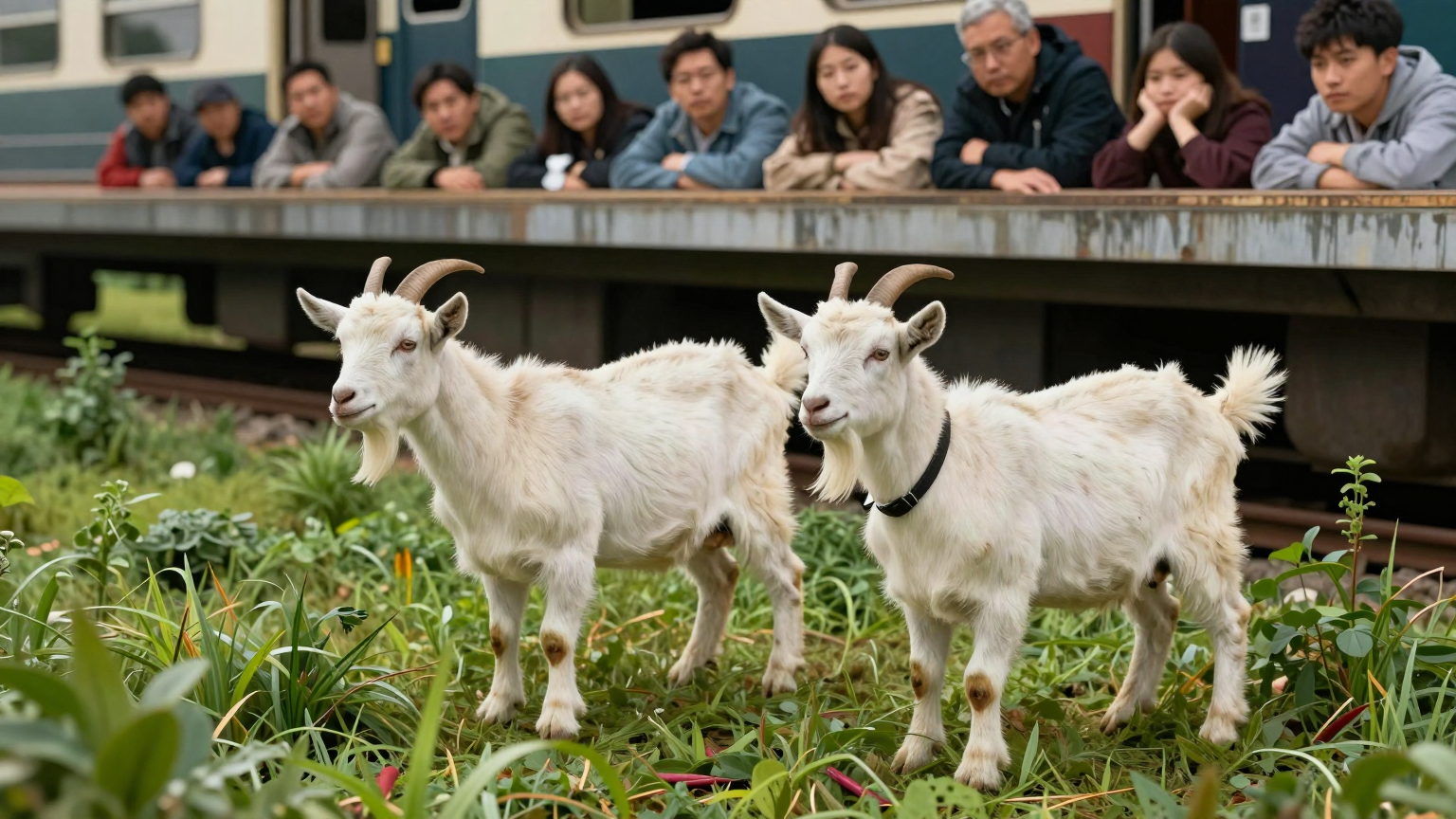
In a charming twist on urban landscaping, two goats named Nagi and Pokke have become the latest stars of Tokyo’s bustling railway scene. Deployed as part of an environmentally friendly initiative by JR East, the goats began their task of clearing overgrown grass near a Tokyo railway station on October 9th, reported to last until December 2.
The goats, who arrived in October, have quickly captured the hearts and cameras of commuters, schoolchildren, and office workers alike. Their presence has brought a unique and calming atmosphere to the typically hectic area, with locals appreciating the gentle sight of the goats grazing amidst the rush of trains 2.
JR East, the railway operator, chose to use goats instead of conventional grass-cutting methods or herbicides, aiming to reduce environmental impact and provide a novel experience for the public. This marks the first time JR East has used goats for such a purpose within Tokyo’s central Yamanote railway loop 2.
Nagi and Pokke seem unfazed by the constant movement of trains around them, continuing their work of munching on weeds and providing a delightful distraction for passersby. However, visitors are kindly asked not to feed the goats so they can concentrate on their important task of keeping the grass under control 2.
This initiative not only offers a picturesque view for the city’s inhabitants but also serves as a practical solution to maintaining green spaces in a sustainable way. As the project continues, it will be interesting to see how the goats adapt to their new surroundings and how long they manage to capture the public’s imagination 2.
What we know
- - Two goats were deployed for clearing overgrown grass 12
- - The goats were near a Tokyo railway station 12
- - The goats arrived in October as part of an environmentally friendly initiative by JR East 2
- - The goats graze on weeds instead of using conventional grass-cutting methods or herbicides 2
- - This project started on 9 October and is planned to last until December 2
- - It is JR East's first goat-grazing project within Tokyo's central Yamanote railway loop 2
- - The goats were named Nagi and Pokke 2
- - Commuters, schoolchildren, and office workers have stopped to watch and photograph the goats 2
- - The goats seem unaffected by the passing trains while grazing 2
- - Local residents find the goats bring a calming presence to the busy area 2
- - Visitors are asked not to feed the goats so they can focus on their task 2





Powered by Quantum Forge Robotics with Jessi AI Intelligence
Trust Score report
- likely
Two goats were deployed for clearing overgrown grass.
85% · supported by 2 - likely
The goats were near a Tokyo railway station.
85% · supported by 2 - likely
The goats arrived in October as part of an environmentally friendly initiative by JR East.
70% · supported by 1 - likely
The goats graze on weeds instead of using conventional grass-cutting methods or herbicides.
70% · supported by 1 - likely
This project started on 9 October and is planned to last until December.
70% · supported by 1 - likely
It is JR East's first goat-grazing project within Tokyo's central Yamanote railway loop.
70% · supported by 1 - likely
The goats were named Nagi and Pokke.
70% · supported by 1 - likely
Commuters, schoolchildren, and office workers have stopped to watch and photograph the goats.
70% · supported by 1 - likely
The goats seem unaffected by the passing trains while grazing.
70% · supported by 1 - likely
Local residents find the goats bring a calming presence to the busy area.
70% · supported by 1 - likely
Visitors are asked not to feed the goats so they can focus on their task.
70% · supported by 1 - unverified
The goats gained popularity on social media.
51% · supported by 1, contradicted by 1