Astronomers Uncover Most Distant Quasar, Challenging Black Hole Growth Models
The newly discovered quasar, located at the edge of the observable universe, is 13.1 billion years old and offers insights into early cosmic history.
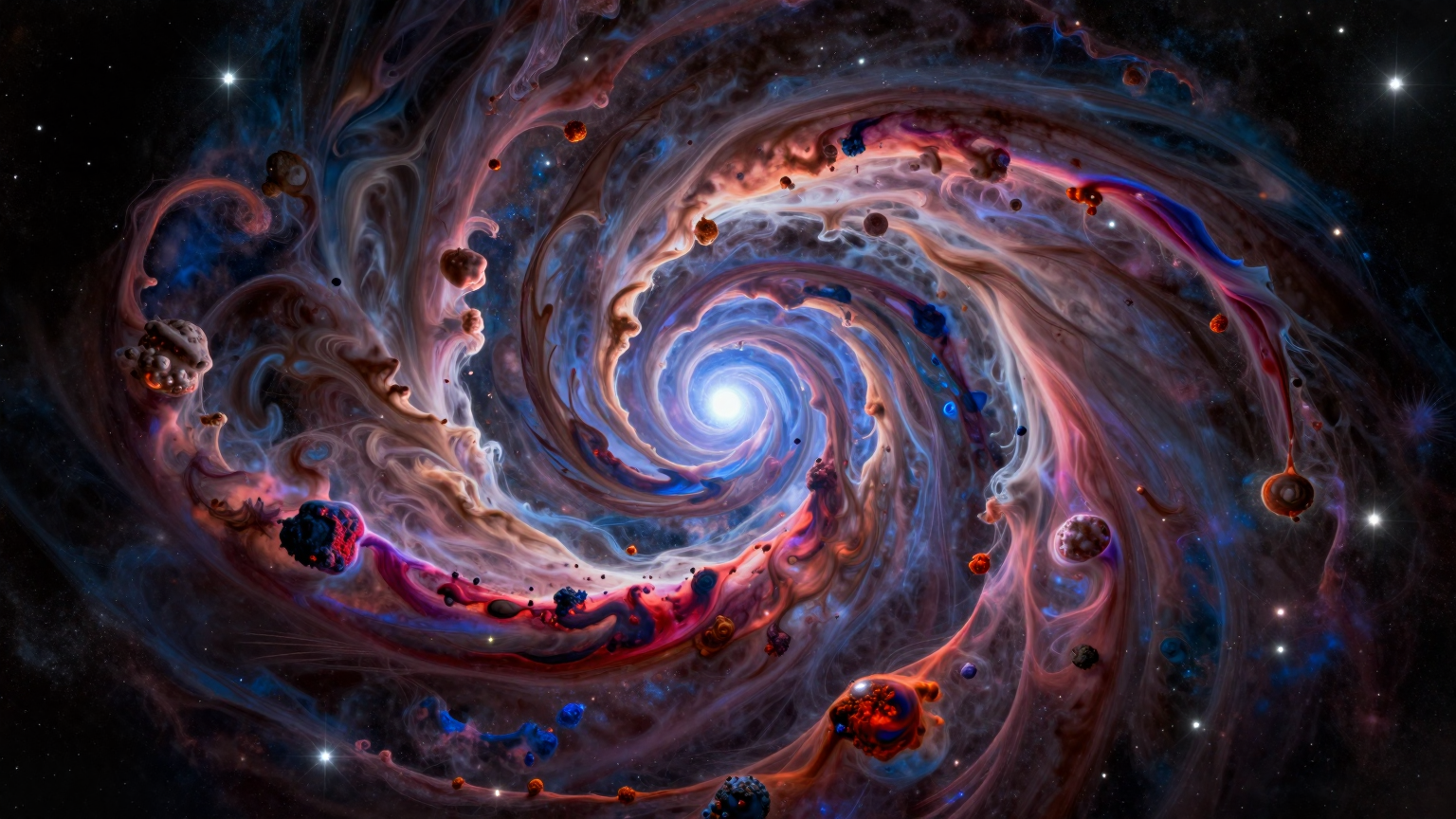
Astronomers have made a groundbreaking discovery, identifying the most distant and ancient quasar known to date, which provides crucial information about the early universe. This quasar, formed just 630 million years after the Big Bang, is not only the oldest observed but also boasts a mass equivalent to 360 million suns, setting new benchmarks in our understanding of celestial bodies.
The quasar, situated at the very edge of what we can observe in the cosmos, is seen as it was 13.1 billion years ago, offering a unique glimpse into the universe’s infancy. Its location and age make it a pivotal point of study for astronomers seeking to understand the formation and evolution of galaxies and black holes.
According to several outlets, the quasar exhibits a redshift of 8.13, marking it as the oldest quasar ever observed. However, there is some discrepancy regarding the name given to this celestial wonder. While one source reports it as being called Dun Aonghasa, after a prehistoric stone fort in Ireland, another indicates its official designation as J1504+6252, with the nickname Dún Aonghas.
This discovery challenges existing models of black hole growth, as the quasar appears to be growing more slowly than expected for its size. This finding could lead to revisions in our understanding of how these massive structures form and evolve over time.
The quasar was reportedly identified using the European Space Agency’s (ESA) Euclid telescope, although this detail is not confirmed by all sources. Regardless of the specific instrument used, the significance of this find cannot be overstated, as it pushes the boundaries of our knowledge of the universe’s earliest moments.
What we know
- A quasar was discovered that formed 630 million years after the Big Bang 123
- This quasar is the most distant known quasar, making it also the oldest observed 123
- The quasar has a mass of about 360 million times that of the sun 123
- The universe is currently estimated to be 13.8 billion years old 23
- The quasar is seen as it was 13.1 billion years ago 2
- The quasar is located at the edge of the observable universe 3
- The quasar has a redshift of 8.13, making it the oldest quasar observed 3
- The quasar appears to be growing more slowly than expected for its size 3
- The discovery challenges existing models of black hole growth 3
What remains unclear
Powered by Quantum Forge Robotics with Jessi AI Intelligence
Trust Score report
- confirmed
A quasar was discovered that formed 630 million years after the Big Bang.
94% · supported by 3 - confirmed
This quasar is the most distant known quasar, making it also the oldest observed.
94% · supported by 3 - confirmed
The quasar has a mass of about 360 million times that of the sun.
94% · supported by 3 - confirmed
The universe is currently estimated to be 13.8 billion years old.
85% · supported by 2 - likely
The quasar was found using the ESA's Euclid telescope.
72% · supported by 2, contradicted by 1 - likely
The quasar is seen as it was 13.1 billion years ago.
71% · supported by 1 - likely
The quasar is located at the edge of the observable universe.
71% · supported by 1 - likely
The quasar has a redshift of 8.13, making it the oldest quasar observed.
71% · supported by 1 - likely
The quasar appears to be growing more slowly than expected for its size.
71% · supported by 1 - likely
The discovery challenges existing models of black hole growth.
71% · supported by 1 - likely
The quasar is named Dun Aonghasa after a prehistoric stone fort in Ireland.
70% · supported by 2, contradicted by 1 - disputed
The quasar is named J1504+6252, nicknamed Dún Aonghas.
30% · supported by 1, contradicted by 2
Sources & references
- Deutsche Welle — Scientists discover quasar formed 630 million years after the Big Bang
- Phys.org — Scientists discover quasar formed within a mere 630 million years of the Big Bang, setting a record
- Live Science — James Webb and Euclid telescopes discover record-breaking black hole at the edge of the universe