Rare Baby Right Whale Discovered Off Canada Brings Joy Amid Population Decline
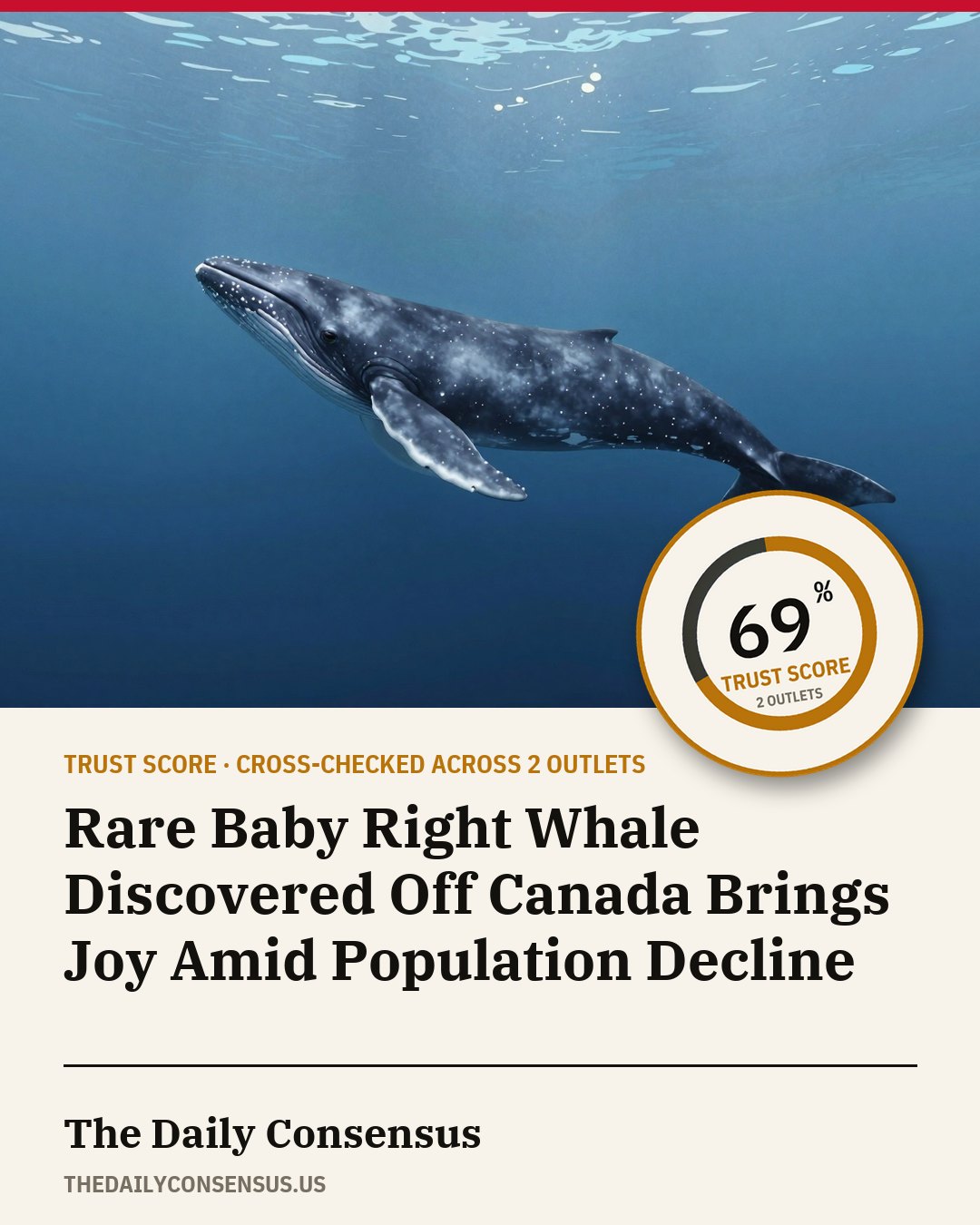
A baby North Atlantic right whale was recently spotted off Anticosti Island, Quebec, marking a welcome addition to the species' declining population.

Scientists have reported a heartening discovery off the coast of Anticosti Island, Quebec, where a baby North Atlantic right whale was spotted in September 2026. This sighting brings joy to researchers and conservationists alike, as the species faces significant challenges due to population decline over the past decade 12.
The newborn calf was observed alongside its mother, Silt, a 38-year-old whale known to researchers. This particular birth is notable because the baby was not detected during earlier surveys conducted in the winter months, highlighting the variability in whale movements and the importance of ongoing monitoring 12.
Right whales typically give birth off the southeastern United States before migrating northward to feed. However, this year’s baby was one of 24 calves identified from the most recent birthing season, indicating that some mothers may be altering their traditional migration patterns 12.
The current global population of North Atlantic right whales stands at approximately 380 individuals, with only around 70 reproductive-age females remaining in the population 12. This scarcity of breeding females poses a critical threat to the survival of the species, as does the ongoing challenge of ocean warming, which has pushed the whales further away from protected areas 12.
Historically, the right whale population experienced a sharp decrease between 2010 and 2020, with a particularly concerning year in 2018 when no new births were recorded 12. The recent spotting of the baby whale thus represents a positive development, offering hope for the future of this endangered species.
Researchers from the Mingan Island Cetacean Study made the discovery, noting that the baby whale had evaded observation despite extensive surveys along the U.S. East Coast throughout the spring and summer 12. This underscores the unpredictable nature of whale migrations and the need for continued vigilance in tracking these majestic creatures.
What we know
- - A baby North Atlantic right whale was discovered off Anticosti Island, Quebec, in September 2026 12
- - The baby whale was likely born months ago and went unnoticed during winter surveys 12
- - The total number of baby right whales found from the most recent birthing season is 24 12
- - The current global population of North Atlantic right whales is approximately 380 12
- - The baby whale was seen with its mother, named Silt, who is 38 years old 12
- - Right whales typically give birth off the southeastern U.S. and then move north to feed 12
- - Only around 70 reproductive-age female right whales remain in the population 12
- - Between 2010 and 2020, the right whale population decreased by about 25% 12
- - Ocean warming has increased threats to right whales due to their movement away from protected areas 12
- - In 2018, no baby right whales were born 12
- - The baby whale was spotted by researchers with Mingan Island Cetacean Study 12
- - The baby whale was not observed by researchers despite extensive surveys along the U.S. East Coast throughout spring and summer 12


Powered by Quantum Forge Robotics with Jessi AI Intelligence
Trust Score report
- likely
A baby North Atlantic right whale was discovered off Anticosti Island, Quebec, in September 2026.
71% · supported by 2 - likely
The baby whale was likely born months ago and went unnoticed during winter surveys.
71% · supported by 2 - likely
The total number of baby right whales found from the most recent birthing season is 24.
71% · supported by 2 - likely
The current global population of North Atlantic right whales is approximately 380.
71% · supported by 2 - likely
The baby whale was seen with its mother, named Silt, who is 38 years old.
71% · supported by 2 - likely
Right whales typically give birth off the southeastern U.S. and then move north to feed.
71% · supported by 2 - likely
Only around 70 reproductive-age female right whales remain in the population.
71% · supported by 2 - likely
Between 2010 and 2020, the right whale population decreased by about 25%.
71% · supported by 2 - likely
Ocean warming has increased threats to right whales due to their movement away from protected areas.
71% · supported by 2 - likely
In 2018, no baby right whales were born.
71% · supported by 2 - likely
The baby whale was spotted by researchers with Mingan Island Cetacean Study.
71% · supported by 2 - likely
The baby whale was not observed by researchers despite extensive surveys along the U.S. East Coast throughout spring and summer.
71% · supported by 2 - unverified
Since 2020, the right whale population has shown slight recovery.
50% · supported by 1, contradicted by 1