Massive Waves From King Tides Batter California Coast, Soaking San Francisco
San Francisco saw its highest November water levels in over four decades, with waves reaching up to 30 feet.
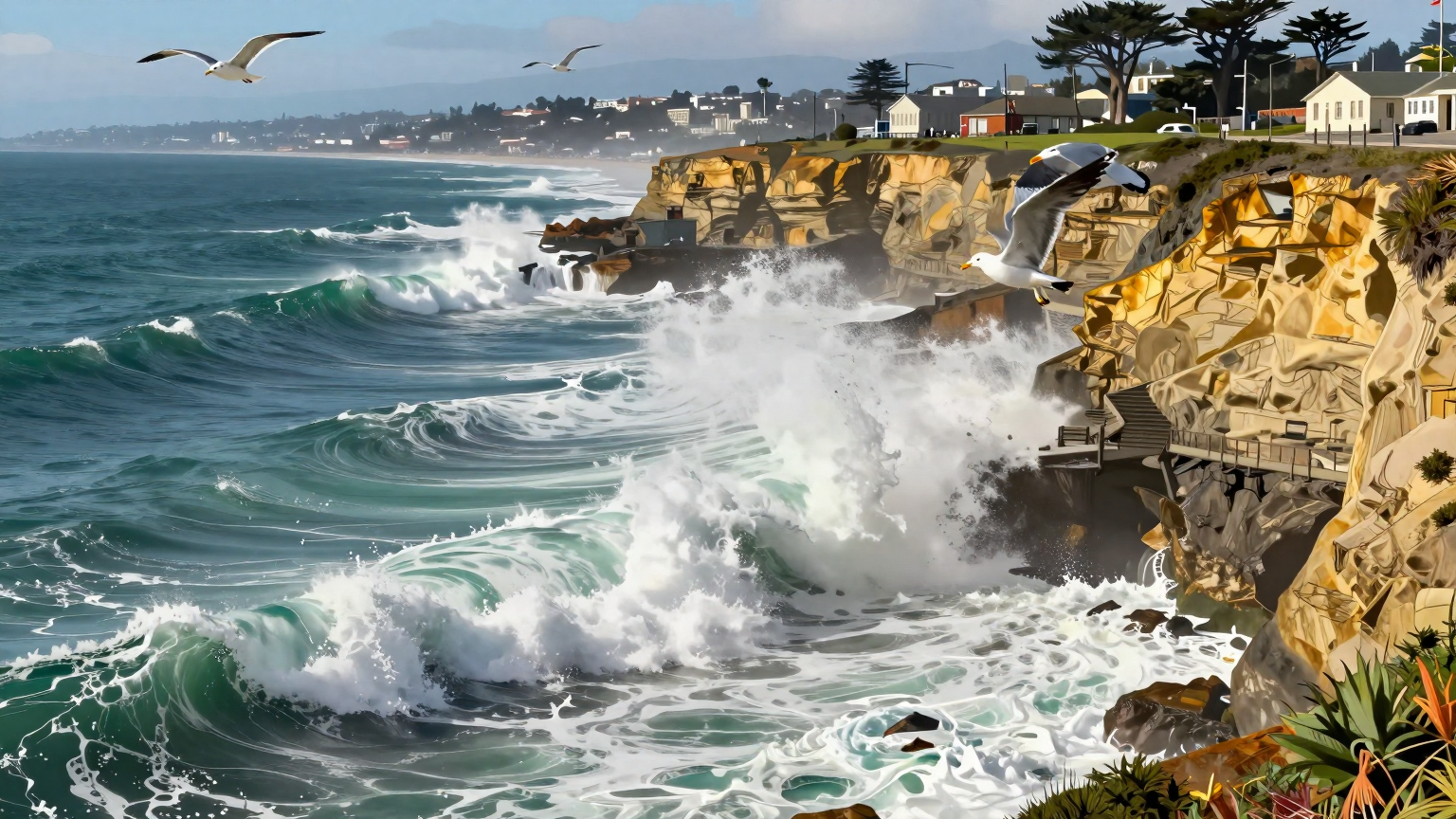
California's coast was recently hit by a powerful surge of waves, known as king tides, which caused significant flooding and disruption along the shoreline. In San Francisco, these tides brought water levels to their highest point in over 40 years, reported to be the highest since November 1979 1.
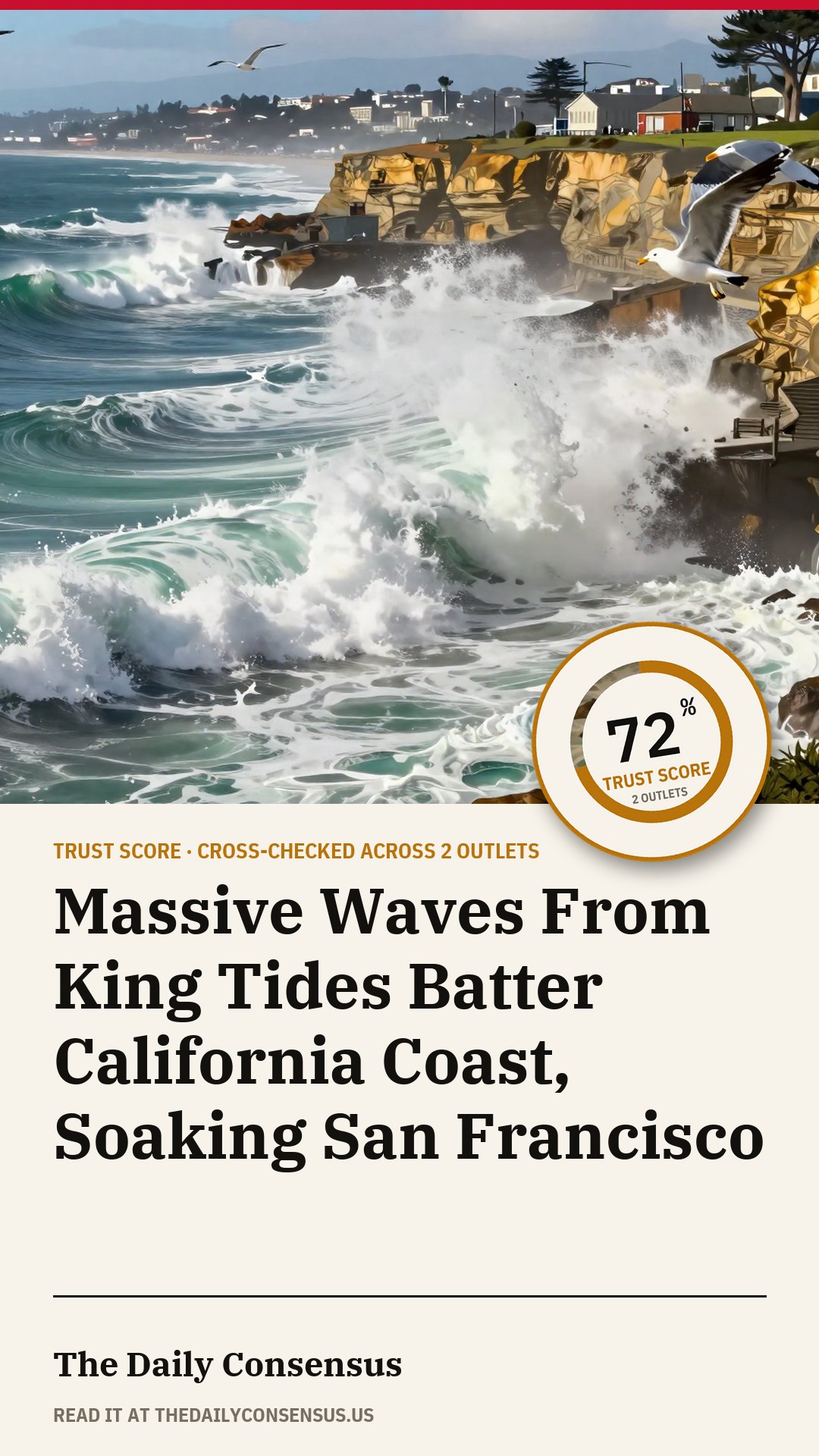
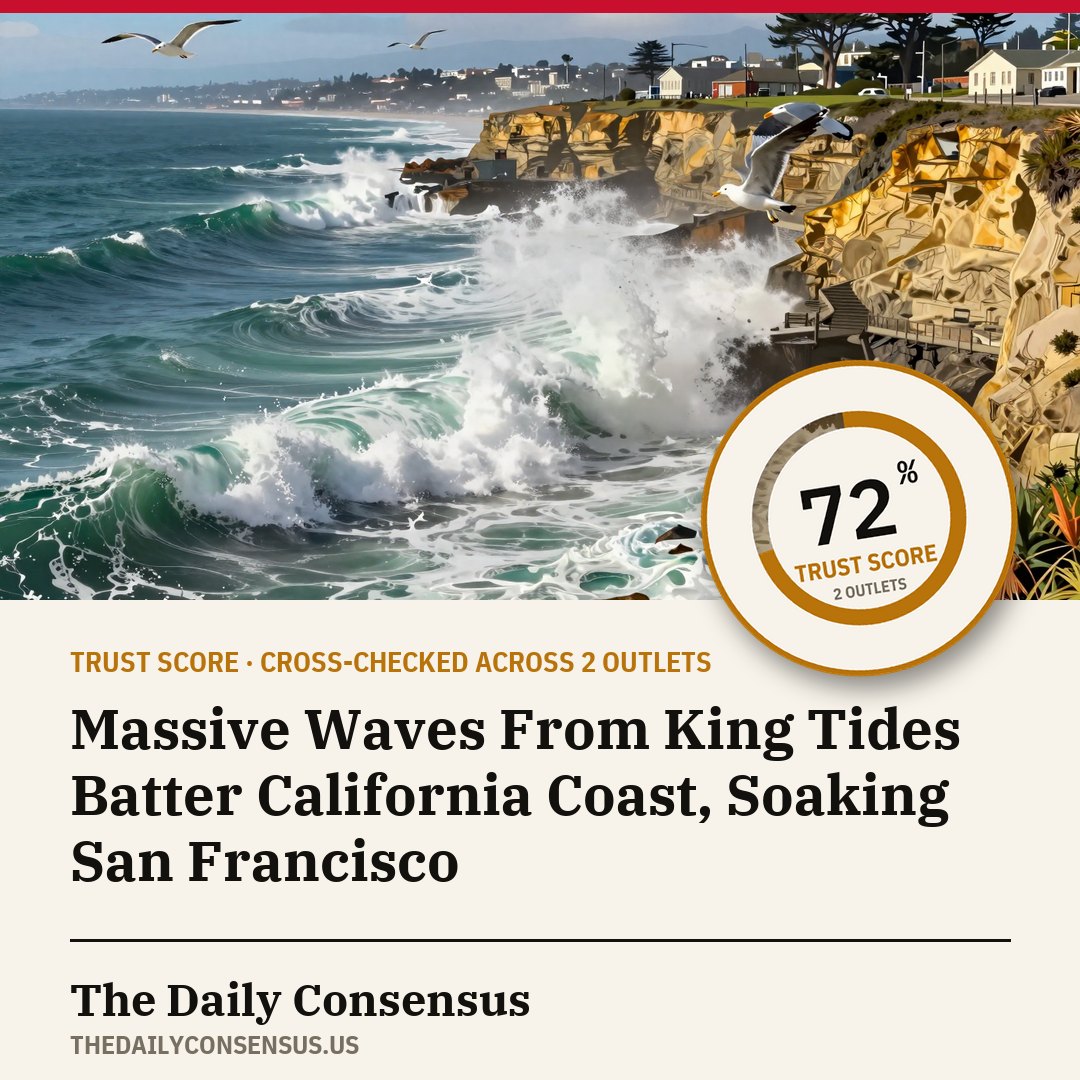
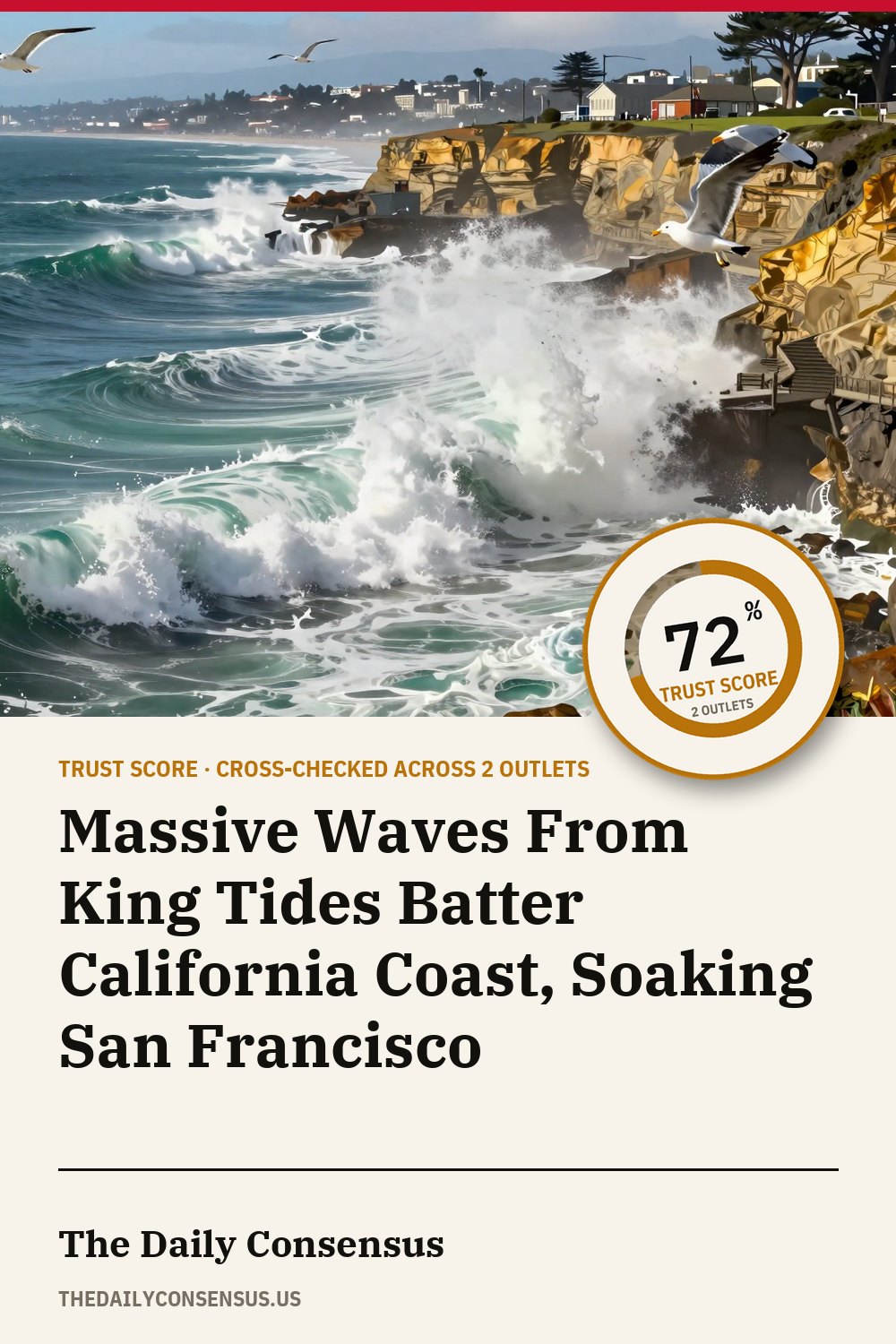
The combination of king tides, El Niño conditions, and human-induced climate change created an ideal storm for coastal inundation 2. At Ocean Beach in San Francisco, waves reached impressive heights of up to 30 feet (9.14 meters), showcasing the sheer force of nature 1.
In Pacifica, a small city located south of San Francisco, an old wooden pier was damaged by the relentless power of the waves, and some vehicles were left partially submerged in knee-deep water 1. Despite the heavy rainfall and high water levels, San Francisco International Airport remained safe from flooding, although there was a notable increase in flight delays, with around 9% more delays compared to previous weeks 1.
Charleston, Oregon, also experienced record-breaking water levels, with the highest ever recorded at approximately 1.12 meters above the mean high water level 2. Meanwhile, NOAA stations in San Diego, Los Angeles, and Santa Barbara all noted some of their highest water levels on record, indicating the widespread impact of these king tides 2.
The L-shaped municipal pier in Pacifica suffered a dramatic collapse when a wave crashed into it, highlighting the destructive potential of the coastal surge 2. This year’s El Niño is expected to be particularly strong, bringing warmer Pacific waters and powerful storms to the region 2.
San Francisco itself faced flooding and waves up to 9 meters during the recent surge, a testament to the magnitude of the event 2. Looking ahead, more king tides are anticipated in San Francisco in December and January, promising continued challenges for coastal residents and visitors alike 2.
What we know
- - 12 Massive waves from king tides affected California's coast.
- - 1 San Francisco experienced its highest November water levels in over 40 years.
- - 2 High coastal water levels were caused by king tides, El Niño, and human-induced climate change.
- - 1 Waves reached up to 30 feet (9.14 meters) at Ocean Beach, San Francisco.
- - 1 An old wooden pier in Pacifica was broken by powerful waves.
- - 1 Some cars were partially submerged and people waded through knee-deep water in Pacifica.
- - 1 San Francisco International Airport runways were not at risk of flooding.
- - 1 About 9% more flight delays occurred at San Francisco International Airport compared to previous weeks.
- - 1 The current king tides are predicted to be at their highest since January 1983.
- - 1 Strong winds could cause tree falls and low-lying streets near the waterfront could flood.
- - 1 Sneaker waves in Southern California could pose danger to beachgoers and cause water to surge into parking lots or roadways.
- - 2 Charleston, Oregon, experienced its highest-ever coastal water level, approximately 1.12 meters above the mean high water level.
- - 2 NOAA stations in San Diego, Los Angeles, and Santa Barbara recorded some of their highest water levels on record.
- - 2 The L-shaped municipal pier in Pacifica collapsed due to a wave crashing into it.
- - 2 This year's El Niño is expected to be stronger than usual, contributing to warmer Pacific waters and powerful storms.
- - 2 San Francisco experienced flooding and waves up to 9 meters during the recent surge.
- - 2 More king tides are anticipated in San Francisco in December and January.
Powered by Quantum Forge Robotics with Jessi AI Intelligence
Trust Score report
- confirmed
Massive waves from king tides affected California's coast.
85% · supported by 2 - likely
San Francisco experienced its highest November water levels in over 40 years.
71% · supported by 1 - likely
High coastal water levels were caused by king tides, El Nino, and human-induced climate change.
71% · supported by 1 - likely
Waves reached up to 30 feet (9.14 meters) at Ocean Beach, San Francisco.
71% · supported by 1 - likely
An old wooden pier in Pacifica was broken by powerful waves.
71% · supported by 1 - likely
Some cars were partially submerged and people waded through knee-deep water in Pacifica.
71% · supported by 1 - likely
San Francisco International Airport runways were not at risk of flooding.
71% · supported by 1 - likely
About 9% more flight delays occurred at San Francisco International Airport compared to previous weeks.
71% · supported by 1 - likely
The current king tides are predicted to be at their highest since January 1983.
71% · supported by 1 - likely
Strong winds could cause tree falls and low-lying streets near the waterfront could flood.
71% · supported by 1 - likely
Sneaker waves in Southern California could pose danger to beachgoers and cause water to surge into parking lots or roadways.
71% · supported by 1 - likely
Charleston, Oregon, experienced its highest-ever coastal water level, approximately 1.12 meters above the mean high water level.
71% · supported by 1 - likely
NOAA stations in San Diego, Los Angeles, and Santa Barbara recorded some of their highest water levels on record.
71% · supported by 1 - likely
The L-shaped municipal pier in Pacifica, a city south of San Francisco, collapsed due to a wave crashing into it.
71% · supported by 1 - likely
This year's El Nino is expected to be stronger than usual, contributing to warmer Pacific waters and powerful storms.
71% · supported by 1 - likely
San Francisco experienced flooding and waves up to 9 meters during the recent surge.
71% · supported by 1 - likely
More king tides are anticipated in San Francisco in December and January.
71% · supported by 1