Judge Denies Trump DOJ's Request to Exclude 20,000 California Ballots - Appeal Expected, Legal and Logistical Challenges Mount
A federal judge on October 29, 2026, denied the Trump administration's request to segregate or invalidate approximately 20,000 California ballots, marking a significant setback for the DOJ's efforts to challenge noncitizen voting.
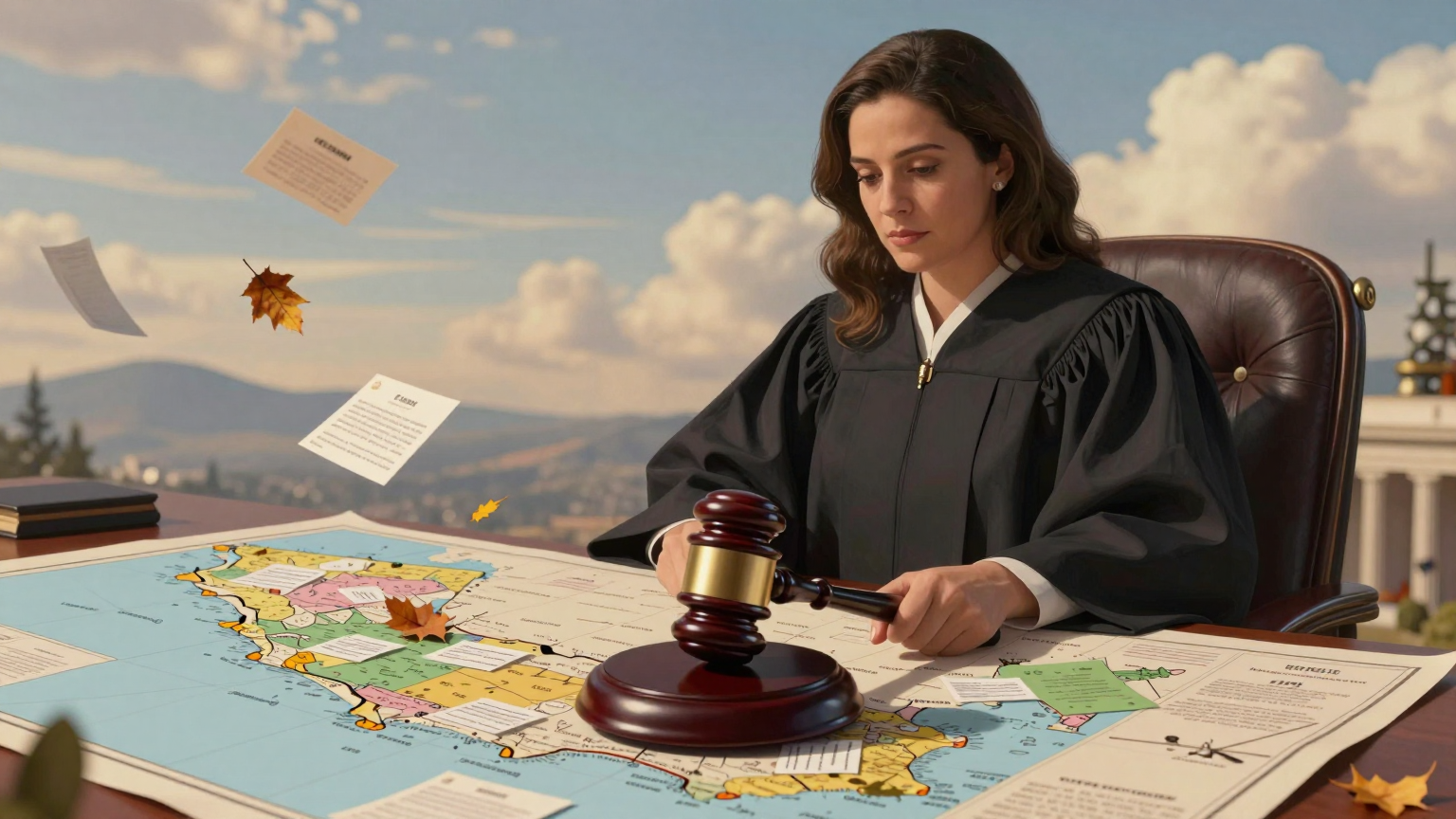
On Thursday, October 29, 2026, a federal judge in California ruled against the Trump administration’s Department of Justice (DOJ) in a high-stakes legal challenge over the validity of approximately 20,000 voter registrations in the state. The judge denied the DOJ’s request to segregate or invalidate these ballots, calling the proposed action both legally unsound and logistically unfeasible. 1
The ruling marks a significant setback for the Trump DOJ’s broader campaign to challenge noncitizen voting, which has been a central theme in its post-2024 election legal strategy. The Justice Department had submitted a list of roughly 20,000 individuals it alleged were noncitizens registered to vote, citing concerns about election integrity. However, the court found that the DOJ’s approach violated the National Voter Registration Act (NVRA) and would disrupt the orderly certification of election results. 46
Key Developments:
- Legal Ruling: The judge emphasized that the federal government cannot unilaterally intervene in state election processes, citing the U.S. Constitution’s delegation of election administration to the states. The court stated that segregating ballots based on citizenship suspicion would cause “chaos” and undermine public confidence in the electoral system. 346
- Logistical Obstacles: California and Los Angeles County officials had previously warned that isolating 20,000 ballots from the more than 3.7 million cast would be impossible without delaying certification and creating administrative chaos. The judge echoed these concerns, noting that no urgent action was required. 35
- Appeal Announced: The DOJ has confirmed it will appeal the decision to the 9th U.S. Circuit Court of Appeals, signaling that the legal battle over noncitizen voting is far from over. 34
- Broader Context: This case is part of a larger pattern of the Trump administration’s efforts to challenge voter eligibility. In Nevada, the DOJ initially claimed 15,903 noncitizens were registered to vote, but that number was later reduced to 185—none of whom were ultimately found to be noncitizens. The administration has also announced 48 criminal cases against noncitizens accused of illegal registration or voting. 4
Confidence and Implications:
With an overall confidence level of 79% across sources, the core facts of the ruling—denial of the DOJ’s request, the legal basis for the decision, and the planned appeal—are well-supported. The ruling reinforces the principle that states retain primary authority over elections, a constitutional principle that has been tested in recent years.
While the immediate impact is limited to California, the case could set a precedent for future challenges to voter eligibility. The DOJ’s continued focus on noncitizen voting, despite limited evidence of widespread fraud, underscores the political and legal tensions surrounding election integrity in the U.S.

Powered by Quantum Forge Robotics with Jessi AI Intelligence
Verification report
- confirmed
A federal judge denied the Trump administration's request to segregate or invalidate approximately 20,000 California ballots.
97% · supported by 6 - confirmed
The Trump administration provided a list of approximately 20,000 individuals believed to be noncitizens registered to vote.
97% · supported by 4 - confirmed
The ruling is considered a setback for the Trump administration's efforts to challenge noncitizen voting.
86% · supported by 2 - confirmed
The Justice Department intends to appeal the decision to the 9th U.S. Circuit Court of Appeals.
85% · supported by 2 - confirmed
California and Los Angeles County officials warned that segregating ballots would be logistically impossible and could delay certification of results.
85% · supported by 2 - confirmed
The judge stated that segregating ballots based on citizenship suspicion would violate the National Voter Registration Act and cause chaos in the voting process.
85% · supported by 2 - likely
The decision was made on October 29, 2026.
72% · supported by 1 - likely
The judge determined no urgent action was required to address the concerns raised by the Trump administration.
72% · supported by 1 - likely
The U.S. Constitution assigns states the responsibility of administering elections.
71% · supported by 1 - likely
The Justice Department's request violated longstanding constitutional principles regarding state control over elections.
71% · supported by 1 - likely
The Trump administration previously claimed up to 15,903 noncitizens were registered to vote in Nevada, but the number was later reduced to 185, all of whom were found to be citizens.
71% · supported by 1 - likely
The Trump administration has announced 48 criminal cases against noncitizens who allegedly registered to vote or voted illegally.
71% · supported by 1 - likely
The case involves more than 3.7 million ballots in total.
71% · supported by 1
Sources & references
- NYT U.S. — Judge Rejects Trump Officials’ Bid to Set Aside California Ballots
- NPR Politics — Judge denies the Justice Department's bid to stop processing California ballots
- Ohio Capital Journal (Ohio) — Judge denies attempt by Trump’s DOJ to exclude 20,000 California ballots from vote count
- Roll Call — Judge denies Trump administration bid to set aside California votes
- WKBN.com (Ohio) — Judge denies federal request to segregate California ballots, says it would 'wreak havoc' on voting
- ABC News — Judge rejects Trump admin request for order to segregate 20,000 Calif. ballots