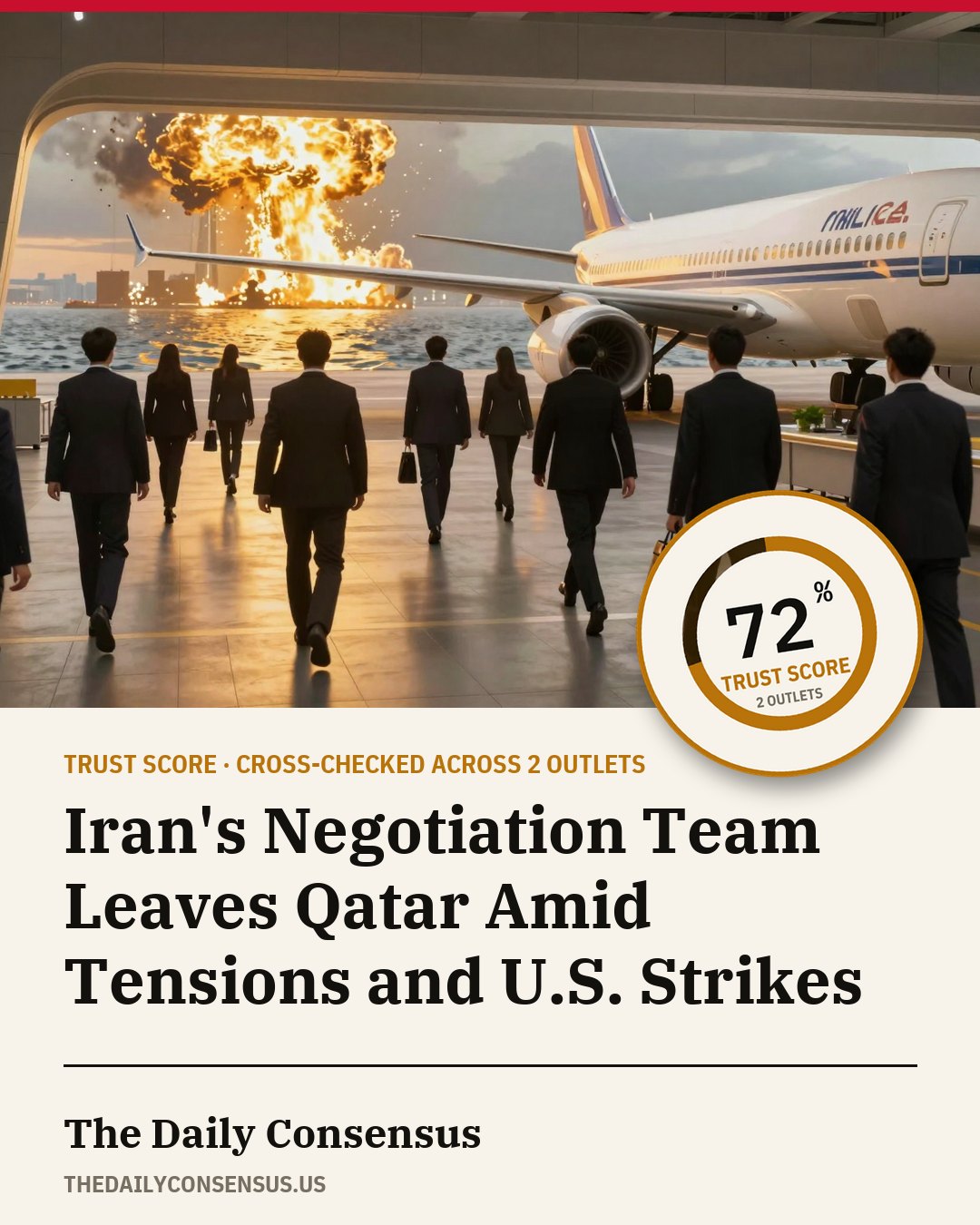
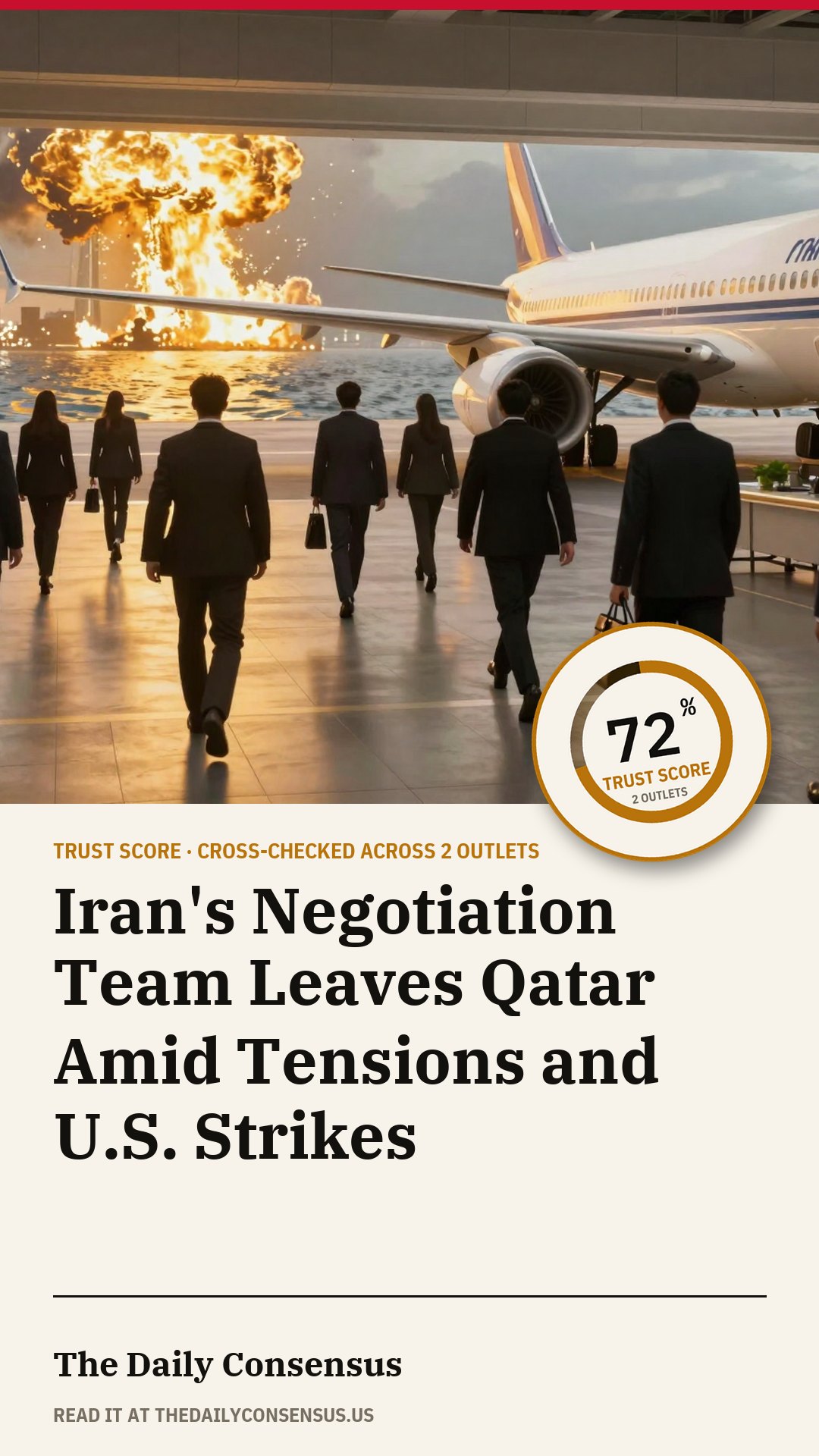
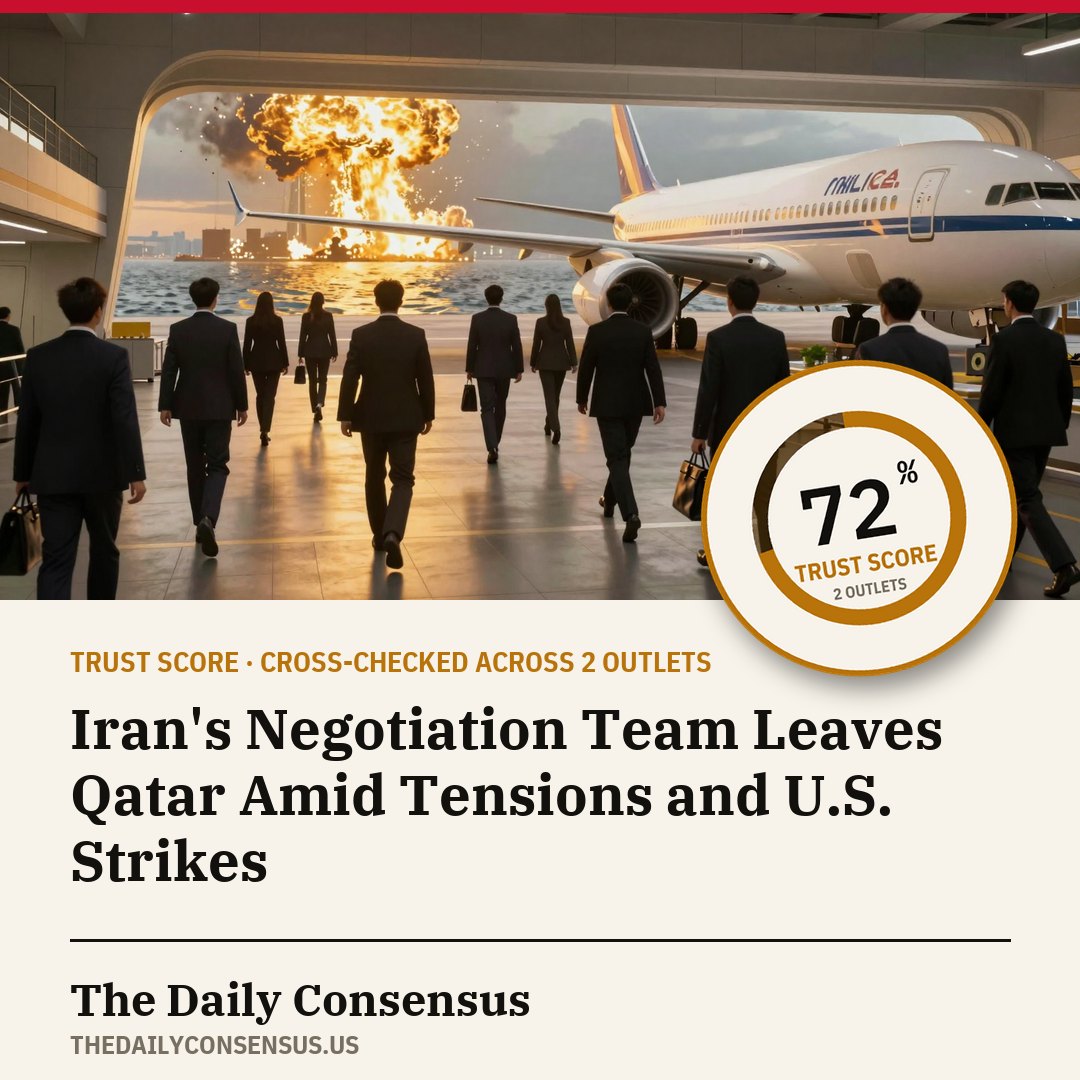
Iran's Negotiation Team Leaves Qatar Amid Tensions and U.S. Strikes
Following a stressful weekend, Iran's negotiation team departs Qatar as U.S. conducts defensive strikes near the Strait of Hormuz.

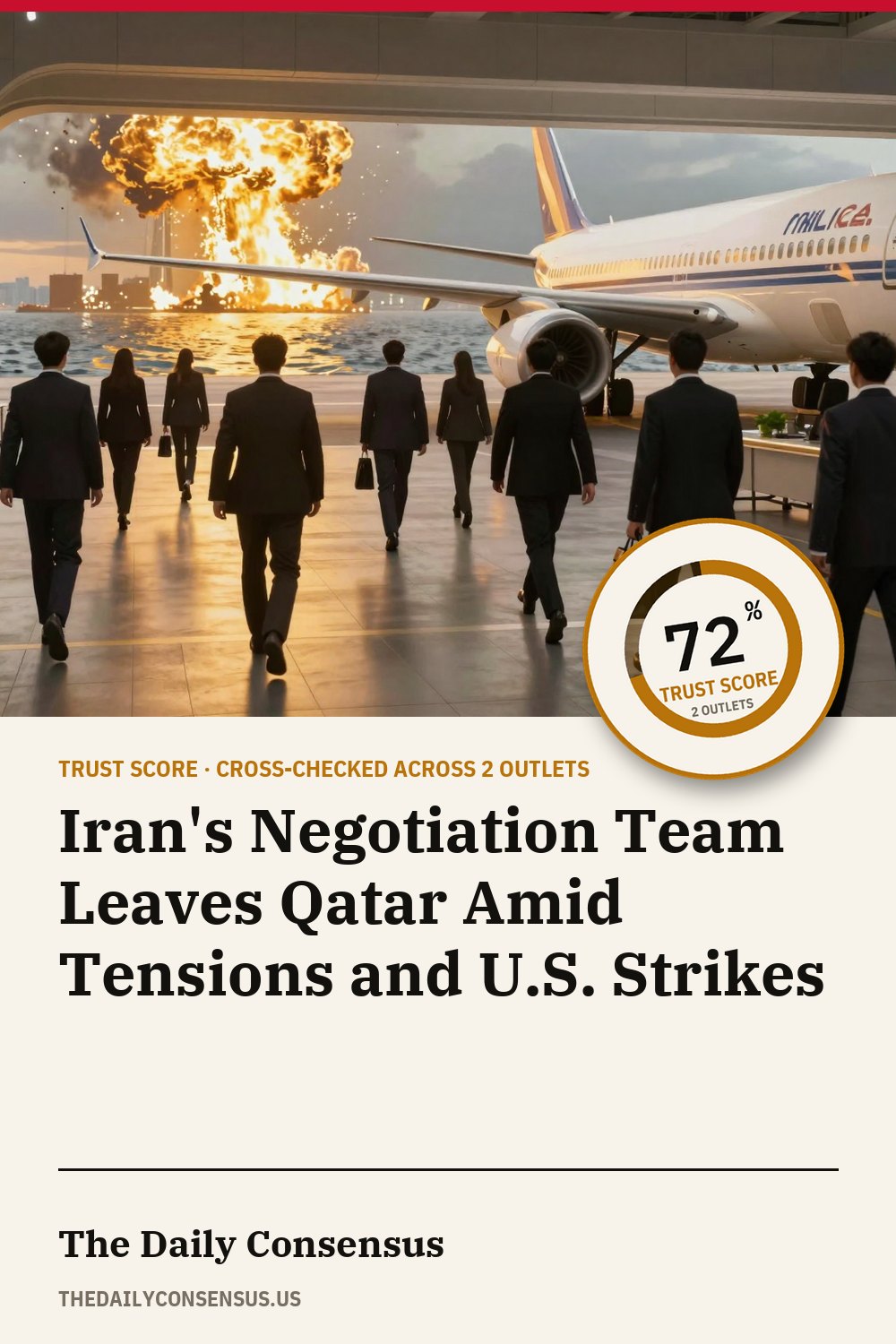
Iran's negotiation team has departed from Qatar following a stressful weekend, marking a significant moment in the ongoing tensions between Iran and the United States. According to reports, the United States carried out defensive strikes on Iranian targets in the Strait of Hormuz, an action that reportedly included explosions being heard on Qeshm Island, Iran 2.
These strikes came on the eve of the midterm elections in the United States, targeting Iranians who had used surface-to-air missiles against American assets. This strategic timing adds a layer of political significance to the military actions, potentially influencing the upcoming vote 2.
Amidst these developments, U.S. Vice President JD Vance expressed optimism about a potential deal with Iran, while Israel's Prime Minister Benjamin Netanyahu advocated for additional strikes post-elections 2. These differing viewpoints highlight the complex dynamics at play within the region and among key global players.
Qatari mediators have been actively involved, holding talks with Iranian officials to discuss a possible ceasefire and the lifting of the U.S. blockade 2. Meanwhile, Saudi Arabia's Defense Minister engaged in discussions with the U.S. Secretary of Defense regarding regional developments, showcasing the interconnected nature of the geopolitical landscape in the Middle East 2.
The impact of these events was also felt economically, as oil prices experienced a drop due to renewed diplomatic efforts in the Iran-U.S. conflict 2. Financially, the U.S. has invested at least $47 billion in the conflict with Iran, while Iranian strikes on U.S. bases have resulted in billions of dollars worth of equipment damage 2.
Looking ahead, China is set to send a special envoy to Iran, Oman, and Saudi Arabia in November, indicating continued interest and involvement in the region's affairs 2.
What we know
- Iran's negotiation team left Qatar after a stressful weekend 12
- U.S. conducted defensive strikes on Iranian targets in the Strait of Hormuz 2
- Explosions were reported on Qeshm Island, Iran 2
- U.S. strikes targeted Iranians using surface-to-air missiles against U.S. assets 2
- Strikes occurred on the eve of the midterm elections 2
- U.S. Vice President JD Vance expressed optimism about a potential deal with Iran 2
- Israel's Prime Minister Benjamin Netanyahu pushed for further strikes post-elections 2
- Qatari mediators held talks with Iranian officials regarding a possible ceasefire 2
- Saudi Arabia's Defense Minister spoke with U.S. Secretary of Defense about regional developments 2
- Oil prices dropped due to renewed diplomatic efforts 2
- U.S. has spent at least $47 billion on the conflict with Iran 2
- Iranian strikes caused billions of dollars in equipment damage 2
- China will send a special envoy to Iran, Oman, and Saudi Arabia in November 2

Powered by Quantum Forge Robotics with Jessi AI Intelligence
Trust Score report
- confirmed
Iran's negotiation team departed from Qatar following a stressful weekend.
86% · supported by 2 - likely
The United States conducted defensive strikes on Iranian targets in the Strait of Hormuz.
71% · supported by 1 - likely
Explosions were heard on Qeshm Island, Iran.
71% · supported by 1 - likely
The U.S. strikes targeted Iranians using surface-to-air missiles against U.S. assets.
71% · supported by 1 - likely
The U.S. strikes occurred on the eve of the midterm elections.
71% · supported by 1 - likely
U.S. Vice President JD Vance expressed optimism about a potential deal with Iran.
71% · supported by 1 - likely
Israel's Prime Minister Benjamin Netanyahu pushed for further strikes on Iran post-elections.
71% · supported by 1 - likely
Qatari mediators held talks with Iranian officials regarding a possible ceasefire and lifting of U.S. blockade.
71% · supported by 1 - likely
Saudi Arabia's Defense Minister spoke with U.S. Secretary of Defense about regional developments.
71% · supported by 1 - likely
Oil prices dropped due to renewed diplomatic efforts in the Iran-U.S. conflict.
71% · supported by 1 - likely
The U.S. has spent at least $47 billion on the conflict with Iran.
71% · supported by 1 - likely
Iranian strikes on U.S. bases have caused billions of dollars in equipment damage.
71% · supported by 1 - likely
China will send a special envoy to Iran, Oman, and Saudi Arabia in November.
71% · supported by 1