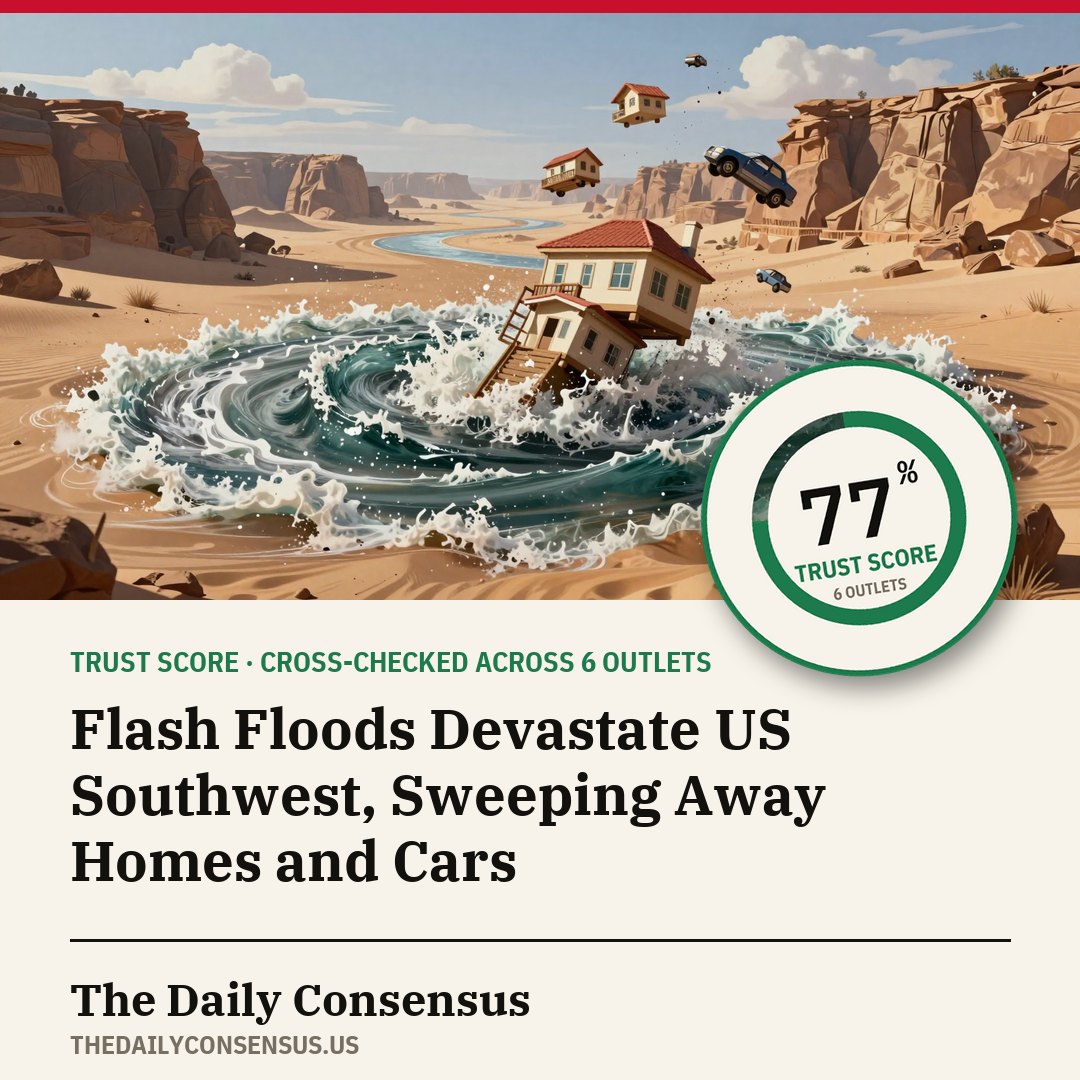
Flash Floods Devastate US Southwest, Sweeping Away Homes and Cars
The US Southwest has been hit by severe flash floods, caused by heavy rainfall and a super El Niño, leading to evacuations and significant damage.

The US Southwest has been devastated by flash floods, sweeping away homes and cars, following a period of intense rainfall that lasted just two weeks. This weather event, which saw over 20 trillion gallons of water fall on the region, was exacerbated by a super El Niño, contributing to the severity of the flooding. According to reports, some towns in the affected area received more rainfall in one day than they typically see throughout the entire month of November.
El Niño, characterized by warmer Pacific Ocean waters, played a crucial role in the heavy rainfall. Warmer ocean temperatures release more moisture into the atmosphere, leading to increased precipitation. Additionally, human-caused climate change has warmed the world's oceans, intensifying El Niño events and making them even more impactful.
The flooding was particularly severe in northern New Mexico, central Arizona, and a Colorado ski town. In Arboles, Colorado, cars, motorhomes, and homes were swept away, resulting in at least one confirmed death and another suspected fatality linked to the flooding. Meanwhile, in Camp Verde, Arizona, residents had to evacuate as water levels rose around an RV park.
Evacuations were necessary in the Four Corners region, with hundreds of people being displaced due to the rising waters. The San Juan River reached 16.81 feet (5.1 meters) during the flood, further complicating rescue and recovery efforts. In Durango, Colorado, approximately 200 residents participated in clean-up operations following the disaster.
This series of events highlights the interconnectedness of global climate patterns and local weather conditions, demonstrating how changes in one part of the world can have profound effects elsewhere. As the world continues to warm, such extreme weather events are likely to become more frequent and severe, posing challenges for communities and ecosystems alike.
What We Know
- - The Southwest experienced severe damage due to heavy rainfall and flash floods. 13456
- - El Niño is causing Pacific Ocean waters to warm. 245
- - A super El Niño contributed to the heavy rainfall and flooding. 45
- - Over 20 trillion gallons of water fell on the Four Corners states and Nevada within two weeks. 4
- - Human-caused climate change has warmed the world's oceans, making El Niño events even more intense. 4
- - Flash floods occurred in northern New Mexico, central Arizona, and a Colorado ski town due to heavy rainfall. 4
- - Cars, motorhomes, and homes were swept away in Arboles, Colorado. 6
- - At least one person died, and another suspected death was linked to the flooding. 6
- - Evacuations were necessary in the Four Corners region. 15
- - Warmer Pacific Ocean waters release moisture into the air. 24
- - Some towns in the affected area received more rainfall in one day than they usually receive throughout the entire month of November. 1
- - Residents in Camp Verde, Arizona, evacuated as water rose around an RV park. 6
- - Hundreds of people were forced to evacuate due to the flooding. 6
- - Around 200 residents in Durango, Colorado, participated in clean-up efforts. 6
- - The San Juan River reached 16.81 feet (5.1 meters) during the flood. 6




Powered by Quantum Forge Robotics with Jessi AI Intelligence
Trust Score report
- confirmed
The Southwest experienced severe damage due to heavy rainfall and flash floods.
97% · supported by 5 - confirmed
El Niño is causing Pacific Ocean waters to warm.
94% · supported by 3 - confirmed
A super El Niño contributed to the heavy rainfall and flooding.
85% · supported by 2 - likely
Over 20 trillion gallons of water fell on the Four Corners states and Nevada within two weeks.
71% · supported by 1 - likely
Human-caused climate change has warmed the world's oceans, making El Niño events even more intense.
71% · supported by 1 - likely
Flash floods occurred in northern New Mexico, central Arizona, and a Colorado ski town due to heavy rainfall.
71% · supported by 1 - likely
Cars, motorhomes, and homes were swept away in Arboles, Colorado.
70% · supported by 1 - likely
At least one person died, and another suspected death was linked to the flooding.
70% · supported by 1 - confirmed
Evacuations were necessary in the Four Corners region.
86% · supported by 2 - confirmed
Warmer Pacific Ocean waters release moisture into the air.
86% · supported by 2 - likely
Some towns in the affected area received more rainfall in one day than they usually receive throughout the entire month of November.
72% · supported by 1 - likely
Residents in Camp Verde, Arizona, evacuated as water rose around an RV park.
70% · supported by 1 - likely
Hundreds of people were forced to evacuate due to the flooding.
70% · supported by 1 - likely
Around 200 residents in Durango, Colorado, participated in clean-up efforts.
70% · supported by 1 - likely
The San Juan River reached 16.81 feet (5.1 meters) during the flood.
70% · supported by 1
Sources & references
- NYT Weather — ‘Devastating’ Damage as Hard Rains and Flash Floods Batter the Southwest
- PBS NewsHour — Is El Niño making storms and flash floods in the Southwest worse?
- NPR National — Devastating storms continue to hit Southwest 'Four Corners' region
- ABC News U.S. — Is El Niño making storms and flash floods in the Southwest worse?
- CBS News — Dangerous flooding hits Four Corners, prompting evacuations across U.S. Southwest
- Euronews — Flash floods devastate US Southwest, sweeping away homes and cars