EPA Ends Efforts to Monitor Air Pollution from Factory Farms
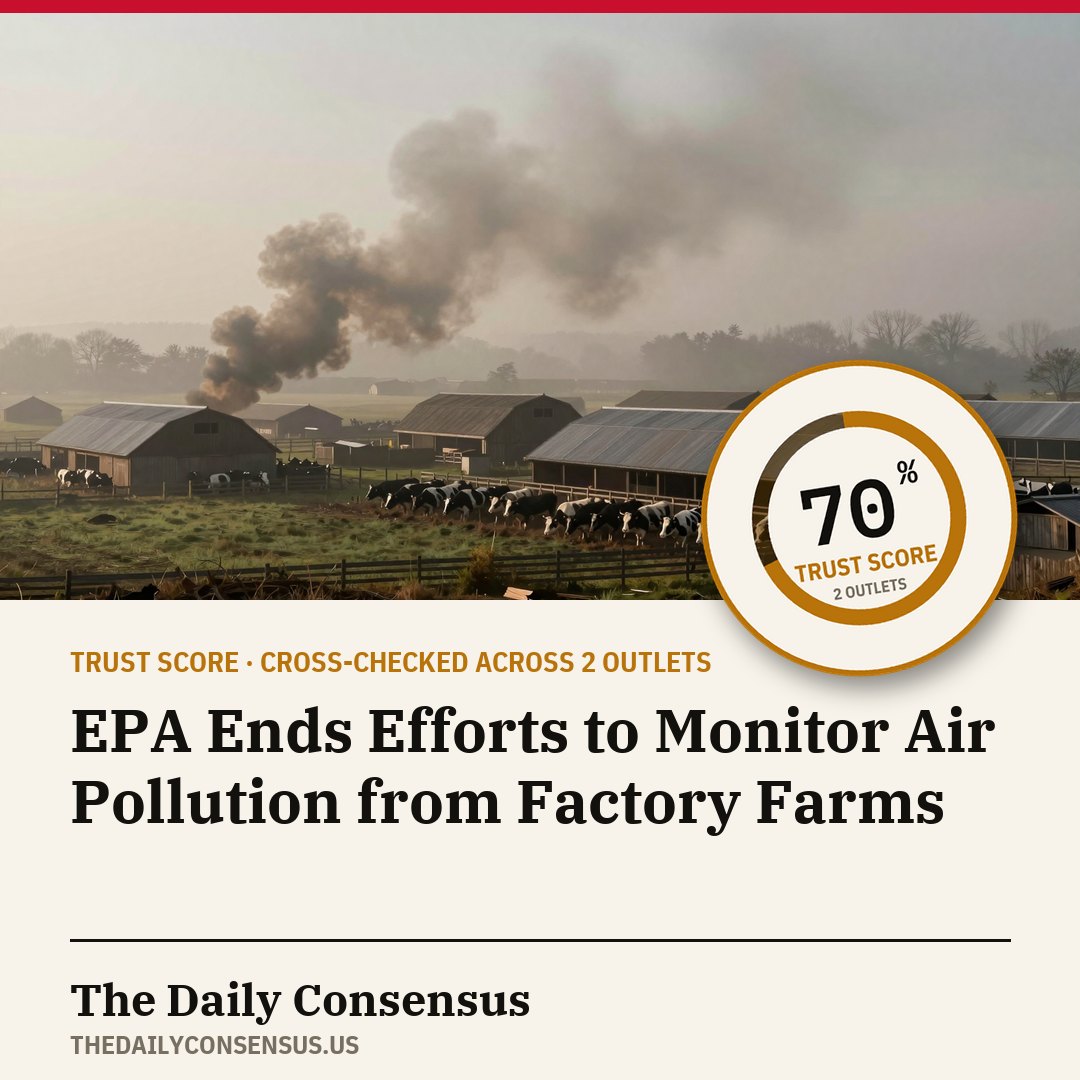
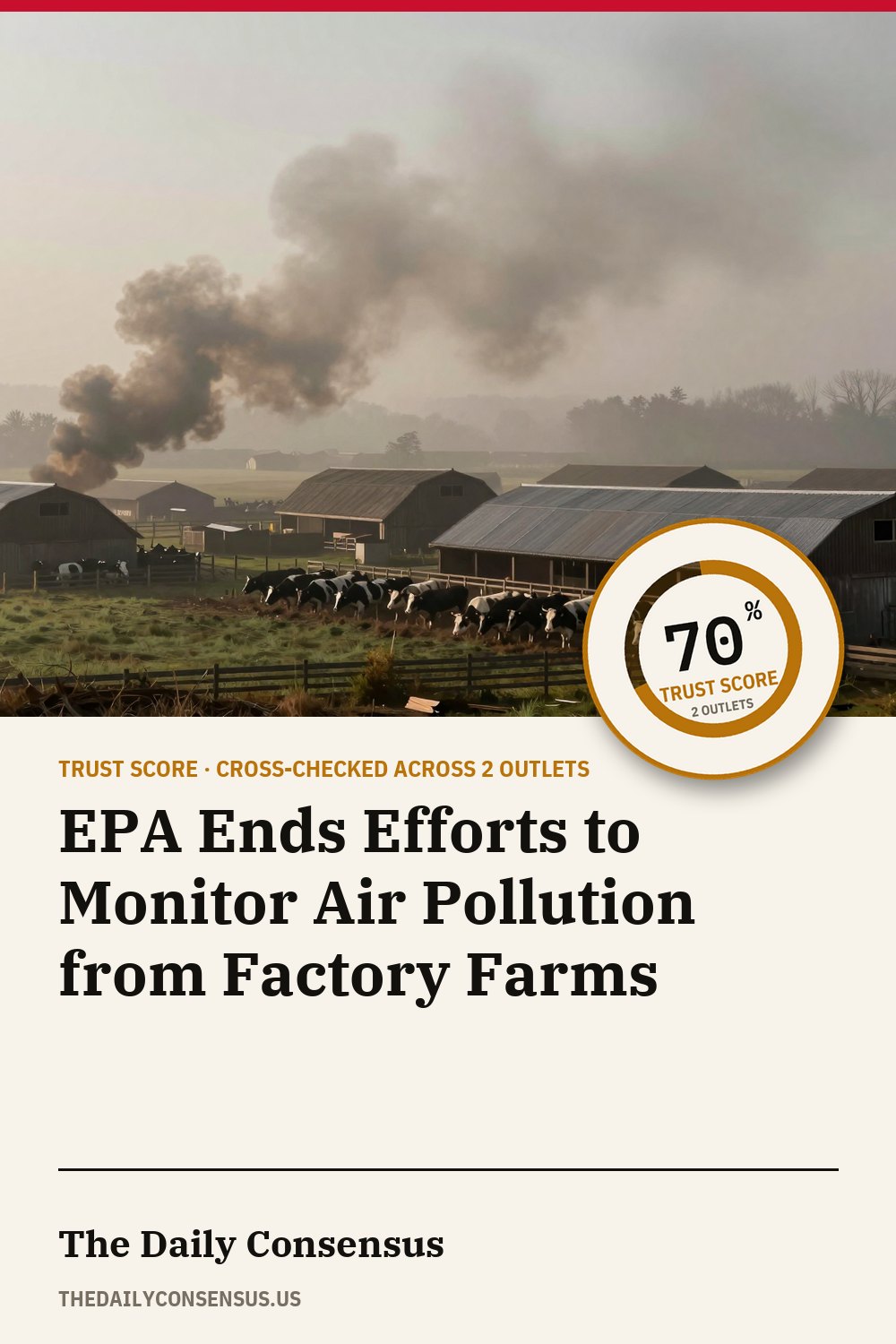
The Environmental Protection Agency has ceased its monitoring of air pollution from concentrated animal feeding operations, despite these emissions contributing to thousands of annual deaths.
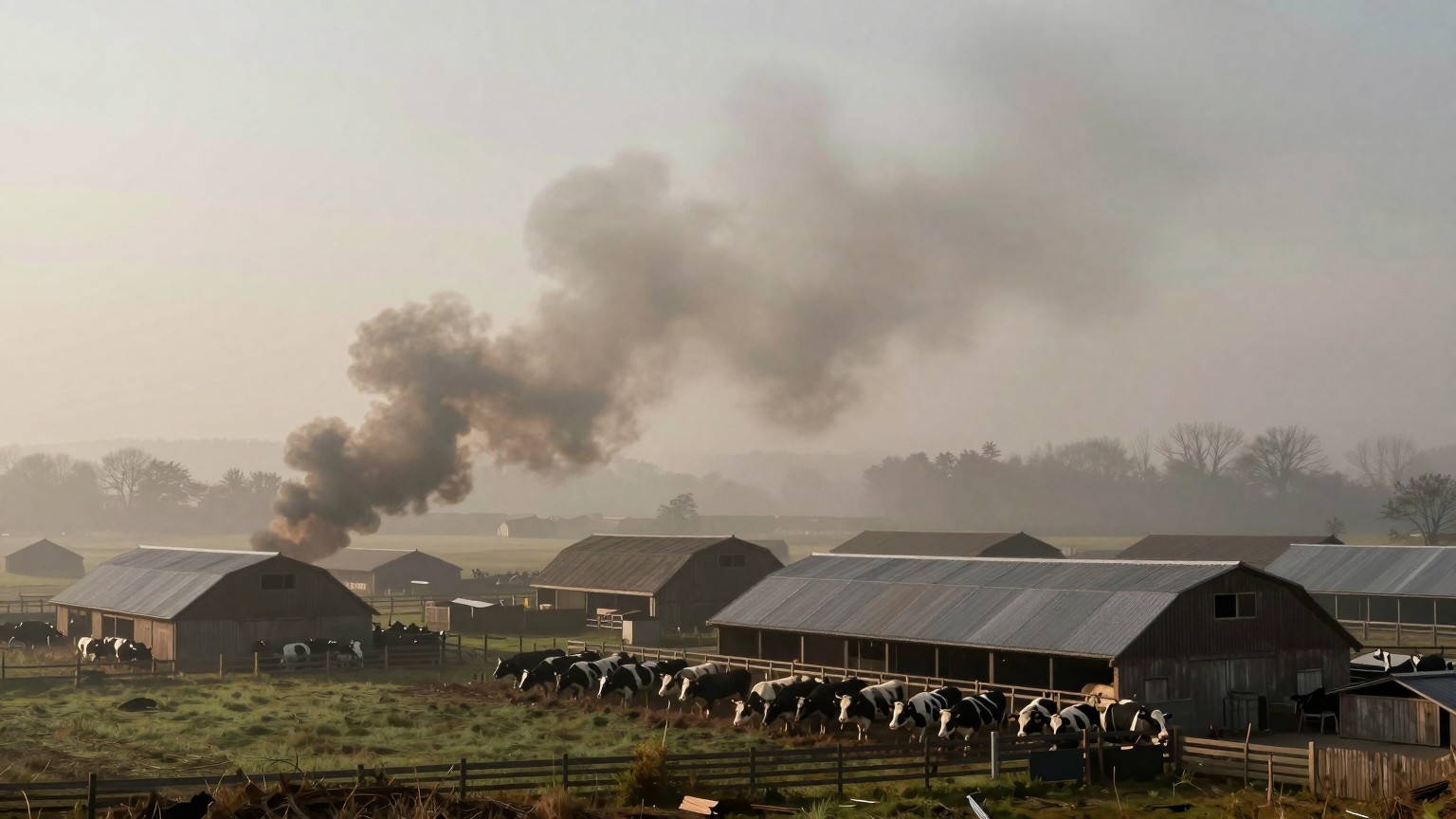
The Environmental Protection Agency (EPA) has thrown in the towel on its efforts to monitor air pollution from factory farms, marking a significant shift in how these agricultural giants will be regulated. This decision comes after over two decades during which the EPA and the livestock industry reached an agreement that exempted concentrated animal feeding operations (CAFOs) from reporting requirements 12.
Factory farms, known for their large-scale production of meat and dairy, release a cocktail of pollutants into the atmosphere, including fine particulate matter, ammonia, nitrogen oxides, sulfur dioxide, and volatile organic compounds 12. These emissions are not merely a nuisance; they contribute to approximately 12,700 deaths annually in the United States 12. The impact on public health underscores the importance of continued monitoring and regulation.
The story of this regulatory change begins in the early 2000s, when the livestock industry successfully contested the EPA’s attempt to enforce limits on certain pollutants 1. In response, the EPA and the livestock industry collaborated to establish the Air Consent Agreement, aiming to develop methods for CAFOs to measure and estimate their air emissions 2. However, since 2005, no new air emissions estimating methodologies have emerged from this partnership 2.
A key factor in the EPA’s decision to end its monitoring efforts is the perceived obsolescence of the data collected through the National Air Emissions Monitoring Study 2. The EPA contends that the information gathered is outdated and insufficient for current needs 2. Additionally, farmers have updated their barns and manure management systems, further complicating the picture 2. Despite this, the Clean Air Act still mandates permits for facilities that surpass specific emissions thresholds 2.
California stands out as an example of how states can take action independently. The Golden State has developed its own models for livestock emissions, which it uses to enforce state air regulations 2. Furthermore, methane emissions from livestock remain outside the scope of the Air Compliance Agreement, indicating that there are still areas where more stringent regulation could be applied 2.
Farmers, who hold historical significance within the Republican Party, will likely see this development as a win for their sector 1. However, the broader implications for public health and environmental quality remain to be seen.
What we know
- - The EPA ended its efforts to monitor air pollution from factory farms 12
- - Factory farms emit pollutants such as fine particulate matter, ammonia, nitrogen oxides, sulfur dioxide, and volatile organic compounds 12
- - These emissions contribute to approximately 12,700 deaths annually in the US 12
- - CAFOs have been exempt from reporting requirements for over 20 years due to an agreement with the EPA and the livestock industry 12
- - CAFOs are required to obtain permits under the Clean Air Act and report emissions under other acts 1
- - The exemption began in the early 2000s after the livestock industry contested the EPA's attempt to enforce limits on certain pollutants 1
- - The EPA and livestock industry worked together to create the Air Consent Agreement in the early 2000s 2
- - The EPA has not produced any new air emissions estimating methodologies since 2005 2
- - The EPA stated that the data from the National Air Emissions Monitoring Study are outdated and insufficient 2
- - Farmers have modernized their barns and manure systems since the original study 2
- - The Clean Air Act still requires permits for facilities that exceed emissions thresholds 2
- - California has its own models for livestock emissions used to enforce state air regulations 2
- - Methane emissions from livestock are not covered by the Air Compliance Agreement 2
- - Farmers are described as a historically important group for the Republican Party 1
Powered by Quantum Forge Robotics with Jessi AI Intelligence
Trust Score report
- likely
The EPA ended its efforts to monitor air pollution from factory farms.
72% · supported by 2 - likely
Factory farms emit pollutants such as fine particulate matter, ammonia, nitrogen oxides, sulfur dioxide, and volatile organic compounds.
72% · supported by 2 - likely
These emissions contribute to approximately 12,700 deaths annually in the US.
72% · supported by 2 - likely
CAFOs have been exempt from reporting requirements for over 20 years due to an agreement with the EPA and the livestock industry.
72% · supported by 2 - likely
CAFOs are required to obtain permits under the Clean Air Act and report emissions under other acts.
72% · supported by 1 - likely
The exemption began in the early 2000s after the livestock industry contested the EPA's attempt to enforce limits on certain pollutants.
72% · supported by 1 - likely
The EPA and livestock industry worked together to create the Air Consent Agreement in the early 2000s.
71% · supported by 1 - likely
The goal of the agreement was to develop tools for CAFOs to measure and estimate air emissions.
71% · supported by 1 - likely
The EPA has not produced any new air emissions estimating methodologies since 2005.
71% · supported by 1 - likely
The EPA stated that the data from the National Air Emissions Monitoring Study are outdated and insufficient.
71% · supported by 1 - likely
Farmers have modernized their barns and manure systems since the original study.
71% · supported by 1 - likely
The Clean Air Act still requires permits for facilities that exceed emissions thresholds.
71% · supported by 1 - likely
California has its own models for livestock emissions used to enforce state air regulations.
71% · supported by 1 - likely
Methane emissions from livestock are not covered by the Air Compliance Agreement.
71% · supported by 1 - unverified
This decision was made just days before the midterm elections.
51% · supported by 1, contradicted by 1 - likely
Farmers are described as a historically important group for the Republican Party.
72% · supported by 1