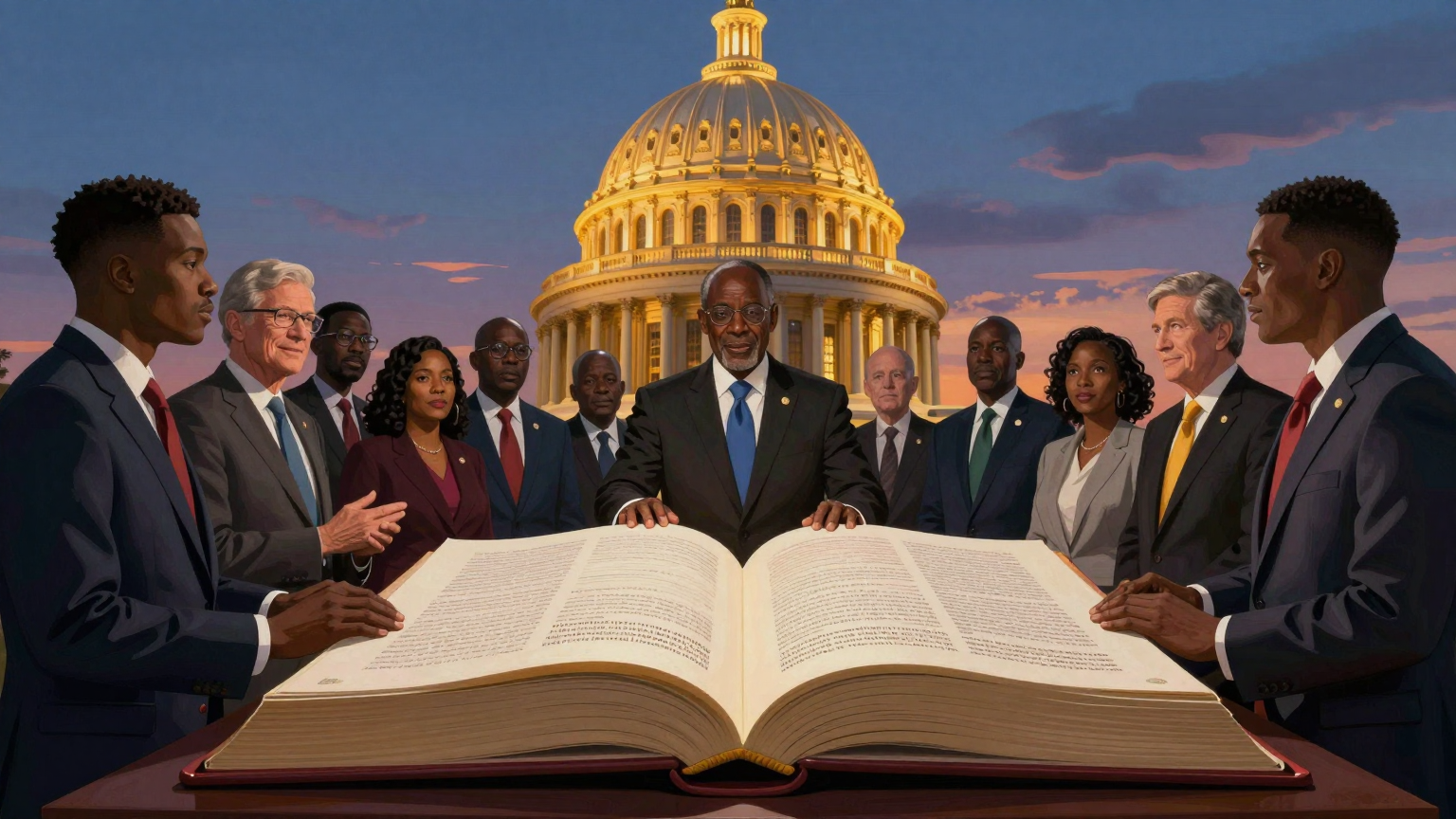
Democrats Secure Majority of Governorships for First Time Since 2010
The party has claimed victory in several key states, marking a significant shift in political power.

In a historic turn of events, Democrats have secured the majority of governorships for the first time in sixteen years, signaling a substantial shift in political power across the United States. This milestone comes after a series of victories in crucial states such as Iowa, Ohio, Georgia, and Texas, where they managed to oust long-standing Republican incumbents and claim new ground. 12
The results of the midterm elections on November 7, 2026, saw Democrats not only holding onto their existing governorships in states like Maine and Wisconsin but also making significant gains in traditionally Republican strongholds. In Iowa, Rob Sand's victory marks the end of over a decade of Republican control, while Amy Acton's win in Ohio signifies the first Democratic governor in twenty years. 12
Keisha Lance Bottoms is poised to become the first Black female governor in U.S. history, a notable achievement that highlights the diversity and inclusivity of the Democratic Party's leadership. Additionally, Gina Hinojosa's triumph in Texas makes her the first Latina governor of the state, further cementing the Democrats' commitment to representation and progress. 3
The Democrats' success can be attributed to several factors, including high prices and widespread disapproval of President Donald Trump, which resonated strongly with voters in key battleground states. These conditions contributed to a wave of support for Democratic candidates, leading to significant gains in state legislatures and executive offices. 12
Moreover, Democrats have made notable strides in controlling attorney general and lieutenant governor roles, a feat not seen in decades. They are also on the cusp of flipping the Texas House, adding another layer of complexity to the ongoing political landscape. 1
Before the election, Republicans held a slight edge with 26 governorships compared to Democrats' 24. However, the recent surge in Democratic victories has tipped the balance, with Democrats now holding a majority of governorships for the first time since 2010. This shift is particularly noteworthy given the historical context and the significance of the states involved. 12
In addition to these major wins, Democrats have also achieved control of the Arizona legislature for the first time in sixty years, showcasing their ability to make long-term impacts in state governance. Meanwhile, they have maintained power in other key states such as Pennsylvania, Wisconsin, Michigan, Nevada, and Kansas. 123
These developments underscore a broader trend of political realignment, with Democrats securing a foothold in traditionally Republican-leaning areas and solidifying their presence in already supportive regions. The implications of these changes will be closely watched as they shape policy and influence at both the state and national levels.
What We Know
- Democrats are likely to hold the majority of governorships for the first time in 16 years. 12
- Democrats won governorships in Iowa, Ohio, Georgia, and Texas. 12
- Gina Hinojosa became the first Latina governor of Texas. 3
- Keisha Lance Bottoms will be the first Black female governor in U.S. history. 3
- Democrats now hold a majority of governorships for the first time since 2010. 3
- Democrats also defended their positions in Maine and Wisconsin. 12
- The midterm elections took place on November 7, 2026. 1
- High prices and disapproval of President Donald Trump contributed to Democratic success. 12
- Democrats gained control of attorney general and lieutenant governor roles for the first time in decades. 1
- Democrats are close to flipping the Texas House. 1
- Rob Sand's election in Iowa ends over a decade of Republican control. 12
- Amy Acton's win in Ohio signifies the first Democratic governor in 20 years. 12
- Keisha Lance Bottoms will be Georgia's first Democratic governor since 2002. 12
- Before the election, Republicans held a 26-24 advantage in governorships over Democrats. 12
- Republicans controlled 28 state legislatures while Democrats controlled 18. 12
- Democrats won the Florida state Senate, Wisconsin state Senate, and North Carolina state House. 12
- Democrats seized control of Pennsylvania's governor's office and both chambers of the legislature. 12
- Democrats achieved control of the Arizona legislature for the first time in 60 years. 12
- Rob Sand became the first Democrat to be elected governor of Iowa in two decades. 3
- Amy Acton succeeded Mike DeWine as governor of Ohio. 3
- Democrats maintained power in Wisconsin, Arizona, Pennsylvania, and Michigan. 3
- There are now three Black governors serving simultaneously. 3
- Democrats held onto power in Nevada and Kansas as of early Wednesday morning. 3





Powered by Quantum Forge Robotics with Jessi AI Intelligence
Trust Score report
- likely
Democrats are likely to hold the majority of governorships for the first time in 16 years.
72% · supported by 2 - likely
Democrats won governorships in Iowa, Ohio, Georgia, and Texas.
72% · supported by 2 - likely
Historic gubernatorial elections included the first Black woman and Black Republican governors.
72% · supported by 2 - likely
Gina Hinojosa became the first Latina governor of Texas.
71% · supported by 1 - likely
Keisha Lance Bottoms will be the first Black female governor in U.S. history.
71% · supported by 1 - likely
Democrats now hold a majority of governorships for the first time since 2010.
71% · supported by 1 - likely
Democrats also defended their positions in Maine and Wisconsin.
72% · supported by 2 - likely
The midterm elections took place on November 7, 2026.
72% · supported by 1 - likely
High prices and disapproval of President Donald Trump contributed to Democratic success.
72% · supported by 2 - likely
Democrats gained control of attorney general and lieutenant governor roles for the first time in decades.
72% · supported by 1 - likely
Democrats are close to flipping the Texas House.
72% · supported by 1 - likely
Rob Sand's election in Iowa ends over a decade of Republican control.
72% · supported by 2 - likely
Amy Acton's win in Ohio signifies the first Democratic governor in 20 years.
72% · supported by 2 - likely
Keisha Lance Bottoms will be Georgia's first Democratic governor since 2002.
72% · supported by 2 - likely
Before the election, Republicans held a 26-24 advantage in governorships over Democrats.
72% · supported by 2 - likely
Republicans controlled 28 state legislatures while Democrats controlled 18.
72% · supported by 2 - likely
Democrats won the Florida state Senate, Wisconsin state Senate, and North Carolina state House.
72% · supported by 2 - likely
Democrats seized control of Pennsylvania's governor's office and both chambers of the legislature.
72% · supported by 2 - likely
Democrats achieved control of the Arizona legislature for the first time in 60 years.
72% · supported by 2 - likely
Rob Sand became the first Democrat to be elected governor of Iowa in two decades.
71% · supported by 1 - likely
Amy Acton succeeded Mike DeWine as governor of Ohio.
71% · supported by 1 - likely
Democrats maintained power in Wisconsin, Arizona, Pennsylvania, and Michigan.
71% · supported by 1 - likely
There are now three Black governors serving simultaneously.
71% · supported by 1 - likely
Democrats held onto power in Nevada and Kansas as of early Wednesday morning.
71% · supported by 1 - unverified
Democrats and Republicans each had 26 governorships prior to the election.
49% · supported by 1, contradicted by 2