Two Crew Members Sentenced for Baltic Sea Cable Damage
A cargo ship's anchor caused significant harm to an undersea cable in the Baltic Sea, leading to convictions for the captain and boatswain.
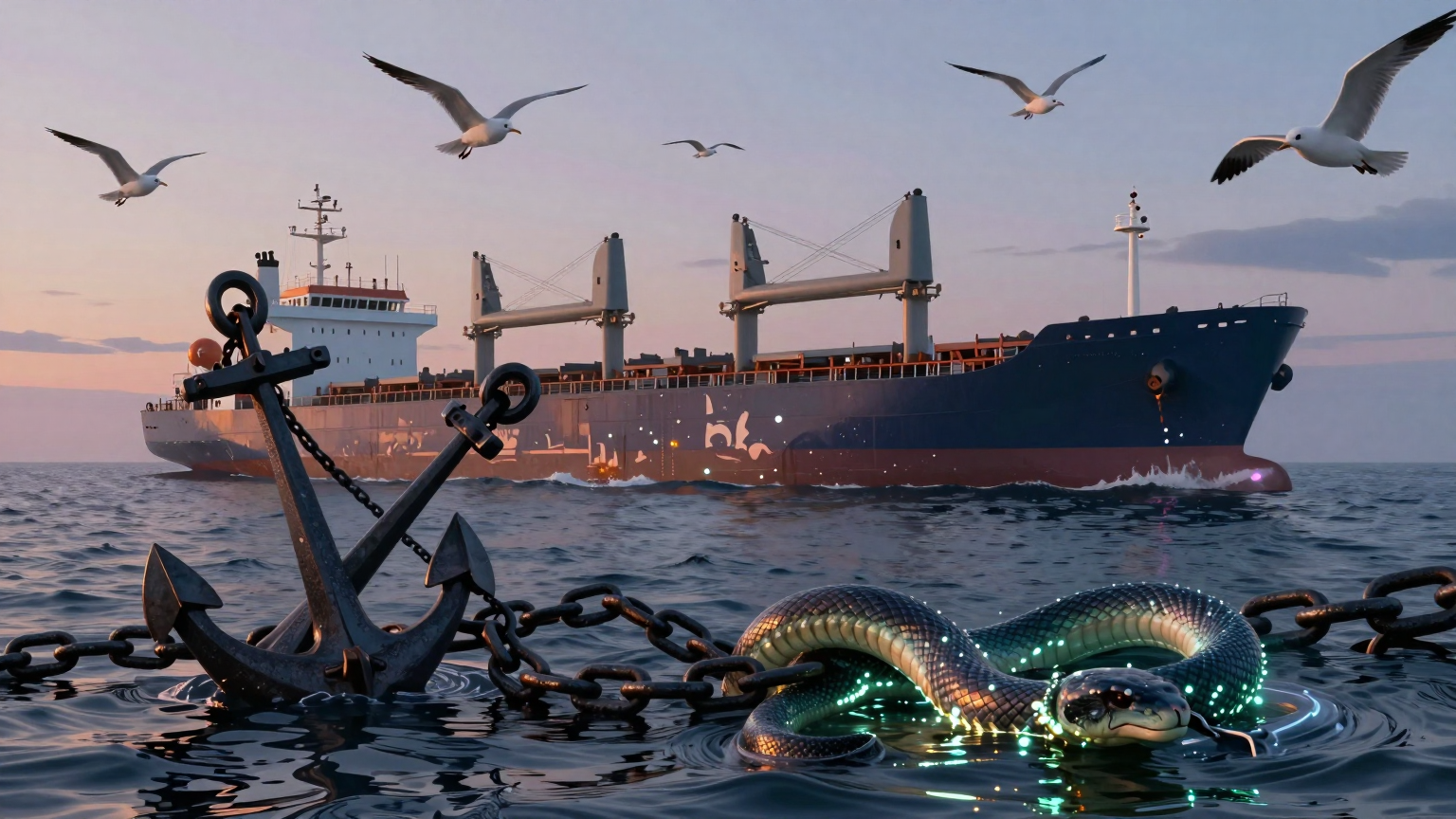
In a recent legal decision, a Finnish court has handed down sentences to two crew members responsible for damaging an undersea cable in the Baltic Sea. The incident, which occurred while the ship was anchored, led to the cable being dragged along the seabed for approximately 130 kilometers, causing substantial damage 123.
The New York Times reports that the two individuals convicted were from Finland, however, this detail is contested by other sources. According to Deutsche Welle and ABC News, the captain is Russian and the boatswain is Azerbaijani, indicating a discrepancy in the nationality of the convicted parties 1 23.
The crew member who served as the captain received a sentence of two years and ten months, while the boatswain’s sentence is not specified in the available information 23. Both defendants were found guilty of aggravated criminal damage, a charge that reflects the severity of the impact their actions had on critical infrastructure 123.
The ship in question, registered in St. Vincent and the Grenadines, was seized by Finnish authorities on December 31st, following suspicions that it was responsible for the cable damage 23. This action underscores the significance placed on ensuring the integrity of maritime cables, which are crucial for communication and energy transmission across vast distances.
Interestingly, the court determined that the anchor's locking mechanism was operating correctly and that the anchor had been raised before the ship departed from St. Petersburg. Despite this, both the captain and boatswain were aware that the anchor was dragging along the seabed, contributing to the damage 3.
While the exact location of the incident is reported differently by various sources, it is likely that the event took place in the Gulf of Finland, a part of the Baltic Sea known for its strategic importance in maritime navigation and commerce 12.
This case highlights the interconnectedness of global trade and communication networks, and the potential consequences when such systems are disrupted by human error or negligence.
What we know
- - The two crew members were convicted of aggravated criminal damage 123
- - The crime involved damaging an undersea cable in the Baltic Sea 123
- - The captain received a sentence of two years and ten months 23
- - The ship's anchor was dragged along the seabed for about 130 kilometers 23
- - The ship was seized by Finnish authorities on December 31st 2
- - The ship was registered in St. Vincent and the Grenadines 3
- - The captain is Russian and the boatswain is Azerbaijani 3
- - The anchor's locking mechanism was functioning correctly and the anchor was raised before the ship left St. Petersburg 3
- - The court found both defendants knew the anchor was dragging 3
What remains unclear
Trust Score report
Likely accurate — probability of truth 68%, weighted across 16 claims from 3 independent outlets.
- confirmed They were convicted of aggravated criminal damage. (94%)
- confirmed The crime involved damaging an undersea cable in the Baltic Sea. (94%)
- confirmed The crew member received a sentence of two years and ten months. (86%)
- confirmed The ship's anchor was dragged along the seabed for about 130 kilometers. (86%)
- likely The incident occurred in the Gulf of Finland. (73%)
- likely The ship was seized by Finnish authorities on December 31 due to suspicion of cable damage. (72%)
- likely The two men were the captain and boatswain of a cargo ship. (71%)
- likely The ship was registered in St. Vincent and the Grenadines. (71%)
- likely The captain is Russian and the boatswain is Azerbaijani. (71%)
- likely The anchor's locking mechanism was functioning correctly and the anchor was raised before the ship left St. Petersburg. (71%)
- likely The court found both defendants knew the anchor was dragging. (71%)
- unverified The captain was sentenced to three and a half years in jail. (51%)
- unverified The defendants were ordered to pay approximately €1.9 million in damages together. (51%)
- unverified The ship was traveling from St. Petersburg to Haifa when the incident happened. (51%)
- unverified The ship was traveling from Russia to Israel. (49%)
- disputed Two men from Finland were sent to prison. (29%)
Sources
- The New York Times — Finland Sends 2 Men to Prison for Damaging Undersea Cable in Baltic Sea
https://www.nytimes.com/2026/11/05/world/europe/finland-fitburg-russia-ship-baltic-cables-sabotage.html - Deutsche Welle — Finland court jails captain and crew member over Baltic cable sabotage
https://www.dw.com/en/finland-court-jails-captain-and-crew-member-over-baltic-cable-sabotage/a-79862519?maca=en-rss-en-all-1573-rdf - ABC News — Russian captain among 2 crew found guilty by Finnish court of damaging Baltic cables
https://abcnews.com/International/wireStory/russian-captain-2-crew-found-guilty-finnish-court-137871830