Sydney Deploys Armed Police Following Bondi Massacre
Armed police officers have begun patrolling Sydney's streets as part of a new security measure following the tragic deaths of fifteen people at Bondi Beach.
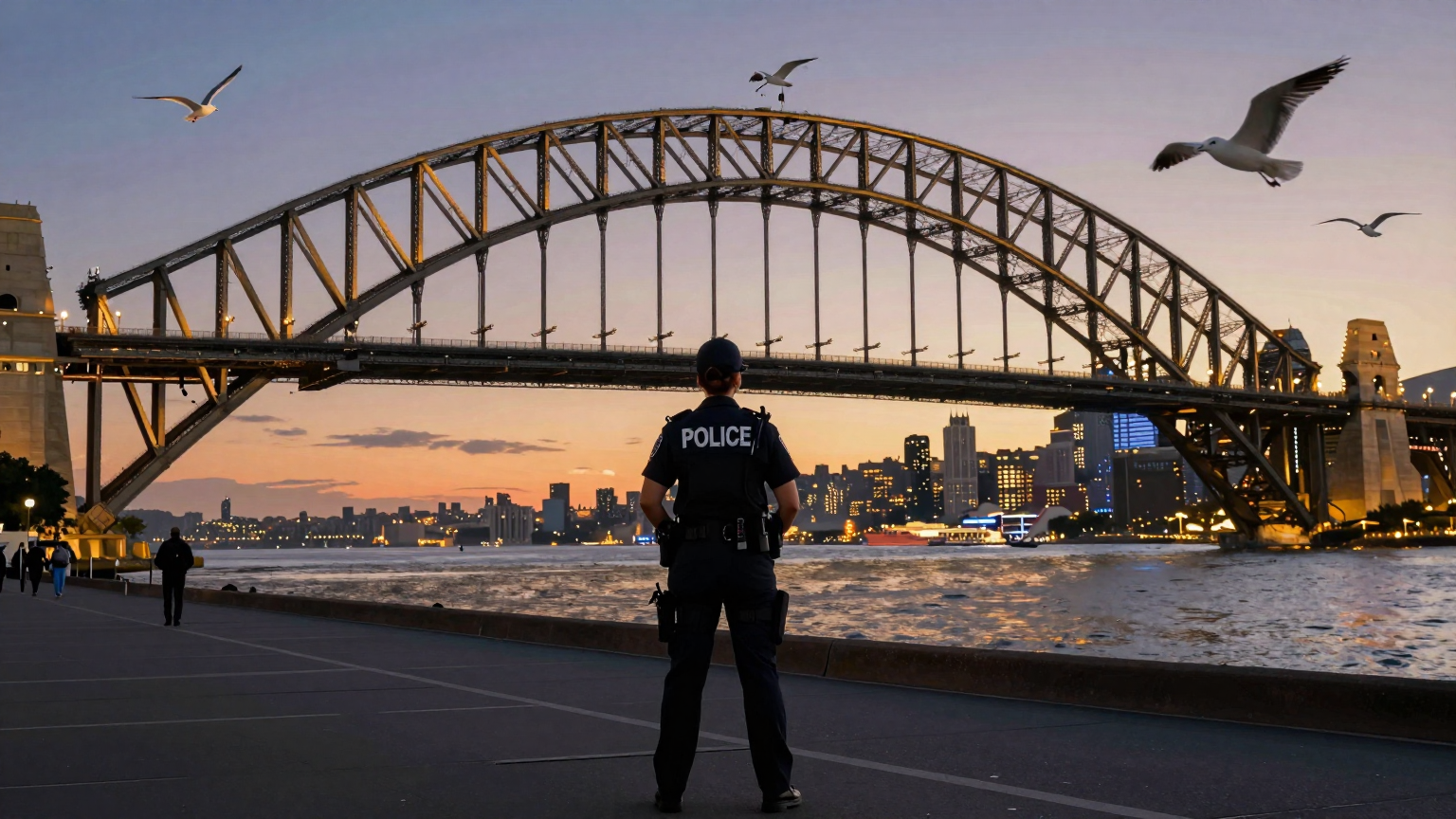
Armed police officers have taken to the streets of Sydney, marking a significant shift in the city's security landscape following the devastating Bondi Beach shooting in December. This deployment is part of the newly established Armed Response Command (ARC), which aims to provide enhanced protection for busy tourist areas, major events, and places of worship.
The ARC, consisting of 250 officers, has been equipped with assault rifles and trained extensively over a six-month period. Their training focused on rifle proficiency, responses to armed offenders, advanced driving, and tactical medical care, ensuring they are well-prepared for any potential threats. The state government allocated A$94.3 million for the establishment of the ARC, reflecting the importance placed on bolstering Sydney’s security measures.
The tragic event at Bondi Beach, where fifteen individuals lost their lives including a ten-year-old girl, stands as Australia's worst mass shooting in nearly three decades. This heartbreaking incident prompted the swift action by the government to implement the ARC, aiming to reassure the public and visitors to Sydney that safety is a top priority.
Operation Shelter, initiated in October 2023, will initially operate concurrently with the ARC before gradually phasing out. However, the introduction of armed patrols has not been without controversy. Amnesty International Australia expressed concern that the ARC could be used to intimidate or suppress peaceful protests, while Greens member Sue Higginson described it as an 'intimidation unit' and an 'escalation in state violence'.
Despite these concerns, the ARC commander assured that officers would only be positioned near demonstrations if there was an armed threat present. This approach seeks to balance the need for heightened security with the preservation of civil liberties. In contrast, New Zealand opted to discontinue armed patrols following public opposition in 2020, highlighting the differing approaches to security measures in neighbouring countries.
What we know
- - Armed police officers began patrolling Sydney's streets. 123
- - The patrols are part of the Armed Response Command (ARC). 13
- - Fifteen people, including a 10-year-old girl, died in a shooting at Bondi Beach in December. 13
- - The attack was Australia's worst mass shooting in nearly three decades. 13
- - Officers will patrol busy tourist areas, major events, and places of worship. 13
- - The ARC consists of 250 officers. 13
- - The state government allocated A$94.3 million for the establishment of the ARC. 3
- - The ARC officers underwent a six-month training program focusing on rifle proficiency, responses to armed offenders, advanced driving, and tactical medical care. 3
- - Operation Shelter will initially operate alongside the ARC before being phased out. 3
- - Amnesty International Australia called for safeguards against the use of the ARC to intimidate or suppress peaceful protests. 3
- - Sue Higginson, a Greens member, described the ARC as an 'intimidation unit' and an 'escalation in state violence'. 3
- - The ARC commander stated that officers might be positioned near demonstrations if there was an armed threat. 3
- - New Zealand abandoned armed patrols following public opposition in 2020. 3
What remains unclear
- - Whether the ARC will face further public opposition or support in Sydney.
- - How the ARC will interact with other security measures already in place.
Verification report
Likely accurate — probability of truth 76%, weighted across 15 claims from 3 independent outlets.
- confirmed Armed police officers began patrolling Sydney's streets. (94%)
- confirmed The patrols are part of the Armed Response Command (ARC). (86%)
- confirmed Fifteen people, including a 10-year-old girl, died in a shooting at Bondi Beach in December. (86%)
- confirmed The attack was Australia's worst mass shooting in nearly three decades. (86%)
- confirmed Officers will patrol busy tourist areas, major events, and places of worship. (86%)
- confirmed The ARC will consist of 250 officers. (86%)
- likely The state government allocated A$94.3 million for the establishment of the ARC. (70%)
- likely The ARC officers underwent a six-month training program focusing on rifle proficiency, responses to armed offenders, advanced driving, and tactical medical care. (70%)
- likely Operation Shelter, established in October 2023, will initially operate alongside the ARC before being phased out. (70%)
- likely Amnesty International Australia called for safeguards against the use of the ARC to intimidate or suppress peaceful protests. (70%)
- likely Sue Higginson, a Greens member, described the ARC as an 'intimidation unit' and an 'escalation in state violence'. (70%)
- likely The ARC commander stated that officers might be positioned near demonstrations if there was an armed threat. (70%)
- likely New Zealand abandoned armed patrols following public opposition in 2020. (70%)
- unverified The ARC involves specially trained officers carrying long-arm rifles. (54%)
- unverified The ARC comprises 250 officers and 28 civilian staff, supported by a round-the-clock operations center. (46%)
Sources
- BBC News — Armed police start patrols in Sydney after Bondi Beach attack
https://www.bbc.co.uk/news/articles/c9kgj7k7ry0ro?at_medium=RSS&at_campaign=rss - Al Jazeera — Sydney deploys heavily armed police unit after Bondi attack
https://www.aljazeera.com/video/newsfeed/2026/11/2/sydney-deploys-heavily-armed-police-unit-after-bondi-attack?traffic_source=rss - The Independent — Sydney deploys armed police with assault rifles in security crackdown after Bondi massacre
https://www.independent.co.uk/news/world/australasia/sydney-bondi-beach-armed-police-patrols-b3077264.html