Severe Weather Threatens Thanksgiving Travel Chaos Across Midwest and South
Strong winds and thunderstorms pose challenges for millions of travelers as they head home for the holidays.
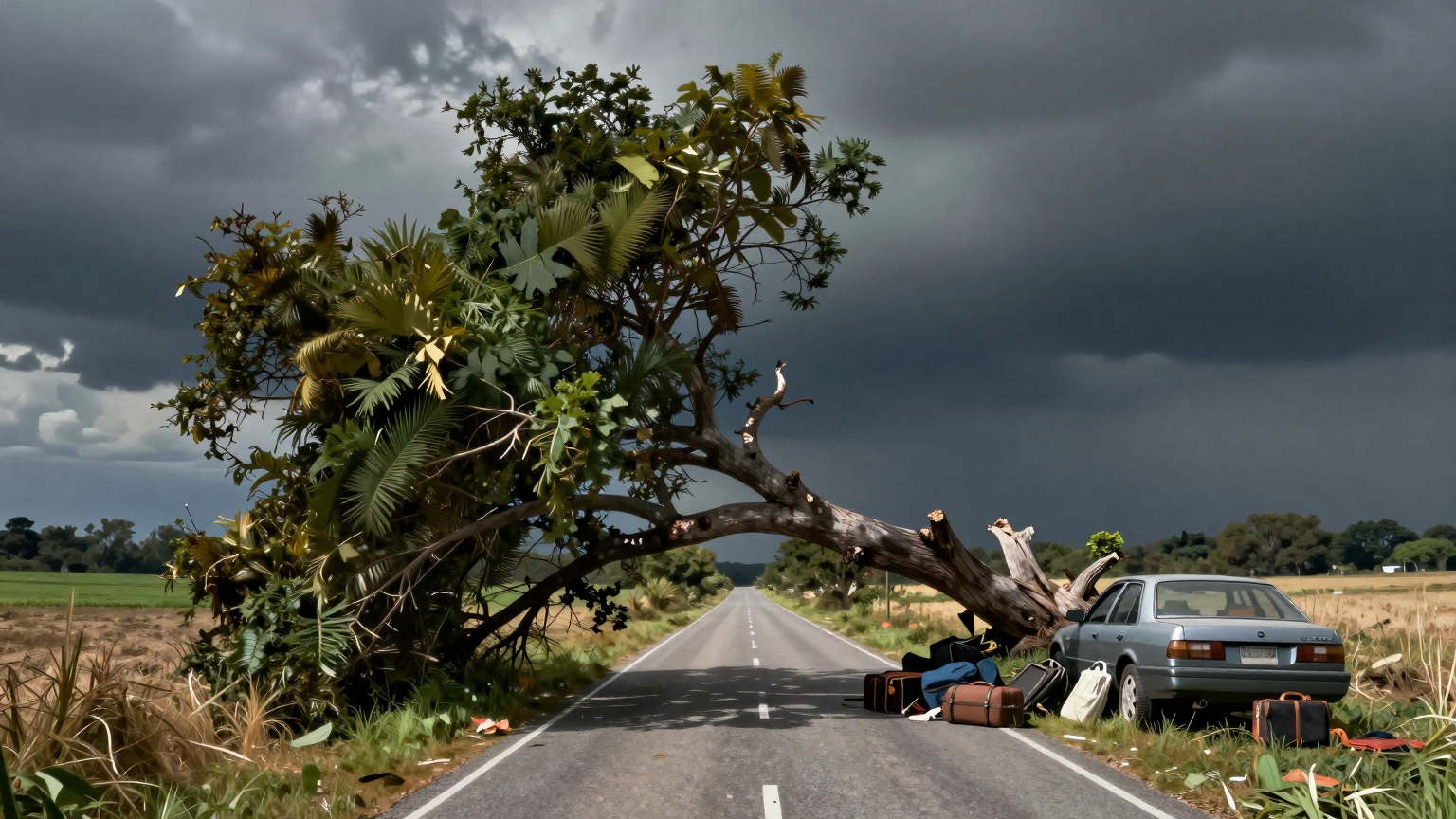
Strong winds and thunderstorms threaten travel in the Midwest and Southern states on Sunday, potentially snarling what is typically the busiest day of Thanksgiving travel 12. As rainstorms move eastward towards major travel hubs such as Chicago, Indianapolis, St. Louis, Atlanta, and Houston, around 60 million people from Texas to Kentucky find themselves under wind alerts on Sunday morning 1. This expansive weather system, stretching from the Great Lakes to the Gulf region, is expected to reach the East Coast by Sunday night, adding further complications to an already bustling travel schedule 1.
The impact of these weather conditions is not just confined to ground travel; San Francisco International Airport has reported average delays of 96 minutes due to wind conditions, while LaGuardia Airport in New York City enjoyed clear skies and calm conditions despite the surge in traffic 1. However, the broader picture is less rosy, with over 63 million people across the United States currently under some form of weather alert 2.
Amidst this meteorological turbulence, the iconic Macy’s Thanksgiving Day Parade was postponed for the first time since World War II due to extreme weather conditions on Thanksgiving Day itself 1. This marks a significant disruption to traditional festivities, highlighting the widespread nature of the weather disturbances. Furthermore, the Transportation Security Administration anticipates screening approximately 17.6 million air travelers between November 24 and November 30, indicating the scale of the travel challenge ahead 2.
With around 3 million travelers expected to pass through U.S. airports on Sunday, the potential for delays and disruptions is high 2. Already, more than 1,600 flights were delayed on Monday morning, showcasing the immediate impact of the weather on travel plans 2. Additionally, Amtrak predicts that Thanksgiving will be its busiest travel period, underscoring the importance of smooth operations for all modes of transportation 2.
As the weather system continues to evolve, fierce wind gusts of up to 45 mph are expected in several states, potentially causing damage such as knocked-down trees and power lines 2. Meanwhile, parts of Northern California and southwestern Oregon prepare for heavy rain, flooding, mountain snow, and high surf, adding another layer of complexity to the overall travel scenario 2.
What we know
- - Strong winds and thunderstorms threaten travel in the Midwest and Southern states on Sunday 12
- - Rainstorms are moving east towards major travel hubs such as Chicago, Indianapolis, St. Louis, Atlanta, and Houston 1
- - The weather system extends from the Great Lakes to the Gulf region and is expected to reach the East Coast by Sunday night 1
- - Around 60 million people from Texas to Kentucky are under wind alerts on Sunday morning 1
- - Macy’s Thanksgiving Day Parade was postponed for the first time since World War II due to extreme weather on Thanksgiving Day 1
- - Over 63 million people were under weather alerts across the United States 2
- - San Francisco International Airport experienced average delays of 96 minutes due to wind conditions 1
- - LaGuardia Airport in New York City had clear skies and calm conditions despite being the busiest travel day of the holiday weekend 1
- - Wind advisories were issued for more than a dozen states, from the Pacific Northwest to the Gulf Coast 2
- - Fierce wind gusts of up to 45 mph were expected in several states, potentially knocking down trees and power lines 2
- - The Transportation Security Administration anticipated screening approximately 17.6 million air travelers between November 24 and November 30 2
- - Around 3 million travelers were expected to pass through U.S. airports on Sunday 2
- - More than 1,600 flights were delayed on Monday morning 2
- - Amtrak predicted that Thanksgiving would be its busiest travel period 2
- - Gusty winds were forecast to spread across much of the Eastern U.S. on Monday 2
- - Parts of Northern California and southwestern Oregon were preparing for heavy rain, flooding, mountain snow, and high surf 2
Trust Score report
Likely accurate — probability of truth 71%, weighted across 17 claims from 2 independent outlets.
- confirmed Strong winds and thunderstorms threaten travel in the Midwest and Southern states on Sunday. (85%)
- likely Rainstorms are moving east towards major travel hubs such as Chicago, Indianapolis, St. Louis, Atlanta, and Houston. (71%)
- likely The weather system extends from the Great Lakes to the Gulf region and is expected to reach the East Coast by Sunday night. (71%)
- likely Around 60 million people from Texas to Kentucky are under wind alerts on Sunday morning. (71%)
- likely Macy’s Thanksgiving Day Parade was postponed for the first time since World War II due to extreme weather on Thanksgiving Day. (71%)
- likely Over 63 million people were under weather alerts across the United States. (71%)
- likely San Francisco International Airport experienced average delays of 96 minutes due to wind conditions. (71%)
- likely LaGuardia Airport in New York City had clear skies and calm conditions despite being the busiest travel day of the holiday weekend. (71%)
- likely Wind advisories were issued for more than a dozen states, from the Pacific Northwest to the Gulf Coast. (71%)
- likely Fierce wind gusts of up to 45 mph were expected in several states, potentially knocking down trees and power lines. (71%)
- likely The Transportation Security Administration anticipated screening approximately 17.6 million air travelers between November 24 and November 30. (71%)
- likely Around 3 million travelers were expected to pass through U.S. airports on Sunday. (71%)
- likely More than 1,600 flights were delayed on Monday morning. (71%)
- likely Amtrak predicted that Thanksgiving would be its busiest travel period. (71%)
- likely Gusty winds were forecast to spread across much of the Eastern U.S. on Monday. (71%)
- likely Parts of Northern California and southwestern Oregon were preparing for heavy rain, flooding, mountain snow, and high surf. (71%)
- unverified Up to 2 feet of snow was dumped in the Rockies by a low-pressure system. (50%)
Sources
- NBC News — Severe weather could snarl busiest day of Thanksgiving travel as wind alerts affect Midwest and South
https://www.nbcnews.com/weather/storms/severe-weather-snarl-busiest-day-thanksgiving-travel-rcna611777 - CBS News U.S. — Millions under alerts as harsh weather impacts last of Thanksgiving travel
https://www.cbsnews.com/news/post-thanksgiving-travel-weather-wind-alerts/