Luxury Cruise Stalled in Cambodia Amid Soaring Fuel Costs
A multi-year journey around the world came to an abrupt halt when a luxury cruise ship was forced to dock in Cambodia due to escalating fuel expenses.
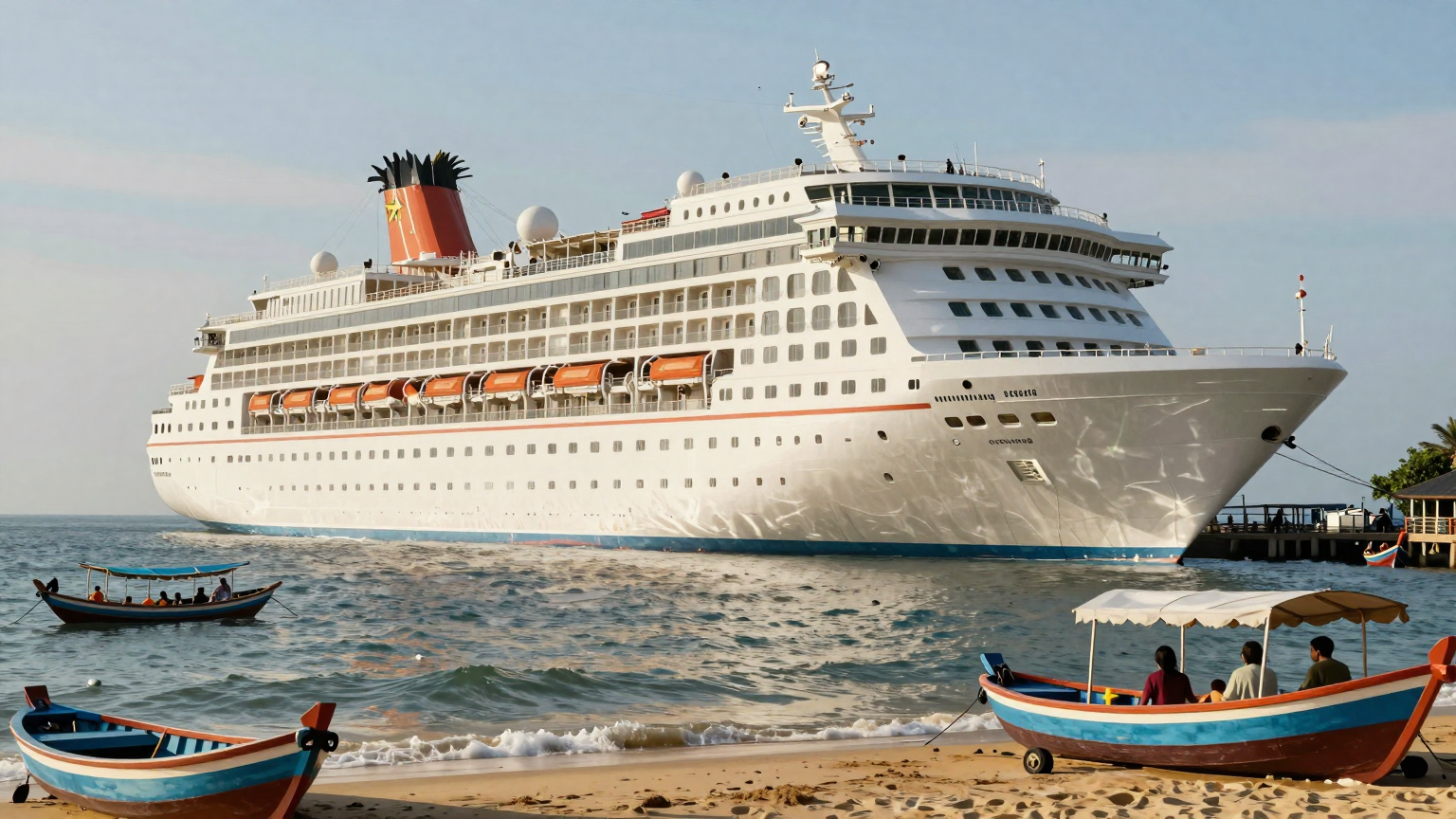
A luxury cruise ship, which had embarked on what was billed as an 'endless' journey around the globe, has been brought to a sudden stop in Cambodia after soaring fuel costs became unsustainable. The vessel, capable of accommodating up to 650 passengers, was more than 750 days into its voyage when it was compelled to suspend operations, leaving approximately 200 passengers on board to make arrangements for disembarkation.
The financial strain on the cruise line was exacerbated by a significant rise in fuel costs, reaching as high as $8,000 per cabin per month in certain parts of Asia. This marked a staggering increase of 344% compared to previous months, making it impossible for the company to continue without restructuring and recapitalization within the next two months. According to reports, the cruise line ran out of funds due to these heightened expenses, despite efforts to mitigate fuel usage by slowing down the itinerary and spending extended periods in port.
The ship, which offered long-term or even permanent accommodation options for renters and buyers, had attracted a predominantly American clientele. Cabins were priced between $120,000 and $440,000, providing residents with the unique opportunity to live aboard while visiting numerous destinations over the course of their stay. However, the dream of an endless cruise was cut short as the company faced the harsh reality of mounting operational costs.
As the ship's operator works on plans for the passengers to disembark, there is uncertainty surrounding the exact timing of the event. While most sources agree that the incident took place in 2026, one report suggests a different year, creating a discrepancy that remains unresolved. Despite this dispute, the impact of the surge in fuel prices on the cruise line's finances and operations is clear, marking a significant setback for the ambitious journey that began over two years ago.
What we know
- - A luxury cruise ship on a multi-year voyage around the world was stranded in Cambodia due to high fuel costs. 123456
- - Fuel costs increased significantly, rising to $8,000 per cabin per month in parts of Asia. 15
- - The company needs to restructure and recapitalize within 60 days due to high fuel costs. 15
- - The cruise line ran out of funds because of the increased cost of fuel. 2
- - Monthly fuel cost per cabin rose by 344% in some Asian regions. 5
- - The ship offers long-term or even permanent accommodation for renters or buyers. 145
- - The ship can accommodate up to 650 passengers. 15
- - The ship's operator is working on disembarkation plans for the approximately 200 passengers currently on board. 1
- - The ship was more than 750 days into its journey when it suspended operations. 1
- - Passengers were given until 2pm on the day of notification to disembark. 1
- - Permanent residencies in the ship's cabins ranged from $120,000 to $440,000. 1
- - Most of the passengers were American. 4
- - Measures to reduce fuel consumption, like slowing down the itinerary and spending more time in ports, were not sufficient to counteract the high fuel prices. 5
- - The cruise was marketed as a residential experience with visits to hundreds of destinations. 5
What remains unclear
- - The exact year the event occurred, with one source suggesting 2026 and others indicating a different timeframe.
Verification report
Likely accurate — probability of truth 72%, weighted across 17 claims from 6 independent outlets.
- confirmed A luxury cruise ship on a multi-year voyage around the world was stranded in Cambodia due to high fuel costs. (97%)
- confirmed Fuel costs increased significantly, rising to $8,000 per cabin per month in parts of Asia. (87%)
- confirmed The company needs to restructure and recapitalize within 60 days due to high fuel costs. (87%)
- likely The cruise line ran out of funds because of the increased cost of fuel. (71%)
- likely Monthly fuel cost per cabin rose by 344% in some Asian regions. (71%)
- unverified The ship, named Villa Vie Odyssey, departed Belfast in October 2024. (53%)
- unverified There were 203 passengers and 156 crew members on board. (47%)
- disputed The event occurred in 2026. (27%)
- confirmed The ship offers long-term or even permanent accommodation for renters or buyers. (94%)
- confirmed The ship can accommodate up to 650 passengers. (87%)
- likely The ship's operator is working on disembarkation plans for the approximately 200 passengers currently on board. (73%)
- likely The ship was more than 750 days into its journey when it suspended operations. (73%)
- likely Passengers were given until 2pm on the day of notification to disembark. (73%)
- likely Permanent residencies in the ship's cabins ranged from $120,000 to $440,000. (73%)
- likely Most of the passengers were American. (71%)
- likely Measures to reduce fuel consumption, like slowing down the itinerary and spending more time in ports, were not sufficient to counteract the high fuel prices. (71%)
- likely The cruise was marketed as a residential experience with visits to hundreds of destinations. (71%)
Sources
- BBC Asia — Luxury cruise passengers stranded in Cambodia due to soaring fuel costs
https://www.bbc.co.uk/news/articles/cwj342k62exyo?at_medium=RSS&at_campaign=rss - CBS News — Surging fuel prices abruptly halts "endless" luxury cruise in Cambodia
https://www.cbsnews.com/video/surging-fuel-prices-abruptly-halts-endless-luxury-cruise-in-cambodia/ - Al Jazeera — Rising fuel costs force passengers off cruise ship
https://www.aljazeera.com/video/newsfeed/2026/10/29/rising-fuel-costs-force-passengers-off-cruise-ship?traffic_source=rss - The Guardian US — Cruise residents stranded in Cambodia after fuel crisis halts operations – video
https://www.theguardian.com/travel/video/2026/oct/29/cruise-residents-stranded-in-cambodia-after-fuel-crisis-halts-operations-video - CNBC Energy — Luxury round-the-world cruise ends abruptly as fuel costs skyrocket
https://www.cnbc.com/2026/10/28/villa-vie-odyssey-fuel-costs.html - Sky News — Cruise ship left stranded in Cambodia after 'soaring fuel costs'
https://news.sky.com/story/cruise-ship-mv-odyssey-stranded-in-cambodia-after-soaring-fuel-costs-13604720