India's Night Lights Up for Diwali: Festival of Lights Celebrated Across Millions
Diwali, the festival of lights, shines brightly across India and the world, marking significant cultural and religious observances for millions of people.
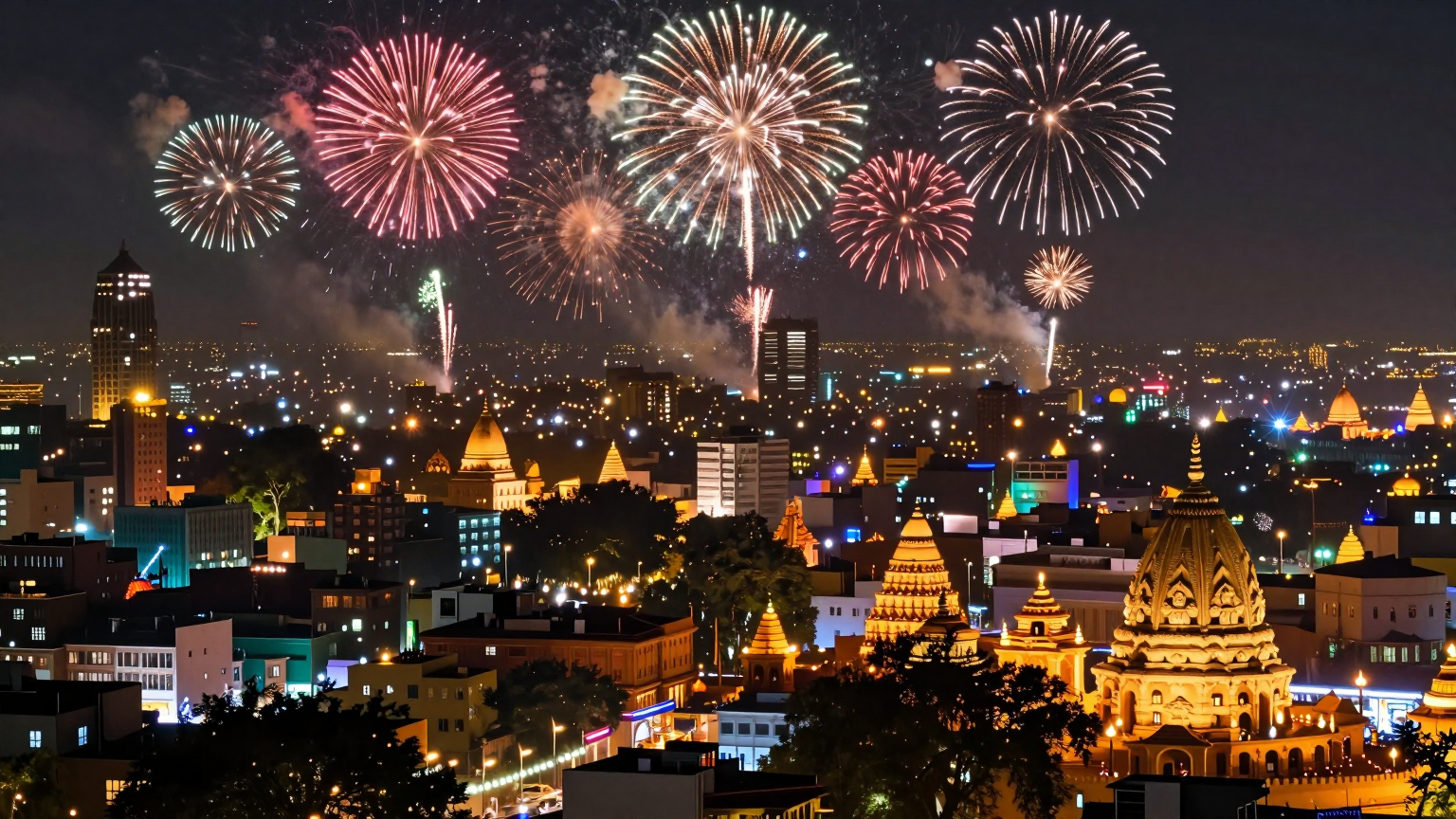
Diwali, renowned as the festival of lights, illuminates the lives of millions of people around the globe, making it one of the most cherished celebrations in India and beyond. This vibrant festival is not just a Hindu tradition but also holds deep significance for Sikhs, Jains, and some Buddhists, each group celebrating unique aspects of the event 12345.
In India, Diwali is celebrated with great fervor, especially in northern regions where the festival coincides with the darkest night of the Hindu lunar month of Kartik. However, this year, the joyous occasion has been marred by severe air pollution, with Delhi experiencing its highest pollution levels in a decade. The Supreme Court has permitted the use of 'green' firecrackers to mitigate environmental impact while still allowing for traditional festivities 1.
The festival's origins vary slightly among different communities. For Hindus, Diwali commemorates the return of Lord Ram to Ayodhya after defeating the demon king Ravana. Meanwhile, Sikhs mark the occasion as Bandi Chhor Divas, celebrating the release of Guru Hargobind from imprisonment. Jains observe Diwali as the day Lord Mahavira achieved moksha, or liberation from the cycle of rebirth 15.
Diwali is not just a religious festival but also a time of economic activity and familial bonding. On Dhanteras, the first day of Diwali, there is a custom of purchasing auspicious items such as gold and silver. The main celebration falls on the third day, where devotees offer prayers to the goddess Lakshmi and partake in festive meals. The festival concludes with Bhai Dooj, which celebrates the bond between siblings 1.
In addition to these cultural and religious practices, Diwali also brings about a surge in financial activities. Muhurat trading takes place on the stock exchanges on this day, reflecting the festival's influence on the economy 1.
This year, Diwali is set to take place on November 8th, with the next occurrence falling on November 8, 2026. The festival typically happens in late October or early November, aligning with the lunar calendar 35.
While Diwali is widely celebrated in India, its influence extends far beyond its borders. It is recognized as an official state holiday in California, showcasing the global reach and cultural significance of this luminous festival 5.
What we know
- Diwali is known as the festival of lights.
- Sikhs celebrate Bandi Chhor Divas, marking Guru Hargobind's release.
- Jains observe Diwali as the day Lord Mahavira achieved moksha.
- Diwali is celebrated by millions of people worldwide.
- Diwali is one of the largest Hindu festivals in India.
- Diwali is celebrated by millions of people in India.
- Diwali occurs on the darkest night of the Hindu lunar month of Kartik.
- Northern India faces significant air pollution issues during Diwali due to seasonal weather and crop burning.
- Delhi's air pollution levels during Diwali are the highest in a decade.
- The Supreme Court allowed 'green' firecrackers in Delhi and surrounding areas to reduce pollution.
- Festival marks the return of Lord Ram to Ayodhya after defeating Ravan.
- Dhanteras, the first day of Diwali, involves buying auspicious items like gold and silver.
- Main celebration occurs on the third day with prayers to Lakshmi and festive meals.
- Bhai Dooj, the final day, celebrates sibling bonds.
- Muhurat trading takes place on the stock exchanges on Diwali.
- Diwali usually takes place in late October or early November.
- In 2026, Diwali will be celebrated on November 8th.
- This year, Diwali is on November 8.
- Diwali is celebrated by Hindus, Sikhs, Jains, and Buddhists.
- In southern India, Diwali commemorates Lord Krishna's victory over the demon Naraka.
- Northern Indians focus their worship on the goddess Lakshmi during Diwali.
- Some Buddhists consider Diwali the anniversary of Emperor Ashoka's conversion to Buddhism.
- California made Diwali an official state holiday last year.
Trust Score report
Likely accurate — probability of truth 76%, weighted across 23 claims from 5 independent outlets.
- confirmed Diwali is known as the festival of lights. (97%)
- confirmed Sikhs celebrate Bandi Chhor Divas, marking Guru Hargobind's release. (87%)
- confirmed Jains observe Diwali as the day Lord Mahavira achieved moksha. (87%)
- confirmed Diwali is celebrated by millions of people worldwide. (86%)
- confirmed Diwali is one of the largest Hindu festivals in India. (85%)
- likely Diwali is celebrated by millions of people in India. (73%)
- likely Diwali occurs on the darkest night of the Hindu lunar month of Kartik. (73%)
- likely Northern India faces significant air pollution issues during Diwali due to seasonal weather and crop burning. (73%)
- likely Delhi's air pollution levels during Diwali are the highest in a decade. (73%)
- likely The Supreme Court allowed 'green' firecrackers in Delhi and surrounding areas to reduce pollution. (73%)
- likely Festival marks the return of Lord Ram to Ayodhya after defeating Ravan. (73%)
- likely Dhanteras, the first day of Diwali, involves buying auspicious items like gold and silver. (73%)
- likely Main celebration occurs on the third day with prayers to Lakshmi and festive meals. (73%)
- likely Bhai Dooj, the final day, celebrates sibling bonds. (73%)
- likely Muhurat trading takes place on the stock exchanges on Diwali. (73%)
- likely Diwali usually takes place in late October or early November. (72%)
- likely In 2026, Diwali will be celebrated on November 8th. (72%)
- likely This year, Diwali is on November 8. (71%)
- likely Diwali is celebrated by Hindus, Sikhs, Jains, and Buddhists. (71%)
- likely In southern India, Diwali commemorates Lord Krishna's victory over the demon Naraka. (71%)
- likely Northern Indians focus their worship on the goddess Lakshmi during Diwali. (71%)
- likely Some Buddhists consider Diwali the anniversary of Emperor Ashoka's conversion to Buddhism. (71%)
- likely California made Diwali an official state holiday last year. (71%)
Sources
- BBC Asia — Homes and temples glow across India as Diwali celebrations begin
https://www.bbc.co.uk/news/articles/cm70pdwz122ro?at_medium=RSS&at_campaign=rss - The Washington Post — A short primer guide to Diwali and those who celebrate it
https://www.washingtonpost.com/world/2026/11/08/short-primer-guide-diwali-those-who-celebrate-it/ - PBS NewsHour — What is Diwali, the Festival of Lights, and how is it celebrated?
https://www.pbs.org/newshour/world/what-is-diwali-the-festival-of-lights-and-how-is-it-celebrated - Al Jazeera — India’s night lights up for Diwali
https://www.aljazeera.com/video/2026/11/9/indias-night-lights-up-for-diwali?traffic_source=rss - ABC News — What is Diwali, the Festival of Lights, and how is it celebrated?
https://abcnews.com/International/wireStory/diwali-festival-lights-celebrated-137916244