German Drone Shatters Electric Flight Speed Records
Quantum Systems' Apex Recordhunter sets a new benchmark at 727 km/h, marking a significant leap in electric aviation.
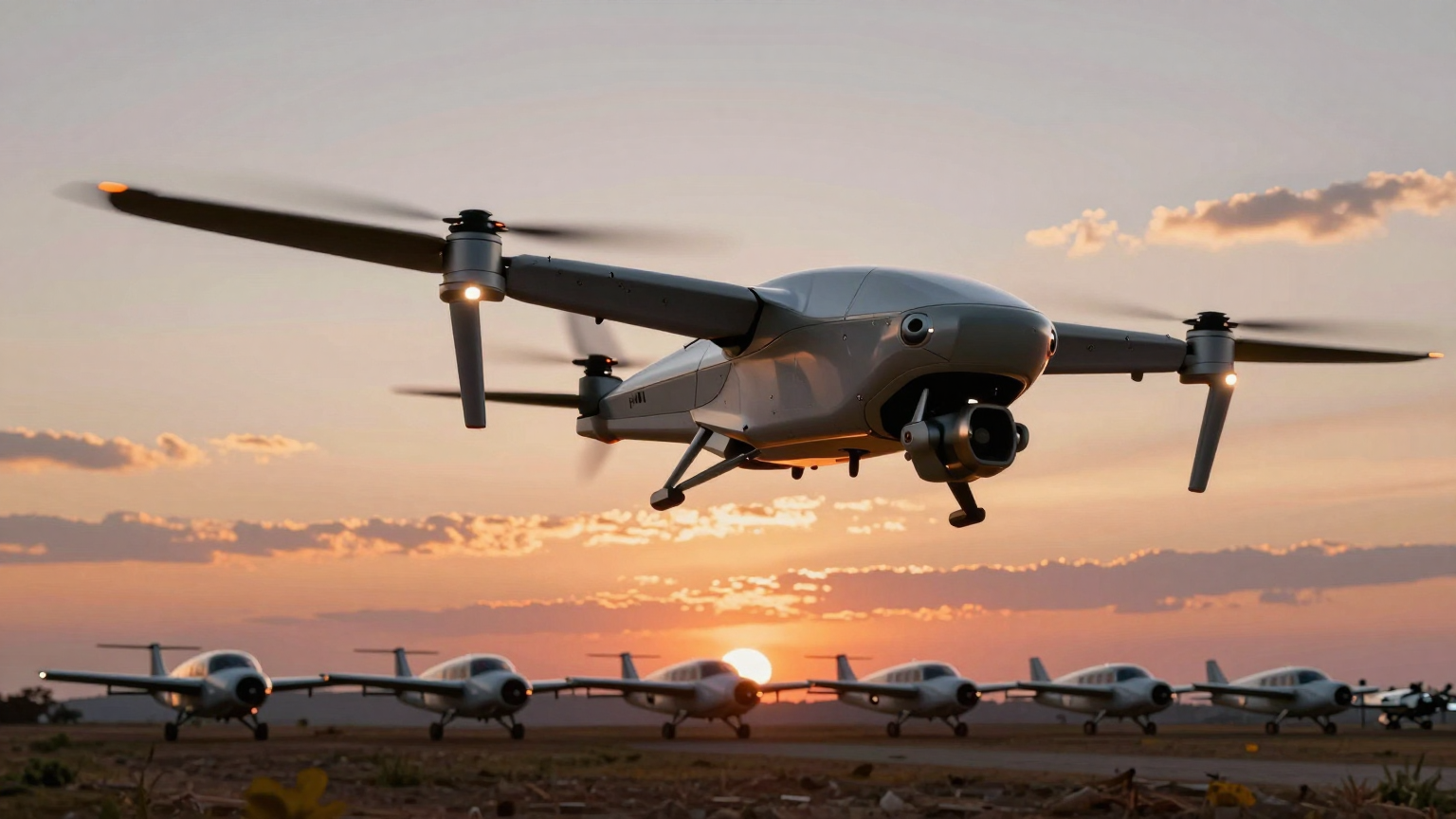
In a groundbreaking achievement, Quantum Systems' Apex Recordhunter drone has set a new world speed record for the fastest battery-electric flying object, reaching an impressive 727 kilometers per hour (km/h) in its official two-way 100-meter speed run 123. This milestone not only cements the German company's position at the forefront of electric aviation technology but also opens up exciting possibilities for future applications in both commercial and military sectors.
The record-breaking flight took place at a military base in Germany, where independent experts verified the drone's speed using GPS data and detailed flight logs, ensuring the accuracy and reliability of the measurement 123. This rigorous verification process is crucial in the competitive field of aviation records, where precision and trustworthiness of data are paramount.
While the official record stands at 727 km/h, earlier tests conducted by Quantum Systems showed even more remarkable speeds. During a preliminary run, the Apex Recordhunter achieved a one-way speed of 777 km/h and a peak speed of 795 km/h, showcasing the potential for further advancements in electric propulsion technology 12.
However, there is some dispute regarding the previous world record for battery-powered quadcopters. While Quantum Systems claims the prior record was 657.59 km/h, other sources suggest a different figure, indicating a need for clarification on this aspect of the record-setting landscape 3.
This achievement by Quantum Systems comes at a time when other nations are also making strides in drone technology. For instance, Russian drones such as the Geran-4 and Geran-5 models have demonstrated capabilities of reaching speeds up to 600 km/h, highlighting the global competition and innovation in this field 3.
The success of the Apex Recordhunter not only represents a technological triumph but also underscores the potential for electric aircraft to revolutionize various industries, from cargo transport to aerial surveillance. As research and development continue, the skies may soon be filled with faster, quieter, and more efficient electric flyers.
What we know
- - Quantum Systems' Apex Recordhunter set a new world speed record for the fastest battery-electric flying object 123
- - The official two-way 100-meter speed of the drone was 727 km/h 123
- - Independent experts verified the speed using GPS speed data and flight logs 123
- - The record flight occurred at a military base in Germany 123
- - Earlier tests showed a one-way speed of 777 km/h and a peak speed of 795 km/h 12
- - There is some dispute regarding the previous world record for battery-powered quadcopters 3
What remains unclear
- - The exact previous world record for battery-powered quadcopters, due to conflicting reports 3
Trust Score report
Likely accurate — probability of truth 78%, weighted across 7 claims from 3 independent outlets.
- confirmed Quantum Systems' Apex Recordhunter drone set a new world speed record for the fastest battery-electric flying object. (89%)
- confirmed The official two-way 100-meter speed of the drone was 727 km/h. (89%)
- confirmed Independent experts verified the speed using GPS speed data and flight logs. (89%)
- confirmed The record flight occurred at a military base in Germany. (89%)
- likely In an earlier test, the drone reached 777 km/h in a one-way run and recorded a peak speed of 795 km/h. (68%)
- disputed The previous world record for a battery-powered quadcopter was 657.59 km/h. (32%)
- likely Russian Geran-4 and Geran-5 drones can fly up to 600 km/h. (66%)
Sources
- European Security & Defence — Quantum Systems breaks world speed record
https://euro-sd.com/2026/11/news/air/54866/quantum-systems-apex/ - Defense Mirror — German Drone Sets World Speed Record for Electric Flight at 727 km h
https://www.defensemirror.com/news/42453 - Defence Blog — German electric drone sets 727 km/h world speed record
https://defence-blog.com/german-electric-drone-sets-727-km-h-world-speed-record/