Delhi Braces for 'Pollution Season' as Smog Shrouds Capital
The Indian capital faces severe air quality issues, exacerbated by winter conditions and Diwali festivities.
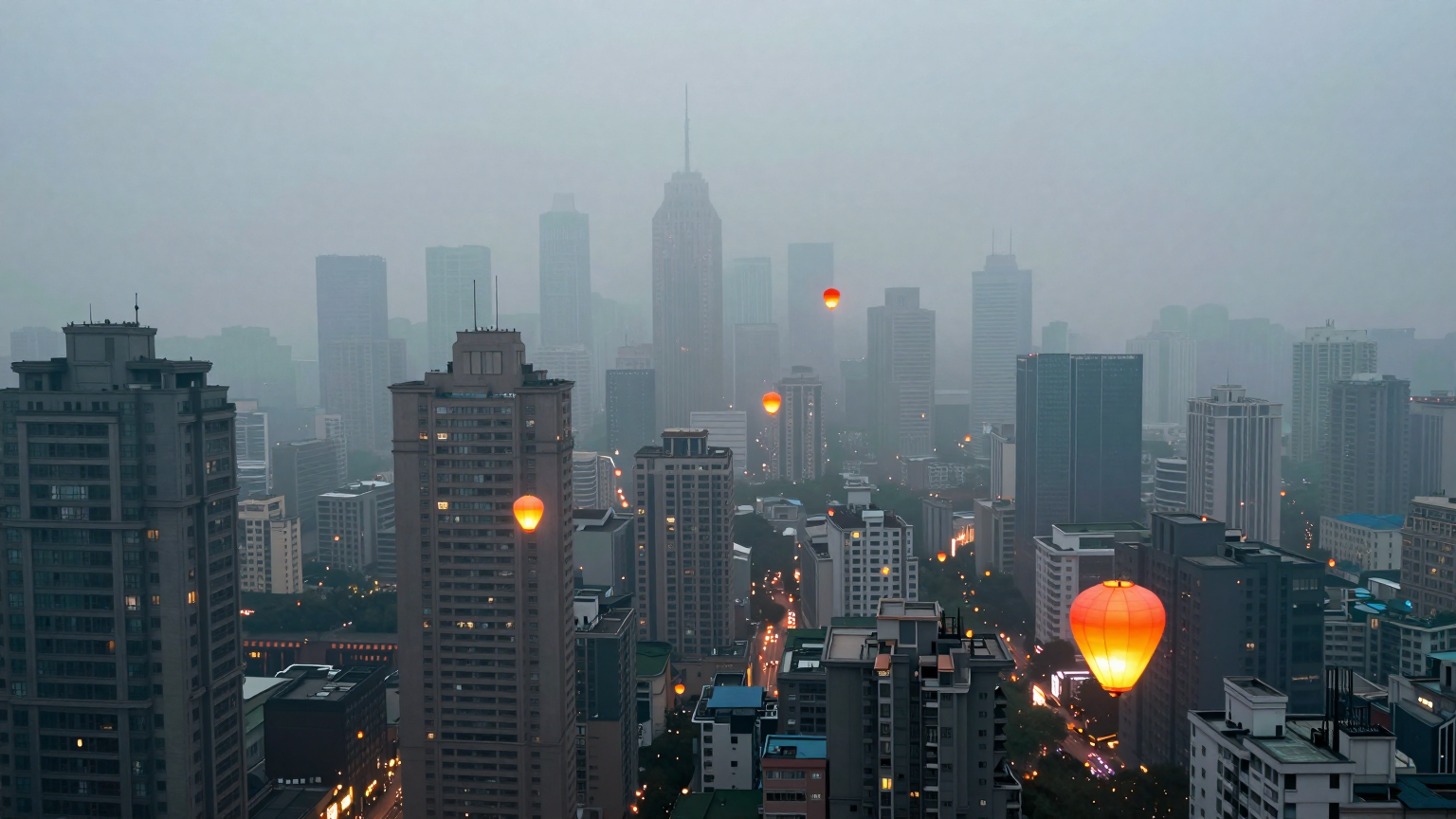
Delhi is currently enveloped in a thick layer of smog, marking the onset of what locals refer to as 'pollution season'. According to reports, the air quality index in the city has soared past 650, making it more than thirty times worse than the World Health Organization's safety limit 2. This stark reality paints a grim picture for residents, who must navigate through hazardous conditions daily.
The situation is compounded by the arrival of winter, which brings cooler temperatures and stagnant air, trapping pollutants closer to the ground 1. Additionally, the festive season, particularly Diwali, adds another layer of complexity, as the widespread use of fireworks further deteriorates the air quality 1.
Vehicular emissions play a crucial role in Delhi's air pollution problem, with the city experiencing heavy traffic congestion on its roads and connecting highways 11. Despite efforts to mitigate these issues, measures to reduce air pollution have proven largely ineffective, leaving the population to endure the consequences 1.
To address the issue of stubble burning, which contributes significantly to the air quality woes, experts suggest providing farmers with economic incentives and alternative solutions 1. This approach aims to tackle one of the major sources of pollution while supporting agricultural practices.
What we know
- - [Air quality index in Delhi exceeded 650](2)
- - [Current air quality in Delhi is more than 30 times worse than WHO's safety limit](2)
- - [Vehicular pollution is a significant factor contributing to Delhi's poor air quality](1)
- - [Winter weather conditions exacerbate Delhi's air quality issues](1)
- - [Measures to reduce air pollution in Delhi have proven ineffective](1)
- - [Farmers should be given economic incentives and alternatives to address stubble burning](1)
- - [Fireworks during Diwali significantly contribute to air pollution](1)
- - [World Health Organization considers an air quality index up to 20 to be safe](2)
- - [Delhi has heavy traffic congestion on its roads and connecting highways](1)
Trust Score report
Likely accurate — probability of truth 72%, weighted across 10 claims from 2 independent outlets.
- likely The air quality index in Delhi exceeded 650. (72%)
- likely Current air quality in Delhi is more than 30 times worse than WHO's safety limit. (72%)
- likely Vehicular pollution is a significant factor contributing to Delhi's poor air quality. (72%)
- likely Delhi's Air Quality Index remains above the hazardous 300 mark. (72%)
- likely Winter weather conditions exacerbate Delhi's air quality issues. (72%)
- likely Measures to reduce air pollution in Delhi have proven ineffective. (72%)
- likely Farmers should be given economic incentives and alternatives to address stubble burning. (72%)
- likely Fireworks during Diwali significantly contribute to air pollution. (72%)
- likely The World Health Organization considers an air quality index up to 20 to be safe. (72%)
- likely Delhi has heavy traffic congestion on its roads and connecting highways. (72%)
Sources
- Deutsche Welle — India news: Vehicles major cause of Delhi pollution, top court says
https://www.dw.com/en/india-news-vehicles-major-cause-of-delhi-pollution-top-court-says/live-79883248?maca=en-rss-en-all-1573-rdf - The Guardian Environment — Delhi braces for ‘pollution season’ as smog shrouds India’s capital – in pictures
https://www.theguardian.com/world/gallery/2026/nov/06/delhi-braces-for-pollution-season-as-smog-shrouds-indias-capital-in-pictures