British Healthcare Worker Tests Positive for Ebola in DR Congo Amid Cholera Crisis
A British healthcare worker has become the first UK national to contract Ebola in the current outbreak in the Democratic Republic of Congo, while the country faces a severe cholera crisis.
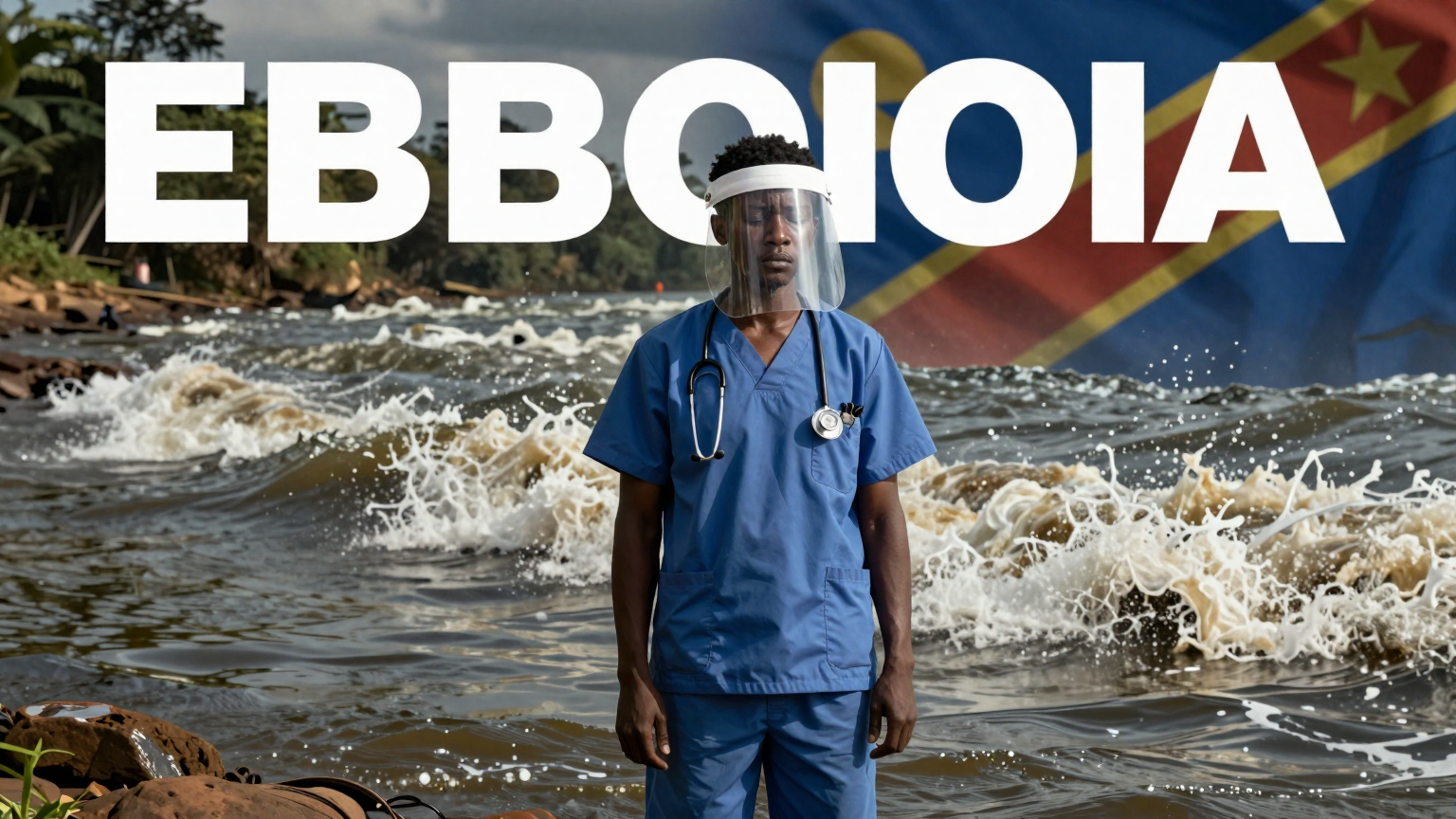
A British healthcare worker has tested positive for Ebola in the Democratic Republic of Congo (DRC), marking the first instance of a UK national contracting the virus during the current outbreak in the country 13. This development underscores the ongoing challenges faced by medical professionals working in regions affected by the deadly disease.
The Bundibugyo variant of the Ebola virus is responsible for the current outbreak in the DRC, which has seen significant fatalities and complications due to its high fatality rate of around 50 percent 3. The infected individual is a healthcare worker, highlighting the risks faced by those on the frontlines of treating patients with infectious diseases 13.
In addition to the Ebola outbreak, the DRC is grappling with a severe cholera crisis, with around 1,800 people having died from the disease in the current year 2. Approximately 60,000 cases of cholera have been recorded, with the majority occurring in the eastern provinces of North and South Kivu 2. The mortality rate for cholera in the DRC is approximately 3% 2, indicating a significant public health challenge.
The World Health Organization (WHO) has approved clinical trials for two new Ebola vaccines, specifically targeting the Bundibugyo strain 3. These trials, led by the DRC’s National Institute for Biomedical Research and supported by the WHO and other partners, aim to provide additional options for combating the virus 3. The new vaccines were developed by the University of Oxford, Serum Institute of India, and Moderna 3.
Accessing remote and conflict-ridden areas remains a significant challenge for healthcare workers and aid organizations, complicating efforts to combat both cholera and Ebola 2. The rainy season poses a particular risk for further spread of cholera, especially in densely populated urban centers like Kinshasa 2.
The UK government has stated that there are established procedures for handling such cases, and the public risk is considered low 1. With four confirmed Ebola cases in the UK previously, including one from a lab accident in 1976 and three from the West Africa outbreak between 2014 and 2015, the country has experience in managing the disease 1.
Two new candidate drugs for Ebola are being added to clinical trials, alongside existing vaccines, offering hope for improved treatment options 1. Additionally, cases of Ebola have been confirmed in Kenya, Nigeria, and Uganda since the start of the outbreak 1. In Kenya, nine cases have been reported, including two deaths, while Nigeria has confirmed one case 3.
What We Know
- A British healthcare worker has contracted Ebola in the DRC 13
- The Bundibugyo variant of the Ebola virus is responsible for the current outbreak 3
- Around 1,800 people have died from cholera in the DRC this year 2
- Clinical trials for two new Ebola vaccines targeting the Bundibugyo strain have begun 3
- Access to remote and conflict-ridden areas complicates efforts to combat both cholera and Ebola 2
Trust Score report
Likely accurate — probability of truth 70%, weighted across 30 claims from 3 independent outlets.
- confirmed A British man has tested positive for Ebola in the Democratic Republic of Congo. (87%)
- confirmed This is the first instance of a UK national contracting Ebola in the current outbreak in DR Congo. (87%)
- confirmed The infected individual is reportedly a healthcare worker. (87%)
- confirmed The Bundibugyo variant of the Ebola virus is responsible for the ongoing outbreak in DR Congo. (87%)
- likely The exact date for the man's return flight to the UK is unknown. (73%)
- likely The UK government stated there are established procedures for handling such cases and the public risk is low. (73%)
- likely There have been four confirmed Ebola cases in the UK, including one from a lab accident in 1976 and three from the West Africa outbreak between 2014 and 2015. (73%)
- likely Two new candidate drugs for Ebola are being added to clinical trials, alongside existing vaccines. (73%)
- likely Cases of Ebola have been confirmed in Kenya, Nigeria, and Uganda since the start of the outbreak. (73%)
- likely Around 1,800 people died from cholera in the Democratic Republic of Congo (DRC) in the current year. (71%)
- likely Approximately 60,000 cases of cholera were recorded in the DRC. (71%)
- likely The majority of cholera cases occurred in the eastern provinces of North and South Kivu. (71%)
- likely There are concerns that cholera may spread along the Congo River basin towards Kinshasa. (71%)
- likely The mortality rate for cholera in the DRC is approximately 3%. (71%)
- likely The DRC is also experiencing its deadliest Ebola outbreak. (71%)
- likely Challenges in accessing remote and conflict-ridden areas are complicating efforts to combat both cholera and Ebola. (71%)
- likely The rainy season poses a risk for further spread of cholera, particularly in Kinshasa. (71%)
- likely The World Health Organization (WHO) has approved clinical trials for two new Ebola vaccines. (71%)
- likely The trials are for the Bundibugyo strain of the Ebola virus. (71%)
- likely The fatality rate of the Bundibugyo strain is 50 percent. (71%)
- likely A trial using the Ervebo vaccine for the Zaire strain started last month. (71%)
- likely Results from the new vaccine trials are expected in early 2027. (71%)
- likely The DRC’s National Institute for Biomedical Research leads the trial, supported by the WHO and others. (71%)
- likely The University of Oxford, Serum Institute of India, and Moderna developed the new vaccines. (71%)
- likely Nine cases have been reported in Kenya, including two deaths. (71%)
- likely One case has been confirmed in Nigeria. (71%)
- unverified Over 5,000 people have died in the current Ebola outbreak in DR Congo. (53%)
- unverified The current Ebola outbreak in DR Congo began in May and has over 10,000 confirmed cases. (53%)
- unverified Over 5,300 people have died from the Bundibugyo strain since May. (47%)
- unverified There have been 10,444 confirmed cases of the Bundibugyo virus in the DRC. (47%)
Sources
- BBC Africa — UK national tests positive for Ebola virus in DR Congo
https://www.bbc.co.uk/news/articles/crq8nj7xqdv9o?at_medium=RSS&at_campaign=rss - Medical Xpress — Some 1,800 dead from cholera in Ebola-hit DR Congo: WHO
https://medicalxpress.com/news/2026-11-dead-cholera-ebola-dr-congo.html - Al Jazeera — WHO approves trials for two new Ebola vaccines
https://www.aljazeera.com/news/2026/11/4/who-approves-trials-for-two-new-ebola-vaccines?traffic_source=rss