Amsterdam Filled With Red As 200,000 Protest Gaza Crisis
More than 200,000 demonstrators took to the streets of Amsterdam, clad in red, to demand tighter trade restrictions on Israel and a halt to arms sales.
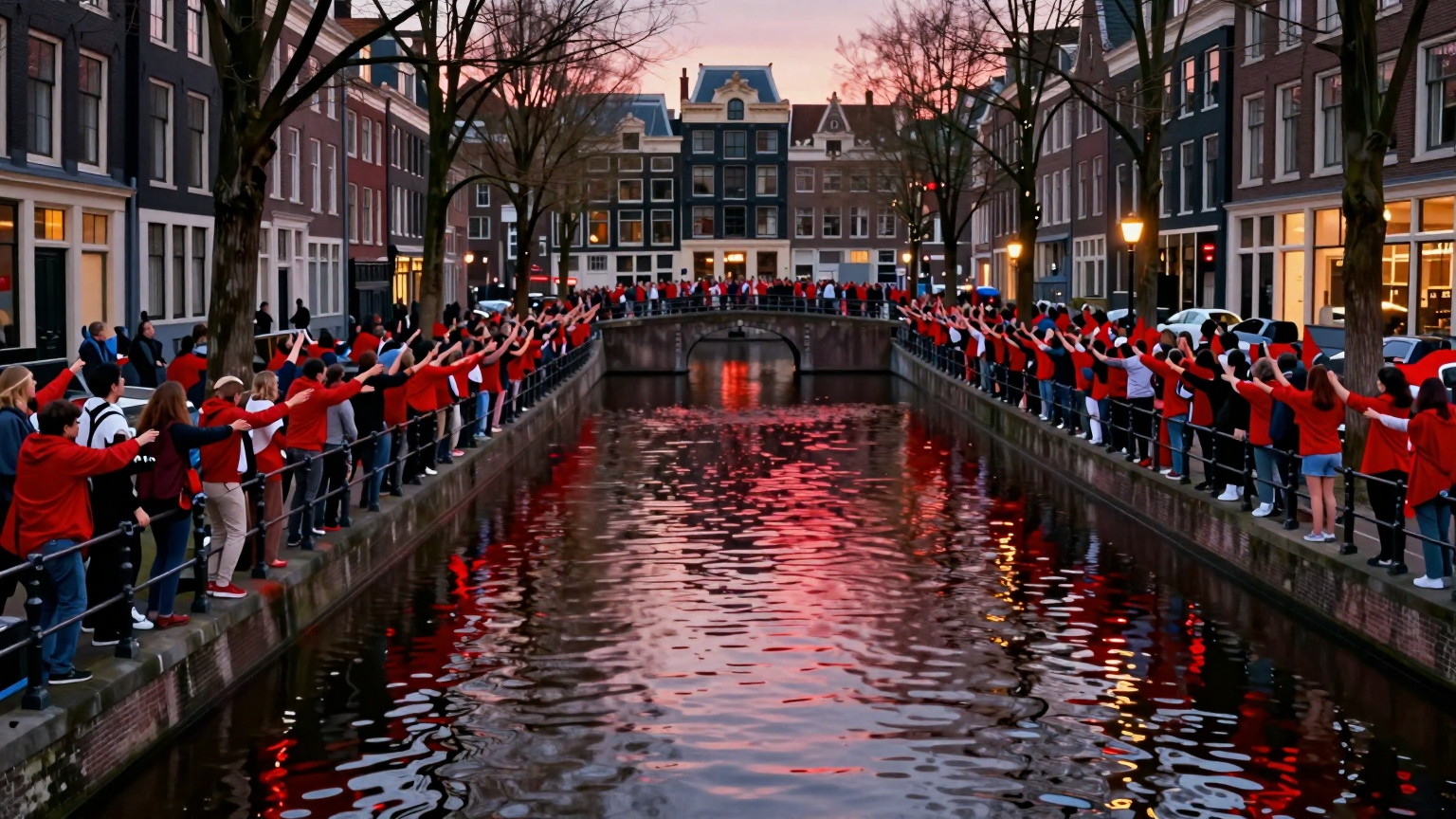
Protesters in Amsterdam donned red attire to form a sea of crimson as they marched through the city's streets, marking a significant show of solidarity with the people of Gaza. According to reports, over 200,000 individuals participated in the 'Red Line' demonstration, which aimed to highlight the ongoing crisis in Gaza and call for stricter measures against Israel.
The protest came at a time of political change in the Netherlands, with the recent formation of a new minority coalition government. This new administration has already taken action by implementing an import ban on goods from Israeli settlements, a move that reflects the public sentiment expressed during the demonstration. However, the Dutch foreign minister's resignation underscores the challenges faced in securing additional sanctions against Israel, highlighting the complexity of international relations and the domestic political landscape.
The demonstrators' demands were not just symbolic; they called for tighter trade restrictions on Israel and a cessation of all arms sales. These calls reflect broader concerns about the impact of economic policies and military actions on the Palestinian population in Gaza. Since the ceasefire in October 2025, over 1,550 Palestinians have lost their lives due to Israeli military operations, according to some reports, although there is a discrepancy with other sources suggesting a lower number of casualties.
The protest was held on a Sunday, with participants wearing red clothing to signify their support for the cause. This choice of day and color was intended to make a powerful visual statement, capturing the attention of both locals and visitors alike. Additionally, the protest coincided with the aftermath of Hamas attacks in October 2023, which had claimed around 1,200 lives and left 251 people as hostages, further emphasizing the urgency of the situation.
What we know
- More than 200,000 people participated in the 'Red Line' protest in Amsterdam. 12
- The protest demanded tighter trade restrictions on Israel and a halt to all arms sales. 123
- The Dutch foreign minister resigned due to failure to secure new sanctions against Israel. 123
- A new minority coalition government in the Netherlands introduced an import ban on products from Israeli settlements. 12
- Over 1,550 Palestinians in Gaza have been killed by the Israeli military since a ceasefire in October 2025. 23
- The protest occurred on a Sunday and participants wore red clothing. 12
- Approximately 1,200 deaths and 251 hostages resulted from Hamas attacks in October 2023. 3
Trust Score report
Likely accurate — probability of truth 70%, weighted across 9 claims from 3 independent outlets.
- likely Protesters demanded tighter trade restrictions on Israel and a halt to all arms sales. (85%)
- likely The Dutch foreign minister resigned due to failure to secure new sanctions against Israel. (85%)
- likely More than 200,000 people participated in the 'Red Line' protest in Amsterdam. (71%)
- likely A new minority coalition government in the Netherlands introduced an import ban on products from Israeli settlements. (71%)
- likely Over 1,550 Palestinians in Gaza have been killed by the Israeli military since a ceasefire in October 2025. (70%)
- unverified At least 74,000 Palestinians, including 21,000 children, died in the conflict since October 2023. (51%)
- likely The protest occurred on a Sunday and participants wore red clothing. (71%)
- likely Hamas attacks in October 2023 resulted in approximately 1,200 deaths and 251 hostages. (70%)
- unverified Prime Minister Rob Jetten stated his government is exerting more political and diplomatic pressure on Israel. (51%)
Sources
- Al Jazeera — Hundreds of thousands join Amsterdam’s ‘Red Line’ protest against Israel
https://www.aljazeera.com/news/2026/11/8/hundreds-of-thousands-protesters-storm-amsterdam?traffic_source=rss - ABC News — Tens of thousands march in Amsterdam, pressing the Dutch government on Gaza and Israel
https://abcnews.com/International/wireStory/tens-thousands-march-amsterdam-pressing-dutch-government-gaza-137954786 - Euronews — Netherlands: Sea of red fills Amsterdam streets in Gaza protest
https://www.euronews.com/video/2026/11/08/netherlands-sea-of-red-fills-amsterdam-streets-in-gaza-protest